

Why Medical Records Can Make or Break Your Fort Myers Car Accident Case
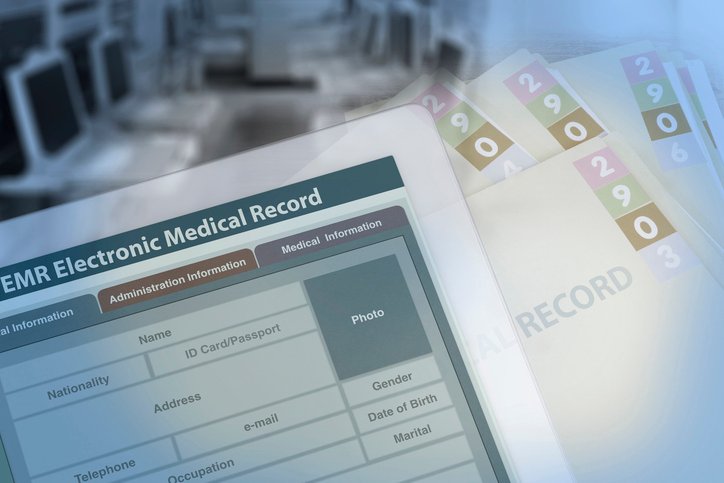
The case is the medical chart. That is the direct answer, and it is one I give to almost every new client on the first call after a Fort Myers crash. The police report matters. The photos from the scene matter. But whether the carrier offers $8,000 or $80,000 on the same set of injuries almost always comes down to what the records say, when they say it, and whether the story they tell holds together from the ER on Cleveland Avenue forward.
I want to walk through how this actually plays out, because the legacy advice on the internet on this topic is generic to the point of being useless. The pattern in our office is consistent: clients who treat the medical chart as part of the case do well, and clients who treat the doctor visit as something separate from the lawsuit usually leave money on the table.
What Florida law actually says about medical records and your claim
Two statutes do most of the work here, and a third sits behind them.
The first is the PIP statute, §627.736, Florida Statutes. Florida is a no-fault state, which means your own auto policy pays the first $10,000 of medical bills and lost wages regardless of who caused the crash. The catch is the 14-day rule. If you do not see a qualifying medical provider within 14 days of the crash, you lose PIP benefits entirely. In plain English: wait two weeks to get checked out, and the first $10,000 in coverage you paid premiums for disappears. I have watched that one piece of statutory fine print decide whether a family could afford an MRI in the first place.
The second is the statute of limitations, §95.11(4)(a), Florida Statutes. As of the 2023 tort reform, you have two years from the date of the crash to file a negligence lawsuit, not four. The medical chart is what proves the timeline. If the carrier digs in and pushes you to suit, the chart entries on day one, week two, and month three are the anchors the case is built on.
The third is §768.81, Florida Statutes, modified comparative negligence. After the 2023 reform, if you are 51% or more at fault, you recover nothing. If you are 30% at fault, your recovery is reduced by 30%. That matters here because adjusters use the medical chart not only to attack damages but to attack fault. A note that says “patient reports he looked down at his phone before impact” can shift the entire negligence picture. Tell your doctor what hurts. Do not narrate the crash dynamics to your physical therapist.
Five medical-record problems that cost Fort Myers clients money
After three decades of car-accident files, the patterns are predictable. These are the five we see most often in our Fort Myers cases:
- The “I felt fine at the scene” client. Refuses transport on Daniels Parkway, drives home, wakes up at 3 a.m. unable to turn his head. By the time he gets to urgent care it is day six. The case is still good, but the carrier will press the gap.
- The client with a pre-existing condition. Bad back from years of construction work, then rear-ended on Summerlin Road. The new MRI shows a herniation at L4-L5 that the old MRI did not. Aggravation cases are winnable, but only if the treating physician puts the comparison in writing.
- The client who treats only with the chiropractor. Six weeks of adjustments, no MRI, no orthopedic referral. The carrier values the claim at PIP plus a small soft-tissue number. The same client, treated by an orthopedist and imaged early, settles for several multiples of that.
- The client whose chart contradicts itself. Tells the ER his pain is a 3. Tells his primary care doctor four days later it is a 9. Tells the physical therapist two weeks after that it is “much better.” Defense counsel highlights all three lines on a single demonstrative and the jury does the rest.
- The client who stops treating because the bills got scary. PIP runs out at $10,000 and treatment ends abruptly. The carrier reads the silence as recovery, not as a money problem. This is fixable if the lawyer steps in early, but only if we know it is happening.
What the chart battle really looks like behind the scenes
The complications people do not see coming are almost never about the medicine itself. They are about how the medicine gets written down and how the carrier reads it.
Most ER charts are dictated quickly. The doctor sees thirty patients a shift and the notes reflect that. If your chief complaint at Lee Health on Cleveland Avenue is logged as “neck pain after MVC,” that is fine. If it is logged as “patient reports vague soreness, ambulating without difficulty,” that line will follow you for two years. We cannot rewrite the ER chart. What we can do is make sure your follow-up provider documents what the ER missed, in detail, in their own words, within days of the visit.
Another complication is the carrier’s use of records review witnesses. The defense hires a physician who has never examined you, reads your chart, and writes a report saying your injuries are degenerative, not traumatic. The way to answer that is with a treating physician who knows you, has examined you repeatedly, and writes a clear causation opinion in the chart itself. Not a separate letter. In the chart.
The third complication is the records release. The carrier will send you a HIPAA authorization that looks routine. It is not. Most of those forms are written broadly enough to pull your gynecological records, your mental-health notes from a decade ago, and your kid’s pediatric file if you are on the same insurance. Do not sign the carrier’s release. We send a narrowed one that covers only the body parts injured in the crash and only the relevant time window. That single change has saved more cases in our office than I can count.
How we work a case like this
We had a family from Fort Myers, mom, dad, and two kids in the back seat, struck head-on by an impaired driver who crossed the center line in the late evening. The dad took the worst of it: multiple fractures and significant internal bruising. The mom and kids had lower-severity injuries but real ones. Everyone in the car needed imaging that night.
We routed the orthopedic follow-up to physicians we have worked with for years and who know how to document a fracture trajectory: initial imaging, reduction or surgical plan, post-op imaging, physical therapy benchmarks, work-restriction notes. The chart told the story without us having to argue it. Every gap in treatment was documented with a reason in the note itself, not left blank.
The drunk driver’s policy had limits, and the limits were what they were. Our job was to make absolutely sure the demand we sent the carrier was supported page-by-page by the medical record. It was. The carrier paid the maximum policy limits across the board, every injured family member compensated, and we then moved on to the underinsured-motorist portion of the family’s own coverage to keep going. The piece I want people to take from this case is not the result. It is the fact that the result was possible only because the medical chart did the heavy lifting. If those records had been thin, generic, or contradictory, the same crash would have produced a fraction of the recovery.
What to do if you are hurt in a Fort Myers crash — the chart-first checklist
This is the advice I give clients on the first call, in this order, because the order matters.
- Get evaluated within 14 days, ideally within 48 hours. Lee Health, NCH, Physicians Regional, or your primary care doctor on Cleveland Avenue or McGregor Boulevard — anywhere that will see you. Tell the front desk it is crash-related so it gets logged that way. The 14-day PIP window is not negotiable.
- Use the words “motor vehicle crash” and the date. Sounds obvious. It is not. Charts that say “patient reports back pain x 3 days” with no mechanism of injury get attacked by adjusters as unrelated. The provider should write “patient was the restrained driver in an MVC on 2026 at [intersection], now presenting with…”
- Describe pain by body part, not by feeling. “Sharp pain in the lower back radiating down the left leg to the calf, 7/10, worse with sitting” beats “I hurt everywhere.” Specific complaints get specific workups. Vague complaints get vague workups, and vague workups settle for vague money.
- Keep the appointments. All of them. If you have to reschedule, reschedule into the same week. A six-week silence in the chart is one of the most expensive things you can do to your own case.
- Tell your provider about every prior injury to the same body part. Do not hide a 2018 back tweak. The carrier will find it in subpoenaed records, and concealment is worse than disclosure. The right framing is aggravation: this is what was there before, this is what is there now, here is what changed.
- Save everything in one place. Discharge papers, imaging discs, prescription receipts, therapy progress notes, mileage to and from appointments, work-restriction slips. A shoebox is fine. A folder on your phone is better. Hand it to your lawyer at intake.
- Do not sign the at-fault carrier’s medical release. Send them to us. The release we use is narrowed to the injured body parts and the relevant time window. That single document protects more cases than any other piece of paper in our office.
Key Takeaways
- Florida’s 14-day PIP rule means a doctor’s visit within two weeks of the crash is not optional — it determines whether you get the first $10,000 in medical coverage at all.
- The statute of limitations on negligence dropped from four years to two in the 2023 reform. Two years goes faster than people think.
- Gaps in treatment, contradictory pain descriptions across providers, and chart entries with no mechanism-of-injury language are the three biggest ways clients accidentally weaken their own cases.
- Pre-existing conditions do not kill claims. Hidden pre-existing conditions do. Tell your treating physician everything and let them write a clean aggravation opinion.
- Do not sign the at-fault carrier’s broad medical release. Call us first. We use a narrowed release that covers only the injured body parts and the relevant time window.
Frequently Asked Questions
Q1. How fast do I really need to see a doctor after a Fort Myers crash?
Florida’s PIP statute (§627.736) cuts off your no-fault medical benefits if you wait more than 14 days from the date of the crash to get an initial evaluation. Practically, we tell clients to get checked the same day or the next morning. Waiting a week is one of the most damaging things you can do to your own case.
Q2. What if I felt fine at the scene and didn’t go to the hospital?
Adrenaline hides a lot. Soft-tissue injuries, concussions, and disc problems often show up 24 to 72 hours later. You still have time inside the 14-day PIP window. Get evaluated, tell the provider it is crash-related, and ask them to put the mechanism of injury in their note.
Q3. Will a gap in treatment really hurt my settlement?
Yes. Adjusters read gaps as evidence you got better. If life intervened — school, work travel, a sick child — tell your lawyer in real time and have it documented in the chart. A documented reason is very different from an unexplained six-week silence.
Q4. Can the insurance company use my old MRIs against me?
They will try. If you have a prior back, neck, or knee issue, the carrier will argue your symptoms are pre-existing. The fix is not to hide the history. The fix is to have your treating physician compare pre-crash imaging to post-crash imaging and write an aggravation opinion that says, in plain English, what changed.
Q5. Should I sign the insurance company’s medical records release?
Not the broad one they send you. A blanket release lets the at-fault carrier dig through ten years of unrelated medical history looking for ammunition. We provide narrowed releases that cover only the body parts injured in the crash and the relevant time window. Call us before you sign anything.
If you have been hurt in a Fort Myers car accident, talk to us before you sign anything
Pittman Law Firm, P.L. handles serious-injury auto cases in Fort Myers, Cape Coral, Estero, Bonita Springs, Naples, and Lehigh Acres. The medical chart is the case. We help clients build it the right way from the first visit forward, and we keep the at-fault carrier from getting access to records they have no business reading. Call 239-992-8259 for a free consultation. There is no fee unless we recover for you.
About the Author

David B. Pittman, Esq. runs a thirty-year personal injury practice in Fort Myers and across Lee County as the founder of Pittman Law Firm, P.L., with a sustained focus on serious-injury auto and complex-liability cases. The firm’s Fort Myers presence handles a steady stream of serious-injury work along the Daniels Parkway, Six Mile Cypress, McGregor Boulevard, Cleveland Avenue, and Summerlin Road corridors, and along I-75 between Estero and Bell Tower.
From The Citadel, The Military College of South Carolina to the University of South Carolina School of Law, David’s preparation has been deliberate. Martindale-Hubbell rates him AV-Preeminent; he is a member of the Multi-Million Dollar Advocates Forum.
David has held a Florida real estate broker license for twenty-five years, a credential that shapes how the firm reads the property side of premises cases. The firm handles personal injury cases across Lee and Collier Counties, serving Fort Myers, Bonita Springs, Naples, Cape Coral, Estero, and Lehigh Acres, with offices at Windsor Place in Bonita Springs (main) and Fort Myers (satellite). Call 239-992-8259 for a free consultation.
Disclaimer: The information on this page is for general information only and is not legal advice for any specific case. Reading this page does not create an attorney-client relationship with Pittman Law Firm, P.L. The hiring of a lawyer is an important decision that should not be based solely on advertising. Past results do not guarantee similar outcomes.