

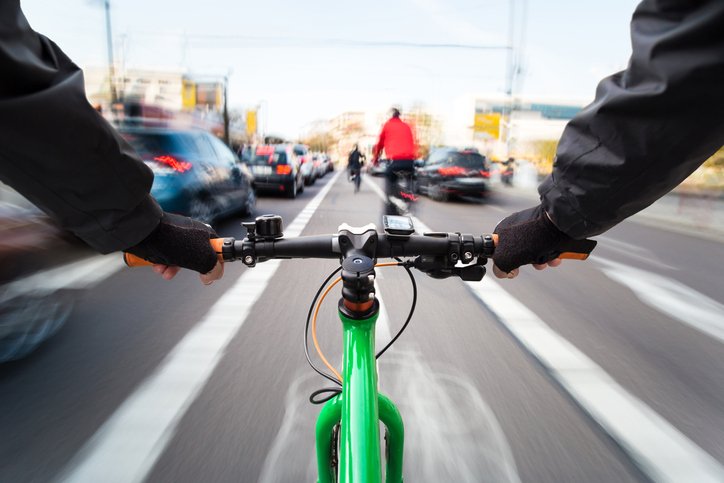
Bicycle Accident Prevention Technology: A Bonita Springs Rider’s Guide to Staying Safer
I get the “what’s the best safety tech” question a lot from riders in our office. After thirty years of representing injured cyclists in Lee and Collier Counties, my answer is this: the gadgets help, but they are not what wins your case after a driver puts you in the road. What wins your case is Florida’s traffic statutes, your own auto policy, and whether you preserved the physical evidence from the moment the crash happened. Spend the money on a MIPS helmet and a daytime running light if you want — both genuinely reduce injury severity. But before you spend another dollar on cycling tech, spend an afternoon understanding the legal framework that will actually determine what happens if a driver hits you on Bonita Beach Road, Old 41, or Imperial Parkway.
This post is meant for people who already ride here. I am writing it as the attorney who has handled these cases for three decades, not as a gear reviewer. The tech section comes second. The law section comes first because that is where the money is — and where most riders are flying blind.
What the data actually shows on bicycle safety tech
the real version: rotational-impact helmets (the MIPS line and similar systems from other helmet makers) reduce angled-impact brain injury forces meaningfully compared with a basic shell helmet. Daytime running lights — the steady or pulsing red rear light, the white front light, used in daylight — reduce being-rear-ended risk in study after study, because Florida drivers in afternoon glare on US-41 are not registering an un-lit bike against bright asphalt. Bright clothing helps a little. Reflective ankle bands help more than reflective vests because the motion catches a driver’s eye faster than a static panel.
That is roughly the limit of what the peer-reviewed data supports. Beyond that, you get into territory where the marketing outruns the research. Radar tail-lights that beep when a car approaches from behind are useful for solo riders on rural stretches like the back roads off Bonita Bay or out near Spanish Wells, but in Bonita Springs traffic they will alarm constantly. Crash-detection apps that auto-call 911 are genuinely useful for the solo rider who goes down on a quiet road and cannot reach a phone — I have had clients whose Garmin or Apple Watch triggered the emergency call and got first responders to them faster. NFC medical-ID chips embedded in a helmet shell are a nice idea, but in fifteen years of bike-crash cases I have not yet seen a Lee County EMS crew actually scan one in the field. They are looking at your wallet and your phone lockscreen.
The point is not that you should skip the technology. The point is that the tech is a small slice of what determines whether you walk away from a crash, and an even smaller slice of what determines whether you recover financially after one.
Florida law that actually determines your case
If you ride a bike in Florida, four statutes do most of the heavy lifting in your case. Learn them.
Cyclists are vehicles. Under §316.2065, Florida Statutes, a person riding a bicycle on a roadway has the rights and the duties of any driver of a vehicle. That cuts both ways. It means a car turning left across your path owes you the same duty it owes another car — but it also means you are bound by stop signs, signals, and lane rules. Insurance defense lawyers love to argue cyclist comparative fault, and the first place they look is whether you ran a stop or rode against traffic.
The 3-foot passing rule. §316.083 requires a driver overtaking a cyclist to leave at least three feet of clearance. When a driver buzzes a rider on Bonita Beach Road and clips a handlebar or sucks the rider into the wake, this statute is direct evidence of negligence. The hard part is proving the passing distance after the fact. This is why a rear-facing camera — a Cycliq Fly6, a Garmin Varia with the camera variant, even a $40 generic action cam — pays for itself the first time a driver claims you swerved into them.
Crosswalk and intersection duty. §316.130 covers pedestrian and cyclist crossing duties — riders dismounting and walking a bike across a crosswalk get pedestrian protections; riding through a crosswalk is a more contested factual question. On the Bonita Beach Road and Old 41 intersection — one of the hairier ones in our service area — that distinction matters.
PIP coverage follows you onto the bike. This one surprises clients more than any other rule. Under §627.736, Florida’s Personal Injury Protection statute, the PIP coverage on your own auto policy applies when you are hit while riding a bicycle. If you do not own a car but live with a relative who does, that household auto policy’s PIP usually applies to you as a resident relative. PIP pays 80% of medical bills and 60% of lost wages up to $10,000 — which is far less than a real cyclist injury usually costs. That is why the next statute matters more.
Why your own UM coverage matters so much
The single most important sentence in this entire post: your own Uninsured/Underinsured Motorist coverage is what funds a cyclist injury claim when the driver who hit you has bad insurance or no insurance at all.
Under §627.727, Florida Statutes, UM coverage on your auto policy applies when you are riding a bicycle and the at-fault motorist is uninsured or underinsured. In our office we routinely stack UM across multiple household vehicles, which can multiply the available coverage substantially. A retired couple in Pelican Landing with two cars each carrying $100,000 in UM may have $200,000 of stackable coverage available to a cyclist family member who is hit by a driver with state-minimum bodily injury limits.
The catch: Florida lets you reject UM in writing at policy issuance. If you signed the rejection form to save thirty or forty dollars a month, you have no UM to fall back on. I have sat in our Windsor Place conference room with too many seriously hurt cyclists and walked them through the math of why the at-fault driver’s $10,000 bodily injury limit and their own non-existent UM is the entire ceiling on their recovery. Before you read another article about helmet tech, pull your auto declarations page out of the drawer and look at the line that says “Uninsured Motorist.” If it says “Rejected,” call your agent on Monday.
A Bonita Springs cyclist case that shows how the pieces fit together
A retired gentleman from the Bonita Springs area was out on his usual morning ride when a driver clipped him from behind. He went off the bike and onto the pavement hard. The orthopedic injuries were significant — the kind that put a man his age in the hospital that same day and into MRIs, pain management, and a full course of physical therapy that ran six months from the date of the crash.
The driver was insured but the carrier opened low, as carriers do when the victim is older and they assume the case will get tired before the client does. The damaged frame, the cracked helmet, and the road-shredded jersey all stayed in evidence. We did not have to file suit. The case settled in full within six months, which let our client put his attention on the physical therapy that mattered, rather than on the phone calls with the insurer that did not.
The reason it settled was not magic. It was the 3-foot statute, the household UM stack, the preserved physical evidence, and a treating orthopedist who documented the injuries cleanly. Those four ingredients win cyclist cases. The gear, the lights, and the camera helped us prove what happened — but the law and the policy framework are what funded the recovery.
What to do after a Bonita Springs bicycle crash — gear-preservation focused
If you are reading this after a crash, here is the order that has worked for thirty years of clients:
Save every piece of gear. Do not wash anything. The helmet, even if it looks fine on the outside — especially if it looks fine on the outside, because the EPS foam compresses internally and a reconstruction engineer can read that compression. The jersey, the shorts, the gloves. The cycling shoes, scuffed cleats and all. The bike, in whatever condition it is in, gets bagged or boxed and stored, not repaired and not thrown in the garage to be forgotten. Pull the SD card from any camera and the ride file from the GPS computer before the device gets handled further.
Get photographed at the scene if you can. Phone photos of the road, the skid marks (or the absence of them), the position of the bike, the position of the vehicle, the lighting conditions, and any traffic-control device in the area. If a bystander gets to the scene first, ask them to take photos before EMS moves anything.
Take the ambulance. A surprising number of cyclists wave EMS off because adrenaline masks the injury for the first hour. Do not. Get evaluated, get imaged, and get the visit documented. A delayed first medical record is the single most common ammunition the defense uses against a cyclist’s pain-and-suffering claim.
Get the police report number and the driver’s insurance card before you leave. If you are too injured to do this, have the responding deputy do it for you — Lee County Sheriff’s Office at the Bonita Springs district will. Photograph the driver’s license and proof of insurance if you are able.
Do not give a recorded statement to the at-fault driver’s insurer. You are not obligated to. You will be called within 48 hours of the crash and asked to “just clear up a few things.” Decline politely. They are building their comparative-fault argument from your own voice.
Call a personal injury lawyer who has handled cyclist cases. Not because every case needs a lawyer, but because the PIP/UM/3-foot-rule analysis above is dense enough that an hour with someone who has done this for thirty years is worth doing before you sign anything the insurer sends.
Key Takeaways
- Buy a MIPS-style helmet and a daytime running light. They are the two pieces of cycling tech with the strongest injury-reduction data behind them.
- Cyclists in Florida have the rights and duties of a vehicle driver under §316.2065, and drivers must give at least three feet when passing under §316.083.
- Your auto PIP follows you onto the bike under §627.736 — and so does any resident relative’s auto PIP if you do not own a car.
- Uninsured/Underinsured Motorist coverage on your household auto policy is the single biggest funding source when the at-fault driver has poor insurance. Check that you have not rejected UM in writing.
- After a crash, preserve every piece of gear — helmet, bike, jersey, shoes, camera SD card. Physical evidence wins cyclist cases more often than police reports do.
Frequently Asked Questions
Q1. Does my auto PIP cover me if I am hit while riding my bike in Bonita Springs?
Yes. Under §627.736, Florida Statutes, your household auto Personal Injury Protection follows you onto the bike. If you do not own a car but live with a relative who does, that relative’s PIP usually applies to you as a resident relative. PIP pays 80% of medical and 60% of lost wages up to $10,000, which is rarely enough for a cyclist hit by a car.
Q2. If I was not wearing a helmet, does that ruin my bicycle injury case in Florida?
Not by itself. Florida does not require helmets for adult cyclists. The driver who hit you is still liable for causing the crash. A defense attorney may argue that helmet non-use increased the severity of head injuries, which can reduce a head-injury recovery, but it does not bar the claim and it does not apply to your orthopedic injuries at all.
Q3. What is the 3-foot passing rule and how does it affect my case?
Section 316.083, Florida Statutes, requires drivers to give cyclists at least three feet of space when overtaking. When a driver clips a rider, this statute is direct evidence of negligence. We pull dashcam footage, traffic cam pulls, and witness statements to establish the passing distance, which often shortens the fight with the insurer.
Q4. The driver who hit me had only state-minimum coverage. What now?
This is where your own Uninsured/Underinsured Motorist coverage matters. Under §627.727, UM coverage on any auto policy in your household applies when you are riding a bike and the at-fault driver has no insurance or not enough. We routinely stack UM across household vehicles. If you rejected UM in writing on your last policy renewal, the carrier will hold you to that signature, so check before you need it.
Q5. Should I keep the broken helmet, the mangled bike, and my torn gear?
Yes. Do not throw any of it away and do not let the body shop or hospital discard it. The damaged bike frame, the cracked helmet, the road-rashed jersey, the bent wheel, the broken GPS computer, the cycling shoes all become physical evidence of the force of impact. An accident reconstruction engineer can read more from a bent fork than from any police report.
If you have been hit on the bike, talk to us
If you or a family member was hurt while riding in Bonita Springs, Fort Myers, Naples, Estero, Cape Coral, or anywhere in Lee or Collier County, call our office at 239-992-8259 for a free consultation. We will walk through the police report, your own PIP and UM coverage, and what is left of your gear, and we will give you a straight read on whether the case is worth pursuing. There is no fee unless we recover for you.
About the Author

From the firm’s Windsor Place office on Bonita Beach Road, David B. Pittman, Esq. has spent more than thirty years in personal injury practice — and cyclist-injury work, with all of its insurance-coverage wrinkles unique to riders, has been a steady part of that practice. The neighborhoods off Old 41 and Imperial Parkway, the school-zone stretches along the Bonita Beach Road corridor, and the surrounding Lee County communities supply most of the firm’s family-injury, premises, and child-pedestrian work; Bonita Springs has been home base for the firm throughout.
David did his undergraduate work at The Citadel, the Military College of South Carolina, before earning his law degree at the University of South Carolina School of Law. Martindale-Hubbell rates him AV-Preeminent, and he holds membership in the Multi-Million Dollar Advocates Forum.
David has held a Florida real estate broker license for twenty-five years, a credential that shapes how the firm reads the property side of premises cases. The firm handles personal injury cases across Lee and Collier Counties, serving Fort Myers, Bonita Springs, Naples, Cape Coral, Estero, and Lehigh Acres, with offices at Windsor Place in Bonita Springs (main) and Fort Myers (satellite). Call 239-992-8259 for a free consultation.
Disclaimer: This article is for general information only and is not legal advice. Reading it does not create an attorney-client relationship with Pittman Law Firm, P.L. Every case turns on its own facts. The hiring of a lawyer is an important decision that should not be based solely on advertisements. Past results do not guarantee a similar outcome in any future case.