

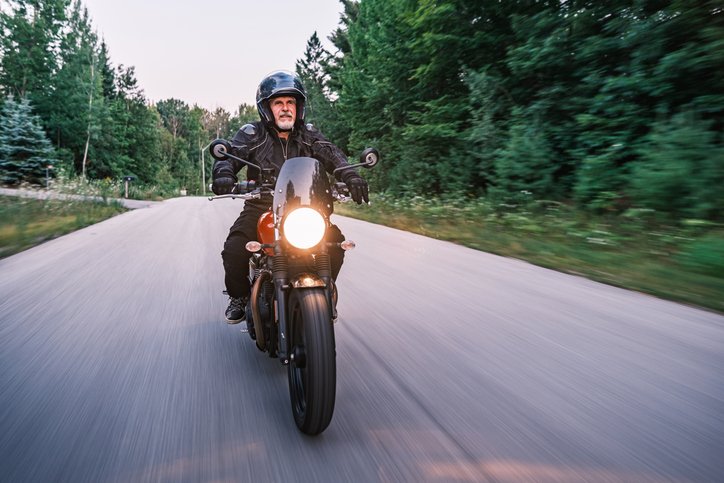
The Top Causes of Fort Myers Motorcycle Accidents in 2025
The cause question — what makes Fort Myers motorcycle accidents happen — is usually the wrong one to start with. Almost every rider crash I have worked involved one of the same four facts: a driver who turned left across the rider’s path, a driver looking at a phone, a driver who never saw the bike because the bike does not present the same visual silhouette as a car, or a driver coming off I-75 at the Alico Road exit and not yet recalibrating to surface-street speeds.
What actually determines whether a rider’s family recovers a fair settlement is not the cause. It is three things: the rider’s own uninsured motorist coverage, whether the bike and gear were preserved before an adjuster could quietly sell off the evidence, and whether anyone on the rider’s side understood that motorcycles are excluded from Florida PIP. That third fact catches more families off guard than any other piece of Florida law I deal with. The rest of this post is what I tell riders who walk into our office, in roughly the order we tell it.
What the data actually shows on Fort Myers motorcycle crashes
Lee County sits in the top ten Florida counties for motorcycle fatalities every year, and the pattern is consistent across the work I have done since 1995. Most of the serious crashes I see cluster on a handful of corridors: Colonial Boulevard between the interstate and Cleveland Avenue, the Daniels Parkway and Six Mile Cypress Parkway interchange area, McGregor Boulevard south of the bridge, the Pine Island Road corridor, and Summerlin Road heading toward Sanibel.
The single most common fact pattern in our motorcycle files is not speed. It is a left-turning driver. A car waiting to turn left across the rider’s lane misjudges the bike’s distance, decides there is room, and pulls across. The rider has perhaps a second and a half to react. Florida’s own crash data has put left-turn collisions at roughly a third of motorcycle fatalities for years running, and that matches what walks in our door.
The second most common pattern is a lane-change merge into a rider who was lawfully riding alongside or just behind a car that did not check the mirror. That is the fact pattern in the case I describe below, and it is the one I see most often on the elevated stretches of I-75 between Estero and the Bell Tower exit.
The Florida law that actually determines your case
There are three statutes every rider in Fort Myers should know. I tell clients to read them once, slowly, and then call us.
No PIP for motorcycles — Florida Statute 627.736. Florida is a no-fault state for car occupants. The first $10,000 of medical bills after a car crash is paid by the injured person’s own PIP coverage, no matter who was at fault. Riders do not get that. The statute defines “motor vehicle” in a way that leaves motorcycles out. If you have an ORIF surgery on a wrist after a Fort Myers crash, the hospital bill does not get a $10,000 head start from your auto policy the way a car driver’s bill would. Almost every rider I meet is surprised by this. Plan around it before you are in the ER.
Helmet law — Florida Statute 316.211. If you are under twenty-one, you must wear a helmet. If you are twenty-one or older, you can ride without one if you carry at least $10,000 of medical insurance. That $10,000 is a fiction in 2026 dollars. A helicopter ride from the Daniels Parkway corridor to Lee Memorial alone can chew through it before the trauma team starts. I have never told a client the statutory minimum was enough.
Uninsured motorist coverage — Florida Statute 627.727. Florida only requires drivers to carry property damage liability and PIP — not bodily injury liability. So a driver can legally hit you and have zero coverage for your broken wrist and your ORIF surgery and your six months of occupational therapy. UM is the policy you buy on yourself that pays when the at-fault driver does not have enough coverage to pay you. For a rider in Lee County, this is not a nice-to-have. It is the policy that runs the case.
Two other statutes come up often enough to flag. Florida Statute 768.81 is modified comparative negligence — a jury divides fault by percentage and a rider’s recovery is reduced by their share, so an adjuster’s first move on a motorcycle file is almost always to try to put fault on the rider. And Florida Statute 316.027 is the leaving-the-scene statute, which matters in any motorcycle case where the at-fault driver kept going, because we then have to chase the driver’s identity through cameras and witnesses before the trail goes cold.
Why your own UM coverage matters so much
If a Fort Myers rider walks into our office with one question, it should be “what UM coverage do I carry on myself.” Here is why.
The Florida driver who merged into a rider on Colonial Boulevard last year may carry the legal minimum. That means the rider has property damage liability available for the bike, PIP for the driver, and nothing for the rider’s body. The driver’s policy has no bodily injury limits at all. The rider is hurt, the bills are real, and the at-fault carrier has nothing to pay with.
That is when we turn to the rider’s own UM policy. UM on a motorcycle policy in Florida pays when the at-fault driver was either uninsured or underinsured. Stacked UM, where it applies, multiplies the limit by the number of vehicles on the household policy. I have settled cases where the UM check did the entire heavy lifting because the at-fault driver’s policy was a dead end. I have also met riders who had been talked into rejecting UM in writing to save twelve dollars a month, and the case effectively ended on day one.
If you ride in Fort Myers and you do not know what your UM limits are, that is the first phone call to make today. Not to us. To your agent. Then call us if you want a second read on the policy.
A lane-change crash on Colonial Boulevard
A rider in Fort Myers was riding lawfully when a driver in the next lane drifted across the lane line without looking and clipped the bike. He went down on the pavement and slid. He came in with road rash across his right side and a wrist that was clearly broken — the surgeon read the films and scheduled an Open Reduction Internal Fixation, an ORIF, which is the surgery where the bone is reset and held in place with plates and screws so it can knit. He then spent months in occupational therapy learning to use the hand again. He is right-handed.
The at-fault driver’s carrier did what carriers do on motorcycle files. The first offer was insulting. The second was lower than the medical bills. We pulled the rider’s own UM policy and stacked the limits where the policy allowed it.
The case ended with a full insurance payout — the property damage on the bike, every medical bill from the ER through the ORIF and through the occupational therapy, and a recovery for the rider himself. The rider went back to work. He did not get rich. He got made whole, which is what the system is supposed to do and what it usually does not do without a fight.
I share that case because it is unremarkable in our office. We work files like that every month. The pattern is always the same: a driver who did not see the bike, a rider with real injuries, and an adjuster betting the rider will give up before the case is built. The riders who do not give up tend to do fine.
What to do after a Fort Myers motorcycle crash
Here is what I tell riders, in the order I tell it.
- Get medical care, and tell the doctor everything that hurts. Riders are tough. I have had clients downplay a wrist for two days and then need an ORIF the surgeon could have done sooner if the wrist had been imaged at intake. If something hurts, say so.
- Save the gear. Helmet, jacket, gloves, boots, eye protection. Do not wash anything. Do not throw the helmet away because the shell looks bad — the shell looking bad is the point. The gear tells a witness what happened to the rider’s body and what would have happened without it.
- Do not let the bike disappear. The carrier will offer to “total” the bike and take it off your hands quickly. If you accept, the evidence is gone. Tell them the bike is being held for inspection.
- Photograph everything before anyone moves it, if you can. The scene, the gouges on the road, the position of the cars, the debris field. The police report is a starting point, not the final word.
- Do not give a recorded statement to the other driver’s insurer. You are under no obligation to. Adjusters are trained to ask questions that pin fault on a rider in ways the rider does not see coming.
- Find your own UM declarations page. Before the first phone call to a lawyer, find what UM you carry. It will shape the case.
- Call us before the thirty-day mark. Florida deadlines on motor-vehicle claims are tighter than they were a few years ago, and waiting helps no one but the carrier.
Key Takeaways
- Florida’s no-fault PIP under §627.736 does not cover motorcycle riders — the statute defines motorcycles out. Plan medical coverage accordingly.
- Helmet law under §316.211 lets riders twenty-one and older skip a helmet with $10,000 of medical coverage. That number is not enough for a real motorcycle injury.
- Your own uninsured motorist policy under §627.727 is the policy that runs most Fort Myers motorcycle cases, because Florida does not require bodily injury liability.
- Save the bike, save the gear, photograph the scene, and do not give a recorded statement to the at-fault driver’s carrier before talking to a lawyer.
- Left-turn and lane-change crashes are the two patterns I see most often along Colonial Boulevard, Daniels Parkway, Six Mile Cypress Parkway, McGregor Boulevard, and I-75 near Alico Road.
Frequently Asked Questions
Q1. Does Florida PIP cover me if I am hurt on my motorcycle?
No. Florida Statute 627.736 defines a “motor vehicle” in a way that excludes motorcycles, so the no-fault PIP benefits that pay the first $10,000 of medical bills for car occupants do not apply to riders. That single fact reshapes almost every motorcycle case we handle in Lee County.
Q2. Do I have to wear a helmet in Florida?
Florida Statute 316.211 requires riders under twenty-one to wear a helmet. Riders twenty-one and older can ride without one if they carry at least $10,000 in medical coverage. That $10,000 will not cover a single day in a trauma ICU, which is why we always tell clients to carry far more.
Q3. Why does my own uninsured motorist coverage matter so much on a motorcycle?
Florida only requires drivers to carry $10,000 of property damage liability and PIP, not bodily injury liability. When a driver with the legal minimum hits a rider, there is often no liability coverage to pay for a broken wrist, an ORIF surgery, or months of therapy. Your own UM policy under Florida Statute 627.727 is what fills that gap.
Q4. Can the insurance company blame me for not wearing a helmet?
Under Florida Statute 768.81 a jury can reduce your recovery by your percentage of fault. Carriers sometimes argue that a head injury was made worse by the absence of a helmet. That argument only works if the injury actually involved the head, and even then it does not bar recovery, it only reduces it.
Q5. What should I do right after a motorcycle crash in Fort Myers?
Get medical care first. Then preserve the bike, the helmet, the jacket, the gloves, the boots and any electronics in the same condition they were in when the crash happened. Do not let the insurer total and sell the bike before an engineering witness has looked at it. Call our office before you give a recorded statement.
Talk to our office before you talk to the insurer
If you or someone in your family went down on a bike anywhere in Lee or Collier County — Colonial Boulevard, Daniels Parkway, McGregor Boulevard, I-75 near Alico Road, anywhere — call our office before the at-fault driver’s adjuster gets to you. We will tell you, on the phone, what your own UM coverage means for the case and what to do with the bike and the gear today. Call 239-992-8259 for a free consultation. There is no fee unless we recover for you.
About the Author

Pittman Law Firm, P.L. is led by founder David B. Pittman, Esq., who has practiced personal injury law in Fort Myers and across Lee County for more than thirty years, with a sustained focus on serious-injury and uninsured-motorist motorcycle claims. The firm’s Fort Myers presence handles a steady stream of serious-injury work along the Daniels Parkway, Six Mile Cypress, McGregor Boulevard, Cleveland Avenue, and Summerlin Road corridors, and along I-75 between Estero and Bell Tower.
David’s professional credentials include a JD from the University of South Carolina School of Law, an undergraduate degree from The Citadel, The Military College of South Carolina, an AV-Preeminent rating with Martindale-Hubbell, and membership in the Multi-Million Dollar Advocates Forum.
David has held a Florida real estate broker license for twenty-five years, a credential that shapes how the firm reads the property side of premises cases. The firm handles personal injury cases across Lee and Collier Counties, serving Fort Myers, Bonita Springs, Naples, Cape Coral, Estero, and Lehigh Acres, with offices at Windsor Place in Bonita Springs (main) and Fort Myers (satellite). Call 239-992-8259 for a free consultation.
Attorney advertising. The information in this article is general and is not legal advice for any individual case. Reading this article does not create an attorney-client relationship with Pittman Law Firm, P.L. Prior results do not guarantee a similar outcome.