

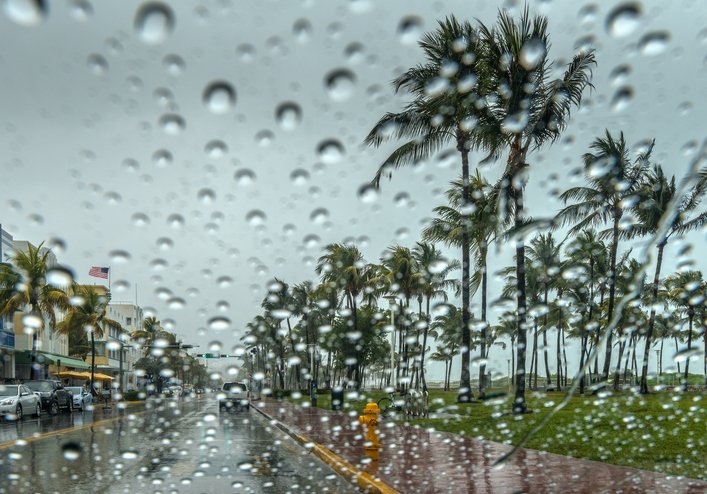
How Weather Dangers Cause Bonita Springs Car Accidents
Rain does not cause car crashes in Bonita Springs — drivers do. The rain is just the condition the driver failed to adjust for. I have handled more than thirty years of weather-related crash files from this office on Bonita Beach Road, and the pattern is almost always the same: somebody made a choice the weather did not make for them. They followed too close in a downpour on Old 41. They ran the first-ten-minutes slick on US-41 at dry-road speed. They never slowed for the squall line that dropped visibility to nothing near Pelican Landing.
What I want to do here is walk through what Florida law actually says, the five rain-and-fog patterns I see again and again at our Windsor Place office, and the practical things you should do at the scene if a downpour catches you and you end up rear-ended, sideswiped, or worse. None of this is a lecture. It is the same conversation I have with clients sitting at our conference table.
What Florida law actually says about weather-related crashes
Weather does not get its own statute. The same negligence rules that govern a clear-day crash on Imperial Parkway govern a rainy-day crash on Imperial Parkway. The question is whether the other driver used reasonable care for the conditions they were in. Three statutes do most of the work in a weather case.
§768.81, Florida Statutes — modified comparative negligence. As of the March 2023 tort reform, Florida runs on a 50% bar. In plain English: if a jury decides you were more than 50% at fault for your own crash, you recover nothing. At 50% or below, your recovery is reduced by your share. The statute is here. In a weather case this matters because the insurance carrier will spend a lot of effort trying to push your share above the 50% line — your tires, your speed, whether your wipers were on, whether you should have pulled off when the sky opened up over Pelican Landing. The defense playbook is to add up small percentages until they cross fifty.
§95.11(4)(a), Florida Statutes — two-year limitations period. Before March 2023 you had four years to file a negligence suit in Florida. After the reform you have two. Two years from the date of the crash is the new line, and missing it ends the case.
§627.736, Florida Statutes — Personal Injury Protection. Florida is a no-fault state for the first layer of medical bills. Your own auto policy pays 80% of reasonable medical bills and 60% of lost wages up to a $10,000 cap, regardless of who caused the crash. The statute is here. The catch most people miss: you have 14 days from the crash to get evaluated by a qualified medical provider or you forfeit PIP entirely. Fourteen days. People will sit at home with a stiff neck for three weeks thinking it will resolve on its own, and then they call us, and we have to deliver bad news.
§316.066 — the crash report requirement. Florida law requires a written police report for any crash involving injury, death, or property damage rendering a vehicle inoperable. In a weather case, the report’s narrative — and the officer’s notation about visibility, road surface, and posted speed — becomes one of the more useful pieces of evidence we have. Make sure the officer is called. Do not let anyone wave you off because “it’s just a fender-bender” in the rain.
Five rain-and-fog patterns that reach our office
After thirty years of working crashes in this area, the rain cases tend to fall into a small number of shapes. Knowing the pattern usually tells me within the first call what kind of case it is going to be.
- The first-ten-minutes rear-ender. The most common pattern by a wide margin. Rain starts. The oil that has been sitting on US-41 or Bonita Beach Road since the last shower mixes with the new water and the surface becomes genuinely slick for about ten to twenty minutes. The driver behind does not adjust. They cannot stop in time. The car in front gets rear-ended at a light or a slowdown. The defense in these cases is almost always “the rain caused it.” The truth is the driver behind was following at a dry-road distance.
- The hydroplane at moderate speed. People assume hydroplaning is a highway thing. It is not. A car with worn tires can lose contact with the pavement at 35 mph in a tenth of an inch of standing water. We see this on the long stretches of Old 41 and Imperial Parkway where the drainage is uneven and water pools in the right-hand lane.
- The squall-line head-on. SWFL gets bands of rain that drop visibility from clear to nearly nothing in under a minute. A driver coming the other way drifts across the centerline because they cannot see the line anymore. These are the cases that produce the worst injuries.
- The coastal fog pile-up. Less common but devastating. Cool inland air rolling over warm Gulf water builds fog along the coastal corridor near Bonita Bay and Spanish Wells in the early morning. By the time a driver realizes visibility has collapsed they are already in the middle of it.
- The “I’ll just push through this puddle” call. Six inches of moving water will float most sedans. A driver in a hurry tries to cross a flooded low spot off one of the side roads after a heavy afternoon cell, the engine dies, and a following vehicle does not see them stopped. This was a recurring pattern after the 2017 storm season and we see it after every major rain event since.
Three things that make weather cases difficult
From the outside, a weather case looks straightforward. Somebody hit you. Somebody pays. In practice three things complicate it.
First, the carrier on the other side will treat the weather as a free defense theme. They will argue your crash was unavoidable, that conditions were “extraordinary,” that their insured did everything a reasonable driver could. The standard the law actually applies is reasonable care for the conditions that existed. Reasonable care in a SWFL downpour means slower, longer following distance, headlights on. A driver who did none of those things does not get a discount because it was raining.
Second, the comparative-fault math under §768.81 cuts harder in weather cases than in clear-weather cases. The 50% bar means the defense only has to win the percentage argument by one point. They will look at your tires, your speed, your wipers, whether you were on the phone, whether you should have pulled into a parking lot when the sky turned green. Every percentage they add to your column gets them closer to the bar. The way we counter that is documentation — at the scene, in the report, and through the witnesses.
Third, the evidence in a weather case decays fast. Traffic-cam footage from Lee County intersections is typically overwritten in around 30 days. Standing water on the pavement is gone in an hour. Tire skid evidence on wet asphalt does not last. The cases we win on weather we usually win because somebody — often a passenger, sometimes a bystander — took a half-dozen phone photos before the tow truck arrived. The cases that get harder are the ones where everybody got out of the rain and nobody documented anything.
A rear-end on Bonita Beach Road that came down to the records
One I think about: a Bonita Springs woman stopped at a light on Bonita Beach Road during an afternoon downpour was rear-ended by a driver who had not slowed for the rain-slick surface. She sustained a complex femur fracture that required surgery and months of rehabilitation.
The carrier’s first position was that the rain made the crash unavoidable. We pulled the crash report, the intersection camera footage, and the at-fault driver’s own cell records. The driver had been going 40 in a 35 on a wet road and the footage showed no brake lights before impact. That combination — speed above the limit, no adjustment for conditions, no attempted stop — made the weather defense impossible to sustain. The case settled for $300,000. The point is not the amount; it is that the documentation we gathered in the first two weeks is what made the settlement possible.
What to do if a downpour catches you in a crash
I have walked dozens of clients through the first twenty-four hours after a rain crash. The advice below is not generic — it is the same checklist I use on the phone when somebody calls our office from the side of the road.
- Stay in the vehicle if you can. If the car is drivable and out of the travel lane, leave hazards on and stay belted in until the rain band passes. A surprising number of secondary crashes happen when somebody gets out of a stopped car on US-41 in a downpour and gets struck by a driver who never saw them.
- Call 911 even on a minor-looking crash. §316.066 requires a written report when there is injury or a disabled vehicle. The narrative the responding officer writes about rain, visibility, and pavement is something we cannot recreate later.
- Photograph the water, not just the cars. Standing water in the lane, sheet flow across the pavement, fog density, sky color — these are the things that disappear in an hour. Take pictures of the rain itself. I have seen cases turn on a single phone photo of water pooling in the right lane.
- Get the names and numbers of every witness, including the tow operator. Tow drivers in this area work the same stretches of Bonita Beach Road and Imperial Parkway week after week and often have useful observations about the road’s drainage. They will not call you later. You have to get the number at the scene.
- See a doctor inside 14 days. The PIP statute is unforgiving. Even if you feel like you can shake it off, a soft-tissue injury from a rain rear-ender often does not show up for 48 to 72 hours. Get evaluated.
- Do not give a recorded statement to the other carrier. They will call within the first day. They will be polite. They will ask about the weather first because they want you on tape saying it was raining hard. You are not obligated to give a statement before talking to a lawyer.
Key Takeaways
- Florida law does not treat rain as a defense — a driver still has to use reasonable care for the conditions, and most of the time they did not.
- The §768.81 modified comparative negligence rule sets a 50% bar; the defense in weather cases is built around pushing your fault share above that line.
- You have two years from the crash to file under §95.11(4)(a). The old four-year window ended with the March 2023 reform.
- PIP under §627.736 pays the first $10,000 of medical and wage loss regardless of fault, but only if you are evaluated within 14 days.
- Weather evidence decays fast — photos of water, fog, and pavement matter more than photos of vehicle damage, which can be documented anytime.
Frequently Asked Questions
Q1: Does Florida law treat a rainy-day crash any differently than a clear-weather crash?
No. Under §768.81, Florida Statutes, the analysis is the same: who failed to use reasonable care, and by what percentage. Weather is part of the conditions every driver is supposed to adjust for, not a free pass. If the other driver was going too fast for the rain on Bonita Beach Road, the rain does not excuse them.
Q2: Can the insurance carrier really blame the weather to deny my claim?
They try. The “act of God” framing comes up in almost every weather case we handle. Florida courts have been clear for decades that a sudden rain shower in SWFL is foreseeable. The carrier still has to show their insured drove with reasonable care for the conditions, and most of the time they cannot.
Q3: How long do I have to file a weather-related car accident claim in Florida?
Two years from the date of the crash, under §95.11(4)(a), Florida Statutes, as amended in March 2023. The old four-year window is gone for any crash after that reform. People still call our office assuming they have four years, and on some of those calls we have to tell them the claim is already closed.
Q4: Does my PIP cover medical bills if the crash happened in a downpour?
Yes. PIP under §627.736 is no-fault. It pays 80% of reasonable medical bills and 60% of lost wages up to the $10,000 policy limit regardless of who caused the crash or what the weather was. You do have to be evaluated by a qualified medical provider within 14 days of the crash or you lose those benefits entirely.
Q5: What if I hydroplaned and hit someone — am I automatically at fault?
Not automatically. The question a jury asks is whether you were driving in a way a reasonably prudent driver would have, given the rain, the road, and your tires. A driver who slowed down, kept distance, and still lost the back end in a sudden squall is in a very different position than one who was going 70 on US-41 with bald tires in a downpour.
If a weather-related crash put you in our office’s path
If you have been hurt in a rain, fog, or flood-related crash anywhere in Lee or Collier County and you are trying to figure out the next step, call our office at 239-992-8259. The consultation is free, and there is no fee unless we recover for you. I will pick up the phone, and you will get a real conversation about your case — not a sales pitch.
About the Author

Personal injury law has been David B. Pittman, Esq.’s focus from the firm’s Windsor Place office on Bonita Beach Road for more than thirty years, with a sustained focus on serious-injury auto and complex-liability cases. He founded Pittman Law Firm, P.L. and remains its lead attorney. Bonita Springs is home for the firm, and most of its child-pedestrian, premises, and family-injury cases come from the residential corridors off Old 41 and Imperial Parkway, the school zones around the Bonita Beach Road corridor, and the surrounding Lee County neighborhoods.
From The Citadel, The Military College of South Carolina to the University of South Carolina School of Law, David’s preparation has been deliberate. Martindale-Hubbell rates him AV-Preeminent; he is a member of the Multi-Million Dollar Advocates Forum.
David has held a Florida real estate broker license for twenty-five years, a credential that shapes how the firm reads the property side of premises cases. The firm handles personal injury cases across Lee and Collier Counties, serving Fort Myers, Bonita Springs, Naples, Cape Coral, Estero, and Lehigh Acres, with offices at Windsor Place in Bonita Springs (main) and Fort Myers (satellite). Call 239-992-8259 for a free consultation.
Attorney advertising. The information on this page is for general purposes and is not legal advice. Reading this page does not create an attorney-client relationship with Pittman Law Firm, P.L. Past results do not guarantee a similar outcome. Every case is decided on its own facts.