

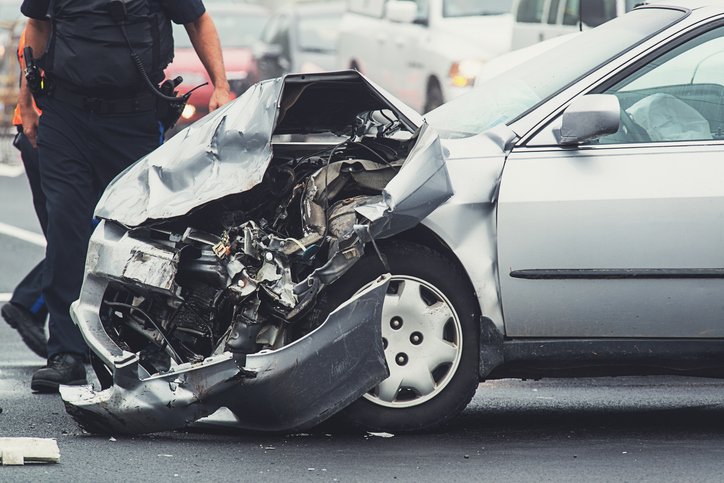
The Impact of Car Damage on Fort Myers Auto Accident Settlements
The repair estimate is not a price tag on your injury claim. A client standing at a body shop on Cleveland Avenue, looking at a $4,200 estimate for bumper and quarter-panel work, may assume that number anchors what the bodily-injury side will settle for. It does not — and the disconnect between what the car looks like and what a body can absorb is the most common misunderstanding I work through with new clients at our Bonita Springs office.
The property-damage track and the bodily-injury track are two separate negotiations, even when the same carrier is handling both. The crumpled quarter panel matters — mainly as evidence about force, not as a settlement figure. Let me walk through what the adjuster on the other end of the file is actually looking at.
What Florida law actually says about car damage and settlement value
Florida treats your auto accident as two claims stitched together. The property-damage side reimburses the loss in or to the vehicle. The bodily-injury side compensates the human being who was inside it. They draw from different coverages and they answer to different statutes.
A few provisions drive most of the analysis:
- §627.736, Florida Statutes — PIP. Florida’s no-fault system gives you up to $10,000 in medical and wage benefits through your own auto policy, regardless of who caused the crash. To keep the full benefit you have to see a physician within fourteen days. PIP runs whether your car has a scratch or is folded in half.
- §768.81, Florida Statutes — modified comparative negligence. Under the 2023 reform, a plaintiff who is more than 50 percent at fault recovers nothing. Anything 50 percent or under, the recovery is reduced by your share. In plain English: if the jury thinks you were 30 percent responsible, your verdict gets cut by 30 percent.
- §95.11(4)(a), Florida Statutes — statute of limitations. The clock to file a negligence lawsuit in Florida is now two years from the date of the crash, down from four. Property-damage demands often resolve faster than that, but the injury side runs on the two-year track and missing it ends the case.
- §627.727, Florida Statutes — Uninsured Motorist coverage. When the at-fault driver has no insurance, low limits, or runs from the scene, UM coverage on your own policy is what stands between you and an empty file. Hit-and-run cases live or die on this provision.
- §316.066, Florida Statutes — crash report. Florida law requires a written report when the crash involves injury, death, or apparent property damage of at least $500. That report becomes the first record everyone in the case relies on. It is also one of the first documents an insurance adjuster pulls when valuing damage and fault.
None of these statutes contain a formula that says “double the damage equals double the settlement.” Damage is evidence. It is not the verdict.
Four property-damage pictures and what each one means legally
When a new file comes in, the property-damage picture usually falls into one of four patterns. The legal strategy looks different in each.
- Heavy damage, heavy injury. Rear-ended at speed on I-75 near Alico Road, both airbags deployed, the vehicle hauled away on a flatbed, the client transported to Lee Memorial. Here the property damage helps us. The adjuster cannot argue the crash was minor when the photos show a tailgate folded into the back seat. We use the damage to support the injury narrative.
- Heavy damage, light injury. The client walks away. The car is totaled. Property side resolves quickly. We still document everything — pulled muscles, sleep disturbance, anxiety driving past the intersection — because soft-tissue injury after a hard crash is real and underreported.
- Light damage, heavy injury. The hardest cases. Low-speed rear-impact at a light on Daniels Parkway, $1,800 in bumper work, and an MRI two weeks later showing a herniated disc. Insurers run a “minimum-impact” defense in these files all day. We counter with EDR data, biomechanical analysis, and the client’s medical record. The Florida courts have repeatedly held that the appearance of the car is not dispositive of injury — but the carrier still tries.
- Light damage, light injury. These resolve quickly, usually inside PIP plus a small bodily-injury demand. Most never need a lawsuit. They still need a paper trail in case symptoms develop later.
Property damage negotiations — where the complications show up
Once you start working the file, the property-damage story complicates the injury negotiation in a few predictable ways.
Diminished value. Even a clean repair leaves a Carfax entry, and that entry costs you real money at trade-in time. In Florida, when the other driver is clearly at fault, you can pursue diminished value against their property-damage carrier — but you need an independent written appraisal, not a number you pulled off a calculator app. We have seen diminished-value losses run anywhere from 10 to 25 percent of pre-crash value on a late-model vehicle.
Total-loss disputes. Florida insurers generally call a car totaled when repairs hit around 80 percent of actual cash value. The carrier’s valuation source is often a national database that does not see the same Lee County market a local dealer sees. Pulling three comparable listings within a 75-mile radius — same year, trim, mileage, and condition — almost always moves the number.
Storage and rental. When the car sits in a yard for three weeks waiting on a coverage determination, storage charges pile up. So do rental days. The at-fault carrier is supposed to cover reasonable rental during the property-damage investigation. They often drag their feet. Lock that down early or the client eats the difference.
Recorded statements. The adjuster will call within 48 hours and ask, very politely, for a recorded statement “just to confirm the property damage.” That recording follows the file into the injury negotiation. Anything the client says about pain, symptoms, or fault becomes evidence.
A North Fort Myers hit-and-run and what the UM policy did
A woman called us after a hit-and-run at an intersection just off Pine Island Road in North Fort Myers. Another vehicle T-boned the passenger side at a moderate speed, then drove off before law enforcement arrived. She had no information on the other driver — no plate, no description that held up. The car was drivable but the passenger door was caved in and the B-pillar bent.
By the next morning she was in real trouble. Sharp neck pain, numbness running into one arm, a headache that would not lift. MRI showed two ruptured discs in the lower cervical spine. The ER doctor diagnosed a concussion on top of it and sent her to a neurologist. She was looking at months of physical therapy, follow-up imaging, and the kind of medical bills that take a household apart.
Because the at-fault driver was never identified, the entire injury recovery had to come through her own Uninsured Motorist coverage under §627.727. We built the file the way we build any serious UM case — full medical workup, biomechanical correlation between the impact and the disc injuries, a wage-loss analysis, and a future-care projection from her treating physician.
The UM carrier paid the full available limits. The recovery cleared every medical bill, replaced her wage loss, and left her with funds for ongoing care. The phrase she used was that we had kept her from being “hit twice” — once by the driver and once by the medical debt.
What to do in the first 72 hours after a Fort Myers crash
Most of the property-damage mistakes I see happen in the first three days. A short, observed-from-experience list:
- Photograph the car before it leaves the scene. All four corners, the interior, the headrest position, the airbag if it deployed, and any debris on the roadway. The tow yard charges to get back in once the vehicle is impounded.
- Get the crash report number before you leave. The deputy on a Lee County crash will give you an exchange-of-information slip with a case number. That number unlocks the report when it posts to the FLHSMV system a few days later.
- See a physician within fourteen days. Not optional. This is the §627.736 PIP rule. Miss the window and you cut your no-fault medical from $10,000 to $2,500. Urgent care counts. Chiropractic alone does not.
- Do not authorize repairs at the carrier’s preferred shop without asking questions. You have the right to choose the shop. We have seen “preferred” shops cut corners on frame work that shows up two years later.
- Save the parts. If anything is replaced — bumper cover, headrest assembly, seat frame — ask the shop to set the old part aside for thirty days. In a contested low-property-damage case, the original part can become evidence.
- Do not give a recorded statement to the other driver’s insurer. Yours, fine, briefly. The other side’s, not without counsel.
- Write down what hurts every day for two weeks. A short daily note — what is stiff, what is throbbing, what woke you up. Memory fades. Adjusters know that.
Key Takeaways
- Car damage is evidence of crash force, not a price tag on your injury settlement — heavy damage helps, light damage does not defeat a real injury claim.
- Florida’s 2023 reforms cut the negligence statute of limitations from four years to two under §95.11(4)(a), and bar recovery if you are more than 50 percent at fault under §768.81.
- Diminished value is a real loss in Florida and can be pursued against the at-fault driver’s property-damage coverage with a written independent appraisal.
- In hit-and-run cases, your own Uninsured Motorist coverage under §627.727 is often the only source of injury recovery — review your declarations page before you need it.
- Most property-damage mistakes happen in the first 72 hours — photograph everything, see a physician within fourteen days, and do not give a recorded statement to the other driver’s carrier without counsel.
Frequently Asked Questions
Does heavy car damage automatically mean a bigger settlement in Fort Myers?
Not automatically, but it helps. Florida adjusters use vehicle damage as a proxy for crash force, and crash force tracks loosely with injury severity. The settlement ultimately turns on your medical bills, your wage loss, your future care, and the at-fault driver’s available coverage under §627.736 and §627.727. Heavy damage simply removes one of the arguments insurers like to run.
Can I still recover if my car has only a scratched bumper?
Yes. We have handled low-property-damage cases where the client had a herniated disc on MRI within ten days. The body absorbs force the bumper does not. Document the impact, see a physician within fourteen days to preserve PIP, and have your attorney pull the EDR data from the at-fault vehicle if the crash is disputed.
What is diminished value and can I claim it in Florida?
Diminished value is the loss in resale price your vehicle suffers after a crash, even after a clean repair. In Florida, a third-party diminished-value claim against the at-fault driver’s property-damage coverage is generally allowed when fault is clear. Your own carrier usually will not pay it under a standard policy. You will need a written appraisal and Carfax history to support the number.
How long do I have to file a Fort Myers car accident claim?
Two years from the date of the crash for negligence claims under §95.11(4)(a), Florida Statutes, after the 2023 reform cut the old four-year window in half. Property-damage demands often run on a different track with the carrier. Do not wait — insurers stall, and the file gets harder to build the longer the bills sit.
The insurer says my car is a total loss but I disagree with their number. What can I do?
In Florida a vehicle is generally totaled when the repair estimate hits roughly 80 percent of actual cash value. Pull three comparable listings within a 75-mile radius for the same year, trim, and mileage. If your number is materially higher than the carrier’s, you can demand appraisal under most policies, or have counsel push the carrier to substantiate its valuation source.
Talk to a Fort Myers Car Accident Attorney
If you were hurt in a Fort Myers crash and the property-damage estimate is being used against your injury claim, call our office. Pittman Law Firm, P.L. handles auto-injury cases across Fort Myers, Cape Coral, Bonita Springs, Estero, Naples, and Lehigh Acres. Reach us at 239-992-8259 for a free consultation. There is no fee unless we recover for you.
About the Author

Pittman Law Firm, P.L. — founded by David B. Pittman, Esq. — has handled personal injury cases in Fort Myers and across Lee County for more than thirty years, with a sustained focus on serious-injury auto and complex-liability cases. The firm’s Fort Myers presence handles a steady stream of serious-injury work along the Daniels Parkway, Six Mile Cypress, McGregor Boulevard, Cleveland Avenue, and Summerlin Road corridors, and along I-75 between Estero and Bell Tower.
David earned an undergraduate degree at The Citadel, The Military College of South Carolina, and a JD at the University of South Carolina School of Law. He carries AV-Preeminent status with Martindale-Hubbell and is a member of the Multi-Million Dollar Advocates Forum.
David has held a Florida real estate broker license for twenty-five years, a credential that shapes how the firm reads the property side of premises cases. The firm handles personal injury cases across Lee and Collier Counties, serving Fort Myers, Bonita Springs, Naples, Cape Coral, Estero, and Lehigh Acres, with offices at Windsor Place in Bonita Springs (main) and Fort Myers (satellite). Call 239-992-8259 for a free consultation.
Disclaimer: The information on this page is for general educational purposes and is not legal advice. Reading this article does not create an attorney-client relationship with Pittman Law Firm, P.L. Florida law changes and every case turns on its own facts — please consult a licensed Florida attorney about your specific situation. This page may be considered attorney advertising under the Rules Regulating The Florida Bar.