

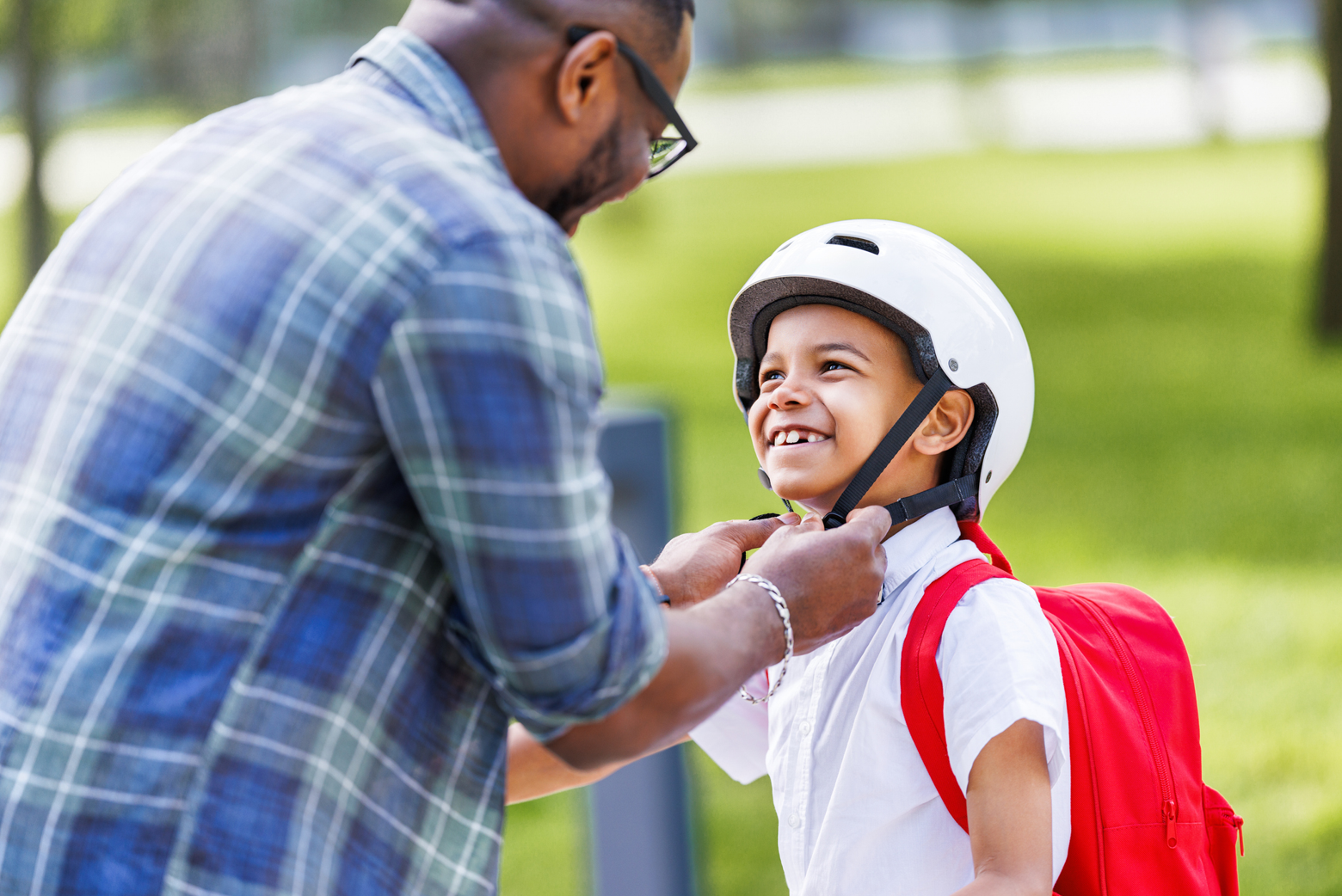
Teaching Naples Kids Safe Bike Habits: A Parent’s Guide From a Personal Injury Lawyer
No, you are not crazy for letting your child ride a bike in Naples. But you are also not wrong to worry. Collier County roads carry resort traffic, snowbird traffic, construction traffic, and a fair number of distracted drivers — and when a cyclist and a car meet, the cyclist absorbs the collision. I have spent three decades watching what happens to families on the other side of these crashes. Most of what protects a child on a bike gets decided long before the bike rolls out of the garage, and most of it is not about what brand of helmet you buy.
This is a guide written from that vantage point — what Florida law actually says, what we see at our firm, and what I tell parents to do when they ask. I am not going to hand you a generic checklist. I am going to tell you what has mattered in the cases we have handled.
What Florida Law Actually Says About Kids on Bikes
Florida treats a bicycle as a vehicle. That single rule sets up almost everything else, and parents are often surprised by it. Your eight-year-old on a sidewalk is a pedestrian under most ordinances, but the moment that same eight-year-old is riding on the roadway, Florida traffic law applies. Here are the statutes that come up over and over in our practice.
The two-year deadline. Under Florida Statute 95.11(4)(a), you have two years from the date of a crash to file a negligence lawsuit. That used to be four years. The Legislature cut it in half in March 2023, and a lot of families still do not know. Two years sounds long, but if your child needs a year of orthopedic follow-up before anyone knows what the case is really worth, the clock is already half gone. There is a tolling rule for minors that gives a little extra room for the child’s own claim, but the parents’ claims and any wrongful-death claim run on the straight two years. We have turned away cases that walked in too late.
The fault rule. Florida is a modified comparative negligence state under Florida Statute 768.81. After the 2023 reform, a plaintiff who is 50% or more at fault recovers nothing. Below 50%, the recovery is reduced by the percentage. So if a jury finds the driver 70% at fault and a 14-year-old cyclist 30% at fault for running a stop sign, the family collects 70% of the damages. There is also a separate doctrine — the Rule of 6 — that says a child under six cannot be assigned any fault as a matter of law. If a five-year-old chases a ball into the road, a jury isn’t allowed to assign any percentage of fault to that child. The rule shifts for older children, and the older the child, the more the defense will try to load fault onto them.
The PIP problem. Most parents assume the driver’s insurance pays the medical bills. It usually doesn’t, at least not first. Under Florida Statute 627.736, Personal Injury Protection follows the person, not the vehicle. Your household auto policy’s PIP — $10,000 in no-fault medical — is generally the first money on the bill, even when your child was on a bike. The catch is the fourteen-day rule: a Florida-licensed doctor has to see the child within fourteen days of the crash or PIP locks out entirely. Pediatricians count. Urgent care counts. Waiting two weeks because the child seems fine does not work in our state.
Uninsured motorist. Under Florida Statute 627.727, the Uninsured Motorist coverage on your auto policy can step in when the driver who hit your child carried only the state-minimum coverage or fled the scene. We have settled child-injury cases where the entire recovery came from the family’s own UM policy because the at-fault driver had no real assets and a $10,000 liability limit. UM is the most under-bought coverage in Florida, and it is the one that matters most when a child is hurt by another driver.
The crash report. Florida Statute 316.066 requires a written crash report whenever there is an injury, and a bicycle crash with a child always qualifies. Make sure the responding officer writes one. Get the case number before you leave the scene. The carrier’s adjuster will pull it within forty-eight hours, and you should have it in your file before they do.
Five Crash Patterns Collier County Bicycle Cases Actually Follow
After three decades of these cases, the crashes start to look like reruns. There are roughly five fact patterns we handle over and over for child cyclists in the Naples area.
- The driveway pull-out. A driver backs out of a residential driveway off a road like Goodlette-Frank or one of the side streets feeding into Pine Ridge Road, and a child on a bike riding the sidewalk gets hit at the curb. The driver almost always says they never saw the child. The sidewalk-to-driveway intersection is the highest-frequency child-bike crash we see in Naples.
- The right hook at a side street. A vehicle on Immokalee Road or US-41 turns right across a bike lane without checking the lane first, and a child riding on the shoulder gets clipped. Drivers focus on oncoming traffic and forget to look at what is already alongside them.
- The crosswalk roll-through. A child crosses at a marked crosswalk on Vanderbilt Beach Road or near a school zone, and a driver making a right on red rolls forward without ever stopping. The crosswalk button was pressed; the driver wasn’t watching for it.
- The parking-lot back-up. A vehicle reversing out of a parking space at a shopping plaza near 5th Avenue South or Pine Ridge Road clips a child riding through the lot. Florida case law treats parking lots as private property, which changes who is liable and how the case is built.
- The dooring. A passenger or driver parked along Gulf Shore Boulevard opens a door into the path of a child cycling alongside parked cars. Less common with kids than with adult commuters, but we have seen it.
Each of these has a different liability theory, a different witness pool, and a different set of insurance issues. The driveway pull-out is usually a clear-liability case but a low-policy case. The right hook on US-41 is often a high-policy commercial-driver case, which is where carriers fight hardest. Knowing which pattern your case fits drives almost every early decision.
Three Ways Child Bike Cases Surprise Families
Adults on bikes have a hard enough time being taken seriously by an auto insurer. Children on bikes get a different kind of pushback. Three complications come up almost every time.
First, the defense will lean on the comparative-fault rule. The older the child, the more aggressively they argue the child should have known better — wrong side of the road, no helmet, headphones in, riding at dusk without a light. Even when the driver clearly ran the stop sign, the carrier wants the jury to spread fault. Under the 2023 reform, every percentage point counts, and at 50% the case dies.
Second, child injuries develop slowly. A broken wrist heals; a growth-plate fracture changes how the bone develops. We had a case years ago where what looked like a minor elbow injury at age nine turned into a permanent range-of-motion limit by age fourteen. If you settle a child’s case before the orthopedist can speak to long-term outcomes, you leave money on the table that the child will need at twenty-five. Court approval is required for any minor’s settlement over $15,000, and the judge looks hard at whether the settlement accounts for the future.
Third, the PIP fourteen-day rule trips up families who think waiting it out is fine. Parents assume that because the child got up and walked away from the crash, the bills will be small. Then a week later the headaches start, or the back hurts when the kid tries to sit through a class, and the doctor visit happens on day sixteen, and PIP is gone. We have had to fight to reopen PIP claims that should never have been closed.
What a commercial-truck case on I-75 taught us about building the file early
This one didn’t involve a child, but the lessons translate, and parents ask about commercial-truck cases on I-75 all the time because that is where families drive between Naples and the beaches on the east coast.
A client was traveling on I-75 in North Naples during one of those summer rainstorms that drops visibility to almost nothing. A semi-truck jackknifed in front of them and the trailer swept across two lanes, striking the client’s vehicle. The client was alive, ambulatory at the scene, and refused transport — the kind of decision I see all the time and the kind of decision that almost always costs people money on the back end.
Within forty-eight hours the back and shoulder pain set in. The treatment that followed was substantial — orthopedic workup, imaging, and a series of diagnostic nerve blocks to isolate the source of the back and shoulder pain. Diagnostic blocks are not cheap, and carriers fight them constantly because they push the medical specials higher and confirm objective injury rather than soft-tissue complaints.
We recovered a settlement that covered the full vehicle replacement, the pain and suffering, and every dollar of the medical care, including the diagnostic workup. The point for any parent reading this: if the people who hit you drive for a living and carry a million-dollar policy, the insurer is going to fight harder, not roll over. Get the right firm in early.
What to Do if Your Child Is Hit on a Bike
This is what I tell parents who call within the first day of a crash. None of it is generic. Every step came from a case where it mattered.
- Call 911 even if your child stands up. Adrenaline masks pain, especially in kids. The crash report under 316.066 only happens if law enforcement responds. No report makes the case three times harder later.
- Do not move the bike. Photograph it where it landed, with the road position visible. Bike position tells reconstruction witnesses where the impact happened, which is half the liability fight.
- Keep the helmet. Even if it looks fine. Even if your child wants the new one. A helmet with a hairline crack and a scuff pattern is evidence of head impact, which matters in the damages discussion later.
- See a pediatrician within fourteen days. Not urgent care a month later. Pediatrician, family doctor, or ER — Florida-licensed, within fourteen days, or PIP shuts off under 627.736.
- Write down what your child says about the crash within the first day. Children give cleaner accounts of what happened in the first twenty-four hours than they will three months later. I have used this approach with families and noticed that the early account often holds up far better than the later retelling.
- Do not give a recorded statement to the driver’s insurer. Their adjuster will call within forty-eight hours, friendly and concerned. The recording is for one purpose: to create inconsistencies they can use later. Tell them you have counsel, hang up, and call us.
- Save the bike and the gear. Helmet, gloves, shoes, anything the child was wearing. Carriers settle cases higher when the physical evidence is preserved. They settle them lower when the bike is already at the dump.
Key Takeaways
- Florida law treats a bike as a vehicle, but a child under six cannot be assigned fault under the Rule of 6, and older children are judged by what a similar-age child would have done.
- Under Florida Statute 95.11(4)(a), you have two years to bring a negligence claim — half the time families used to have.
- PIP under 627.736 generally pays first, follows the person not the vehicle, and locks out if no Florida-licensed doctor sees the child within fourteen days.
- Uninsured Motorist coverage under 627.727 is often the only meaningful recovery when the at-fault driver is underinsured or flees, and it is the most under-bought coverage in Florida.
- Preserve the bike, the helmet, the gear, and the crash report — and never give a recorded statement to the at-fault driver’s carrier without talking to a lawyer first.
Frequently Asked Questions
Q1. If a driver hits my child on a bike in Naples, who pays the medical bills first?
Under Florida Statute 627.736, the PIP coverage on the household auto policy generally pays the first $10,000 of medical bills, even though your child was on a bike and not in the car. PIP follows the person, not the vehicle. The at-fault driver’s liability coverage comes into play after PIP, and an Uninsured Motorist policy under 627.727 may matter if the driver carried thin coverage or fled.
Q2. Does my child’s age affect a fault finding under Florida’s comparative negligence law?
Yes. Florida courts apply what attorneys call the Rule of 6: a child under six is legally incapable of negligence. For older children, juries look at whether the child acted as a reasonable child of similar age and judgment would have. Florida Statute 768.81 sets the modified comparative negligence rule for everyone else, where a plaintiff found 50% or more at fault recovers nothing.
Q3. How long do I have to file a claim if my child is hurt while biking?
Under Florida Statute 95.11(4)(a), the deadline for a negligence claim is two years from the date of the crash for incidents on or after March 24, 2023. A minor’s claim has some additional protection, but the parents’ own claims for medical expenses and the family’s wrongful death claim, if it ever came to that, run on the two-year clock. Do not wait.
Q4. Is my child legally required to wear a helmet in Florida?
Yes. Florida law requires bicycle helmets that meet federal safety standards for any rider under 16. A missing helmet does not bar a claim, but it can be argued by the defense as a factor in head-injury damages. We have seen carriers try to reduce settlement value when there is no helmet, even where the helmet would not have made a difference.
Q5. What should I do at the scene if my child is hit by a car while biking?
Call 911 first. Do not move the bike or the child unless there is an immediate hazard. Florida Statute 316.066 requires a written crash report for any injury crash, and you want that report. Photograph the bike, the helmet, the road position, and any skid marks. Get the driver’s insurance and a phone number for any witness. Then call a lawyer before you give a recorded statement to the driver’s insurance carrier.
Talk to Our Office Before You Talk to the Insurance Company
If your child has been hurt on a bike anywhere in Naples or Collier County, the first call should be to our office, not to the at-fault driver’s insurer. We handle these cases on a contingency basis. There is no fee unless we recover for you, and the initial consultation is free.
About the Author

For more than thirty years, David B. Pittman, Esq. has handled personal injury cases out of the firm he founded, Pittman Law Firm, P.L., with a sustained focus in Naples and across Collier County, representing injured clients across Lee and Collier Counties, with a particular focus on commercial-vehicle, complex-liability, and serious-injury cases. Naples cases run heaviest along US-41, Immokalee Road, Pine Ridge Road, and Vanderbilt Beach Road, and through the older commercial and resort properties along Gulf Shore Boulevard and 5th Avenue South.
David’s undergraduate years were at The Citadel, The Military College of South Carolina; his legal education at the University of South Carolina School of Law. AV-Preeminent at Martindale-Hubbell; member of the Multi-Million Dollar Advocates Forum.
David has held a Florida real estate broker license for twenty-five years, a credential that shapes how the firm reads the property side of premises cases. The firm handles personal injury cases across Lee and Collier Counties, serving Fort Myers, Bonita Springs, Naples, Cape Coral, Estero, and Lehigh Acres, with offices at Windsor Place in Bonita Springs (main) and Fort Myers (satellite). Call 239-992-8259 for a free consultation.
Attorney advertising. The information on this page is for general information only and is not legal advice for any individual case. Reading this page does not create an attorney-client relationship with Pittman Law Firm, P.L. Prior results do not guarantee a similar outcome.