

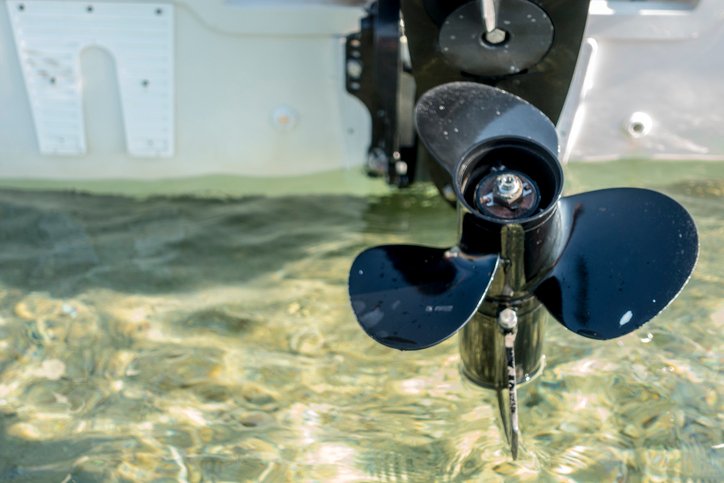
Boat Propeller Injuries in Fort Myers: What Florida Law Says and What We See in Practice
If you are reading this from a hospital waiting room while a family member is in surgery after a propeller strike on the Caloosahatchee River or out past the McGregor Boulevard marinas near Punta Rassa, here is the short version: propeller injuries are not car-wreck cases. PIP does not cover them. The insurance lane is marine liability, not auto. The two-year clock under §95.11(4)(a) starts the day of the strike, and marine evidence — witness names, photos of the prop, the operator’s policy declarations page — disappears within days on the water.
This post lays out what Florida law actually says, the five patterns I see again and again in our office, and the action list I give families who call from the Lee Health trauma center off Colonial Boulevard. Fort Myers waters get heavy boat traffic year-round. When something goes wrong, it tends to go wrong fast.
What Florida law actually says about boat propeller injuries
Three statutes drive most of these cases. None of them are obvious from the outside, which is why the first conversation we have with a new client usually involves a lot of unlearning.
Modified comparative negligence — §768.81, Florida Statutes. Florida changed this rule in 2023. The plain-English version: if a jury decides you were 50% or less responsible for your own injury, you can still recover, but your damages get reduced by your share of fault. If the jury puts you at 51% or more, you take home zero. On a boat case, fault gets sliced finely — the operator, the passenger who moved at the wrong moment, sometimes a second vessel, sometimes the manufacturer for a missing prop guard. We map those slices out early because the difference between 49% and 51% is the difference between a full recovery and nothing.
Statute of limitations — §95.11(4)(a), Florida Statutes. Same 2023 reform shortened the negligence deadline from four years to two. Two years from the date of the propeller strike, in most cases, to file suit. People hear “two years” and assume there is plenty of runway. There is not — accident reconstruction, marine engineering work, medical lien negotiations, and pre-suit demand cycles eat months. If a year has already gone by when a family calls us, we move quickly.
PIP does not apply — §627.736, Florida Statutes. This trips up almost every new client. Florida’s $10,000 no-fault medical coverage attaches to motor vehicles on land. On the water, you are riding on health insurance, the boat owner’s liability policy, and sometimes a homeowner’s umbrella. We have had clients in the first week assume their auto PIP would carry the early bills, only to find out at billing that it does not. That is a problem we want to get in front of, not behind.
Uninsured Boater coverage — by analogy to §627.727, Florida Statutes. Florida’s UM statute is written for cars, but many marine policies sold in this state include an analogous uninsured-boater endorsement. If the at-fault operator was uninsured or underinsured — and a startling number on our waterways are — that endorsement is sometimes the only meaningful pot of money. We always pull the declarations page on day one and look for it.
Five propeller fact patterns we see in Fort Myers and Lee County
Almost every propeller case I have handled fits one of five patterns:
- Person-overboard strikes. A passenger goes off the gunwale or the swim platform, the operator turns the wrong way to circle back, and the prop catches the swimmer. The federal kill-switch rule (engine cut-off device for vessels under 26 feet above displacement speed) exists exactly for this scenario, and yet we still see operators who had it but were not tethered to it.
- Anchored-vessel strikes. A boat is anchored, a passenger is in the water near the stern, and the operator restarts the engine without confirming the count. These are devastating because they are almost always low-speed and the propeller cuts before the operator hears the scream.
- Tow-toy strikes. Tuber, skier, wakeboarder falls. The driver loops back too tight. The 2024 Florida tow-vessel rules tightened observer requirements, but compliance on busy Memorial Day weekends near Fort Myers Beach is uneven.
- Rental-fleet operator inexperience. Out-of-state visitor rents a center console for the first time, does not understand wind drift around a marina entrance off Pine Island Road or San Carlos, and clips a kayaker or paddleboarder. The rental company’s training documentation and the operator’s signed waiver become the first two documents we request.
- Two-vessel collisions with secondary propeller injuries. The collision itself is not the worst of it — the injuries come when one boat’s prop reaches into the other boat’s swim deck or seating area. These cases involve two insurance carriers and a fault dispute that runs back through Coast Guard navigation rules.
Each pattern has a different liability target, a different evidence list, and a different settlement timetable. The worst thing a family can do in the first week is assume their case is the same as the propeller case their neighbor’s cousin had.
Why propeller cases are harder than they look from the outside
Three things make these cases unusually difficult, and a family deserves to hear them up front rather than three months in.
Medical workups take time. Propeller wounds are not just lacerations. The blade-impact mechanism drives debris and bacteria into tissue, and the rotational force tears nerve and tendon at depth. A clean-looking leg wound can hide nerve damage that does not declare itself for weeks. We do not let an insurance company drive a quick settlement before the full workup — including any diagnostic nerve blocks or repeat imaging — has been completed. Settling early on an incomplete diagnosis is one of the few mistakes you cannot undo.
Witnesses scatter. Unlike a car wreck where bystanders give names to the responding officer, boating witnesses are often from out of state, on a charter, or on a friend-of-a-friend’s vessel. If we are not getting names and phone numbers within 48 hours, we are usually not getting them at all.
Insurance carriers know the medicine is delayed. The marine insurance carriers handling these claims are not the same desks that handle auto claims, and they know the medical timeline is longer. Early lowball offers are the norm, and they are timed to land while a family is still focused on the operating room rather than the legal claim. We document the pace of treatment carefully so that, when the offer comes, we can show why it does not match what the medicine actually requires.
A case that shows how we run a marine-injury file
One we worked recently was not a propeller case but it is a useful illustration of how I approach a serious vehicle-against-vehicle injury when a commercial carrier is on the other side of the claim. A semi-truck jackknifed on I-75 in North Naples during a heavy rainstorm and came across into our client’s lane. Our client took most of the impact through the back seat — back and shoulder.
She made it clear from the first call that the carrier was not going to be allowed to push our client into a quick statement or a low offer while he was still in the early stages of treatment. The medical workup ran for months and included a series of diagnostic nerve blocks before the treating physician could pin down which discs were doing the talking. That kind of workup is exactly what a carrier will try to short-circuit if no one is pushing back on the timing.
We recovered a settlement that covered the full replacement value of his vehicle, his pain and suffering, and one hundred percent of his medical care, with nothing left for him to owe his providers afterwards. The reason it worked is that nobody on our side allowed the carrier to control the clock. A propeller case is a different mechanism, but the playbook is the same: protect the medical timeline, document the liability picture early, and do not let the carrier rush you out of a full recovery.
What to do if a propeller injury has just happened
This is the action list I give families who call from a hospital lobby. It is not a generic checklist — every item below is here because I have watched a case go sideways for lack of it.
- Get the operator’s name, vessel registration number (the FL-numbers on the bow), and insurance carrier in writing before anyone leaves the marina. If law enforcement is on scene, ask the officer for the incident number while you are still there. A week later that information becomes very hard to chase down.
- Photograph the propeller and the vessel. Specifically the propeller itself — three blades, four blades, condition, prop guard yes or no. We have had cases turn on whether a guard was installed and whether it had been removed by the operator.
- Do not give a recorded statement to the boat owner’s carrier. Not the same day, not the next day. Tell them in writing that all communication goes through our office.
- Keep every piece of medical paper. Discharge summaries, prescription receipts, the parking-garage receipt from the trauma center. The PIP analogue does not exist on the water, so each receipt sits on top of a real out-of-pocket calculation later.
- Save the clothing and the gear. The cut pattern in a swimsuit, life jacket, or wakeboard vest is sometimes the clearest piece of mechanism evidence we will ever have. Put it in a paper bag, not plastic, and put the bag somewhere dry. Do not wash it.
- Get to a trauma program, not an urgent care. Lee Health’s trauma program off Colonial Boulevard and the trauma facility serving the Daniels Parkway corridor are both set up for this kind of injury. Urgent care is not.
- Call us before the two-year clock has eaten more than a few months. The shorter post-2023 deadline under §95.11(4)(a) is the single biggest reason families regret waiting.
Key Takeaways
- Florida PIP under §627.736 does not cover boat propeller injuries — the insurance landscape on the water is different and is set up around marine liability, health insurance, and sometimes a homeowner’s umbrella.
- The negligence statute of limitations under §95.11(4)(a) was cut from four years to two in 2023. Two years is the working deadline for most propeller cases.
- Under §768.81, you can be partially at fault and still recover — up to 50%. At 51% or more, the recovery is zero. Fault gets sliced finely, and the slicing is a jury question, not the carrier’s call.
- Propeller wounds need a full medical workup before settlement. Nerve and tendon damage often does not declare itself for weeks. Settling early is a mistake you cannot undo.
- Evidence disappears fast on the water — witness names, photos of the propeller, and the operator’s policy declarations all need to be in hand within days, not months.
Frequently Asked Questions
Does Florida no-fault PIP cover a boat propeller injury?
No. PIP under §627.736 only applies to motor vehicle crashes on land. A boat propeller injury runs on different rails — health insurance, the operator’s boat liability policy, and sometimes a homeowner’s policy if the boat qualifies. That changes how we sequence medical bills and lien negotiations from day one.
How long do I have to file a boat propeller injury lawsuit in Florida?
Two years from the date of the injury for most negligence claims, under §95.11(4)(a) after the 2023 reform. It used to be four. Wrongful death cases also run two years. If the U.S. Coast Guard or a federal admiralty rule is in play, separate deadlines can apply, so do not assume two years is always the longest window.
What if I was partly at fault — say I was standing on the bow when I shouldn’t have been?
Florida’s modified comparative negligence rule (§768.81, as amended in 2023) lets you recover as long as you are 50% or less at fault. If you are 51% or more at fault, you recover nothing. Standing on the bow does not automatically make you the majority-at-fault party — that is a jury question, and we have argued plenty of those.
Do I have to report a boat propeller accident?
Yes. Florida requires the operator to report any boating incident that involves injury beyond immediate first aid, death, disappearance, or property damage above the statutory threshold. The report goes to FWC or the nearest law enforcement agency. The crash-report concept under §316.066 is a road-accident rule, but the boating reporting duty is the water equivalent and we treat it just as seriously.
What does a boat propeller case cost up front?
Nothing up front. Our firm handles personal injury cases on a contingency fee — there is no fee unless we recover for you. We front the costs of records, witnesses, and reconstruction work and recoup them from the settlement or verdict at the end.
Talk to our office about your boat propeller injury
If you or someone in your family was injured by a boat propeller on Fort Myers waters, call Pittman Law Firm, P.L. at 239-992-8259 for a free consultation. There is no fee unless we recover for you. I will sit down with you, walk through the medical picture, the insurance picture, and the two-year clock, and tell you straight whether we think the case is worth pursuing.
About the Author

David B. Pittman, Esq. runs a thirty-year personal injury practice in Fort Myers and across Lee County as the founder of Pittman Law Firm, P.L. The firm’s Fort Myers presence handles a steady stream of serious-injury work along the Daniels Parkway, Six Mile Cypress, McGregor Boulevard, Cleveland Avenue, and Summerlin Road corridors, and along I-75 between Estero and Bell Tower. David represents injured clients across Lee and Collier Counties, with a particular focus on commercial-vehicle, complex-liability, and serious-injury cases — the kind of cases, like boat propeller strikes, where the medical workup is long and the insurance lanes are not the obvious ones.
His background: undergraduate at The Citadel, The Military College of South Carolina; JD at the University of South Carolina School of Law; AV-Preeminent rating from Martindale-Hubbell; member of the Multi-Million Dollar Advocates Forum.
David has held a Florida real estate broker license for twenty-five years, a credential that shapes how the firm reads the property side of premises cases. The firm handles personal injury cases across Lee and Collier Counties, serving Fort Myers, Bonita Springs, Naples, Cape Coral, Estero, and Lehigh Acres, with offices at Windsor Place in Bonita Springs (main) and Fort Myers (satellite). Call 239-992-8259 for a free consultation.
The information on this website is for general information purposes only. Nothing on this site should be taken as legal advice for any individual case or situation. This information is not intended to create, and receipt or viewing does not constitute, an attorney-client relationship. This is attorney advertising.