

Who’s Responsible When Road Debris Causes Your Fort Myers Motorcycle Accident?
When a rider calls our office after a debris crash, the first thing their carrier will do is look for a way to put fault on the rider — the argument being that you had time to see the object and steer around it. The second thing the at-fault driver’s carrier will do is not answer the phone, because the truck that shed the ladder on I-75 near Alico Road was two exits up the interstate before you unbuckled your helmet. These are the two moves Florida debris cases always open with, and the rider who walks in without representation on day one is already behind.
That sounds discouraging. It is not meant to be. It is the truth about how these files work, and once you understand it you can act in ways that protect your family. The rest of this post walks through what the data actually shows about debris crashes in Southwest Florida, the four Florida statutes that drive every motorcycle case we handle, why your own uninsured motorist coverage carries more weight here than people realize, and the practical steps that determine whether a debris case ever reaches a settlement table.
What the data actually shows on Fort Myers debris crashes
The national headline numbers get quoted everywhere, and they are real. The AAA Foundation for Traffic Safety counted more than 200,000 debris-related crashes nationwide across a four-year window, with roughly 39,000 injuries and 500 fatalities. What those numbers do not tell a Fort Myers rider is the local texture.
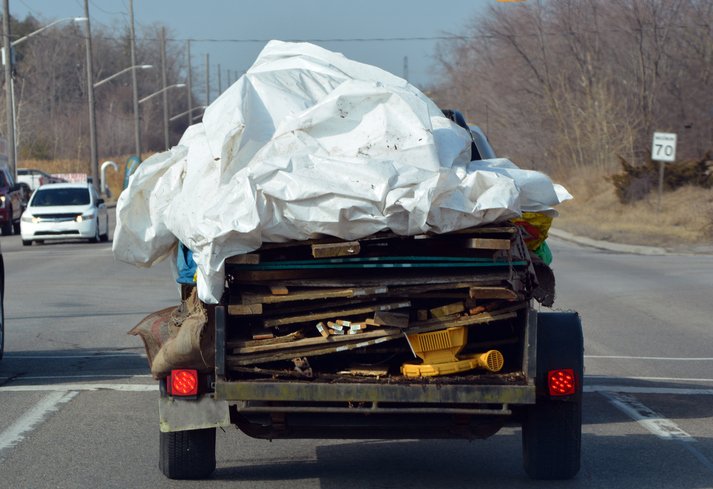
On the corridors we work along most often, the worst debris is what came off a vehicle minutes earlier. Shredded retread on I-75 between Alico Road and Daniels Parkway. Lawn-equipment trailers losing a string trimmer along Six Mile Cypress Parkway. A bed-liner that lifted out of a pickup on Colonial Boulevard at sixty miles per hour. Ladders are the one most people underestimate. Service trucks running between job sites along McGregor Boulevard, Cleveland Avenue, and Summerlin Road shed extension ladders every year, and a ladder in a motorcycle lane is a kill object.
What the data does not capture is the second-impact problem. Most riders who hit debris do not get hurt by the debris itself. They get hurt by the asphalt, the guardrail, or the vehicle behind them. The injury pattern in our files is broken collarbones, broken wrists, road rash that needs grafting, traumatic brain injury when the helmet strap fails, and the catastrophic crush injuries that happen when a following car cannot stop. The debris is the trigger. The damage comes from everything that happens in the next four seconds.
Florida law that actually determines your case
Four statutes do the heavy lifting on a Fort Myers motorcycle file. I will give you the citation, the plain-English version, and why it matters for a debris case.
Section 627.736, Florida Statutes — PIP. Florida is a no-fault state for cars. It is not a no-fault state for motorcycles. The statute excludes motorcycles from the definition of “motor vehicle” for PIP purposes. Translation: if you are on two wheels and you go down because of a shredded retread on I-75, the $10,000 in PIP medical that a car driver gets does not exist for you. None of it. Your own health insurance, any MedPay rider you bought, and your uninsured motorist coverage do the work PIP would otherwise do.
Section 316.211, Florida Statutes — helmet law. Riders 21 and older who carry at least $10,000 in medical-benefits coverage may ride without a helmet. Under 21, helmet is mandatory. The piece I want every adult rider to hear: the helmet exemption does not erase the comparative-negligence argument the defense will raise. If a head injury is in play and you were not wearing a helmet, the defense will ask the jury to reduce your damages on the head-injury portion. That is a different argument from “you cannot recover.” You can. The number gets argued down.
Section 627.727, Florida Statutes — uninsured motorist. This is the lifeline statute on debris files. Florida law lets you stack UM in narrow circumstances and lets you reach UM benefits when the at-fault party is unidentified, provided you carry it and provided you reported the crash. The single most useful piece of paper in your wallet, after a debris crash, is a declarations page that shows you bought UM.
Section 768.81, Florida Statutes — comparative negligence. In 2023 the Legislature moved Florida from pure comparative negligence to a modified comparative system. If you are more than 50 percent at fault, you take nothing. That matters on a debris case because the defense will always argue the rider had time to see the object and steer around it. We meet that argument with reconstruction, sight-line analysis, and the speed-and-distance math that shows what a reasonable rider could actually do in the available reaction time.
One more, which we use less often but which surfaces in the worst debris cases: section 316.027 governs leaving the scene. When cargo falls off a trailer and the driver keeps going, that is hit-and-run conduct even if the trailer never touched the rider. It opens the door to coverage and, in the right facts, to punitive exposure.
Why your own UM coverage matters so much
Florida’s minimum auto liability limits are among the lowest in the country. A driver who hauls a ladder loose in an open pickup bed often carries only the bare minimum. A landscape trailer that sheds a mower may not have any commercial coverage at all. And the most common debris scenario, the one I see file after file, is the unidentified at-fault driver: the truck is two exits up the interstate before you have unbuckled your helmet.
Uninsured motorist coverage solves that. It is your own carrier’s promise to step into the shoes of the absent or undercovered driver. We have settled debris cases where the entire recovery came from the rider’s UM stack, because there was no identifiable at-fault truck and no commercial policy to reach. When clients ask me what to buy, the answer is the same one I have given for twenty-plus years. Buy more UM than you think you need. The premium is small. The protection is enormous. If you ride, do not ride uninsured against the rider next to you who is uninsured.
A case worth describing — the liability lesson that applies to every debris file
This is not a motorcycle file. I am telling it anyway because the lesson on liability and on protecting a vulnerable victim is the same one I apply on rider cases.
A child was visiting a neighbor when an unrestrained dog rushed and attacked. The injuries were deep facial and neck lacerations, the kind that go past the dermis and into muscle. The emergency room called in a plastic surgeon. There was a course of rabies shots because the dog’s vaccination history could not be confirmed at the scene. Months later, the family was paying for trauma counseling because the child was waking up screaming.
Florida’s dog-bite statute is one of the few areas of personal-injury law that imposes strict liability on the owner. Provocation does not get argued the way negligence does in a car case. We recovered a high-value settlement that covered the medical, the projected revision surgeries, and a meaningful amount for the disfigurement and the post-traumatic stress.
The lesson I carry from that file to every motorcycle debris file is this. When the law gives you a clear path to liability, you still have to do the work on damages. The future medical, the permanency, the psychological piece. Insurers undervalue what they cannot see on an X-ray. The job is to make it visible.
What to do after a Fort Myers motorcycle crash — preserve the gear
Most of what gets written on this topic is a generic action list. Mine is short and specific because I have watched what wins these cases and what loses them.
- Do not let anyone move the debris. If you can take twenty seconds before the deputy arrives, photograph the object in place. Once Road Rangers sweep it, the physical evidence is gone. A photograph of the tire carcass on the roadway in its actual position is worth more than ten witness statements.
- Save the gear. All of it. Helmet, jacket, gloves, boots, the jeans you had on. Put it in a closet. Do not wash it. Do not throw the helmet away because it is cracked — the crack is the evidence. We have used scuff patterns on a left boot to prove the bike slid left when the carrier insisted the rider had laid it down voluntarily.
- Call 911 even if you think you are fine. The report number is what unlocks UM. Adrenaline masks broken bones for hours. I have had riders walk away from a scene at McGregor Boulevard and Colonial Boulevard, get home, and not be able to lift a coffee cup the next morning because a scaphoid fracture finally announced itself.
- Photograph the road surface beyond the debris. Gouges in the asphalt, your skid trail, any oil, any spilled cargo further up the lane. The geometry of those marks is what a reconstruction engineer uses to reverse-calculate speed and angle.
- Get the names of two witnesses, not ten. Two careful statements from drivers who saw the debris fall beat a dozen statements from people who only saw you go down. Quality, not volume.
- Do not give a recorded statement to the other carrier. They are not your friend. They are building the comparative-negligence file under section 768.81. Politely decline and route the call to a lawyer.
- Pull your own declarations page before you call anyone. Know your UM limits. Know your MedPay. The first call to your own carrier sets the tone for the entire claim.
Key Takeaways
- Motorcycles are excluded from Florida PIP under section 627.736. The rider’s health insurance, MedPay, and UM coverage do the work that PIP would otherwise do.
- Riders 21 and older with $10,000 in medical coverage may legally ride without a helmet under section 316.211, but the defense will use the choice to argue down head-injury damages.
- Uninsured motorist coverage under section 627.727 is the practical lifeline on debris cases, because the at-fault driver is often unidentified or carries only minimum limits.
- Florida is now a modified-comparative state under section 768.81: a rider found more than 50 percent at fault recovers nothing.
- Physical evidence disappears fast. Save the gear, photograph the debris in place, and pull your own declarations page before any insurer contacts you.
Frequently Asked Questions
Q1. Does Florida PIP cover me if road debris caused my motorcycle crash in Fort Myers?
No. Under section 627.736 of the Florida Statutes, motorcycles are not included in the definition of a motor vehicle for PIP. Riders get no PIP medical coverage. Your own health insurance, MedPay if you carry it, and uninsured motorist coverage are the realistic sources of first-dollar coverage after a debris crash.
Q2. Who can be held liable when road debris causes a motorcycle accident on I-75 near Alico Road?
It depends on where the debris came from. A trucking company whose load shed cargo, a contractor whose ladder fell off a service truck, a construction firm working the corridor, or a property owner adjacent to the road can all be on the hook. A government agency can be reached in narrower circumstances under section 768.28, generally where it had actual notice of the hazard and failed to act.
Q3. I am over 21 and was not wearing a helmet. Does that kill my Fort Myers motorcycle case?
No. Florida law under section 316.211 allows riders 21 and older with at least $10,000 in medical coverage to ride without a helmet. The defense will still raise it under the comparative-negligence rule in section 768.81 to reduce head-injury damages. It is one factor a jury weighs. It does not bar your claim.
Q4. Why does my own uninsured motorist coverage matter so much in a debris case?
Florida’s minimum auto liability limits are low, and in a debris case the at-fault driver often cannot be found at all. Your uninsured and underinsured motorist coverage under section 627.727 is the practical lifeline. After thirty years of handling rider cases in Lee and Collier Counties, the file with strong UM is the file that pays the bills.
Q5. How long do I have to file a Fort Myers motorcycle accident lawsuit?
For crashes occurring on or after March 24, 2023, the negligence statute of limitations in Florida is two years from the date of the crash. Wrongful death claims run two years from the date of death. Claims against a government entity carry stricter pre-suit notice timelines under section 768.28. Do not wait.
Talk to our office before you talk to the other insurer
If you were hurt in a Fort Myers motorcycle crash where road debris was a factor, call our office at 239-992-8259 for a free consultation. We will pull your policy, look at your photos, and tell you straight whether you have a case worth pursuing. There is no fee unless we recover for you.
About the Author

The case load at Pittman Law Firm, P.L. has been built over more than thirty years of personal injury practice in Fort Myers and across Lee County under founder David B. Pittman, Esq., with a sustained focus on serious-injury and uninsured-motorist motorcycle claims. The firm’s Fort Myers presence handles a steady stream of serious-injury work along the Daniels Parkway, Six Mile Cypress, McGregor Boulevard, Cleveland Avenue, and Summerlin Road corridors, and along I-75 between Estero and Bell Tower.
Academically: The Citadel, The Military College of South Carolina for undergraduate; the University of South Carolina School of Law for the JD. Professionally: AV-Preeminent at Martindale-Hubbell and a member of the Multi-Million Dollar Advocates Forum.
David has held a Florida real estate broker license for twenty-five years, a credential that shapes how the firm reads the property side of premises cases. The firm handles personal injury cases across Lee and Collier Counties, serving Fort Myers, Bonita Springs, Naples, Cape Coral, Estero, and Lehigh Acres, with offices at Windsor Place in Bonita Springs (main) and Fort Myers (satellite). Call 239-992-8259 for a free consultation.
Disclaimer: The information in this article is general in nature and is not legal advice. Reading this article does not create an attorney-client relationship with Pittman Law Firm, P.L. Every case turns on its own facts. For advice on a particular situation, consult a licensed Florida attorney. This is attorney advertising.