

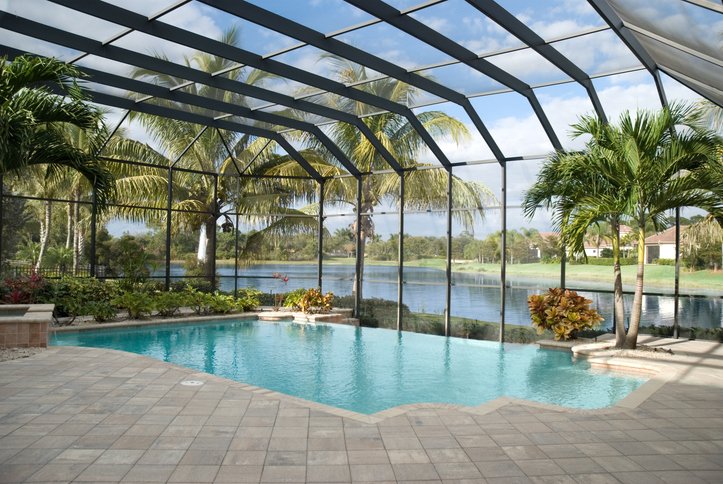
Injured at a Fort Myers Pool? Here’s What Insurance Companies Won’t Tell You
When someone slips on a pool deck at a hotel off Summerlin Road, or a child gets hurt at a condo pool near Daniels Parkway, or a grandparent breaks a hip stepping out of a screened lanai at a rental near McGregor Boulevard, the call to our office almost always starts the same way: the insurance company says I don’t really have a case. The carrier almost always says that. They are almost always wrong about how Florida law actually works.
I have spent the last twenty-five years as a licensed Florida real estate broker alongside my law practice. That means when I look at a Fort Myers pool deck, I am not just reading a case file. I am reading the property the way someone who has handled commercial leases, common-area maintenance schedules, and HOA rules for two and a half decades reads it. That perspective changes what I see and what I argue.
What Florida law actually says about pool injuries
There are four statutes that drive almost every Fort Myers pool case our office handles. None of them get explained to you by the adjuster.
Chapter 515 — the Residential Swimming Pool Safety Act. Florida requires every residential pool to have at least one approved safety feature: a four-foot barrier, an approved pool cover, exit alarms on doors that lead to the pool area, or a self-latching gate that a small child cannot open. If a homeowner removed the gate, propped the alarm open, or never installed a barrier in the first place, that is a statutory violation. Statutory violations are evidence of negligence in Florida, and they shift the conversation with the carrier immediately.
§95.11(4)(a), Florida Statutes — two-year statute of limitations. Before the 2023 tort reform, you had four years to bring a negligence claim. As of March 24, 2023, that window is two years from the date of the injury. You can read the statute here. In plain English: if you slipped at a Fort Myers pool on a Tuesday, you have two years from that Tuesday to file suit or your claim is dead, no matter how strong it was.
§768.81, Florida Statutes — modified comparative negligence. Florida used to be a pure comparative negligence state — if you were 90% at fault, you still recovered 10%. After the 2023 reform, the rule is now modified: 50% or less at fault, you recover, reduced by your percentage. The statute is here. Cross the 51% line and you recover nothing. Adjusters know exactly where that line is and they push every fact in the file toward it.
§627.736, Florida Statutes — PIP does not apply. Personal Injury Protection is the no-fault, $10,000 medical bucket attached to your auto policy. Clients call our office assuming PIP will pick up the bills for a pool fall the same way it does for a fender bender. It does not. Pool injuries are premises-liability claims, not motor-vehicle claims. Your health insurance pays first, a lien typically attaches to any recovery, and the property owner’s liability carrier eventually owes the rest. The order matters, and the carrier will not walk you through it.
Fort Myers pool injury types we handle
- The hotel pool deck slip. A guest steps out of the pool onto tile that has not been re-grooved or treated in years. There is no warning sign, no anti-slip mat. We see this constantly along the Summerlin Road and Daniels Parkway hotel corridors. The duty owed to a paying hotel guest is the highest under Florida premises law — invitee status.
- The condo or HOA pool with a broken gate. The self-latching mechanism gave out months ago, the maintenance log knew about it, and a child walks in unaccompanied. Chapter 515 plus the association’s own meeting minutes usually tell the story.
- The vacation rental pool with no barrier at all. Short-term rental owners off McGregor Boulevard and Cleveland Avenue sometimes treat their property as a residence when it suits them and as a business when it suits them. The barrier requirement does not bend.
- The diving-board or shallow-end head and neck injury. Diving into water that turned out to be three feet deep when the sign said five. These cases involve catastrophic spinal-cord injuries and require quick preservation of the depth markers, the board, and the pool plans.
- The chemical-burn case. A maintenance contractor over-chlorinates the pool, or a cleaning supply gets dumped into the skimmer before guests get out. We have handled these from condos along Pine Island Road and from a banquet venue near Colonial Boulevard. The contractor’s own commercial general liability policy often becomes the primary source of recovery.
Why pool cases are tougher to work than they look
Three things make these cases harder than the average slip-and-fall, and I want to be candid about all three.
First, the evidence vanishes fast. Pool decks get pressure-washed. Tile gets replaced. Broken gate latches get quietly fixed the next morning. Surveillance footage at hotels along Summerlin Road runs on a 14- or 30-day loop. If we are not on the property with a preservation letter within the first week, we are building the case out of memory.
Second, the comparative-fault attack is brutal. The defense will argue you were running, that you had been drinking, that you ignored a sign, that you should have seen the puddle. Under §768.81 they only need to push you to 51%. We counter by documenting exactly what the property owner failed to do — Chapter 515 violations, maintenance log gaps, prior complaints. The 25 years I have spent as a Florida real estate broker matters here. I know what a reasonably prudent property owner is actually expected to do, because I have lived inside the standard.
Third, insurance layers get complicated. A single Fort Myers pool case can involve the property owner’s policy, the property manager’s policy, an umbrella policy, a pool maintenance contractor’s CGL policy, and the injured person’s own health insurance with a subrogation lien. Sorting that out is a lot of phone calls and a lot of letters before any of it touches a courtroom.
What the defense strategy looks like, and how we answer it
The case that comes to mind, even though it was not a pool case, taught me everything about how a property owner builds a defense against you and how to take it apart. A construction worker in Lehigh Acres was operating a crane when its boom contacted an overhead power line that had not been flagged, de-energized, or even discussed at the morning safety meeting. He took third-degree burns over a significant portion of his body and lost months of his life in a dedicated burn unit through repeated skin-graft surgeries. His trade was gone. A man who built things with his hands for a living could no longer hold a tool the same way.
The contractor’s carrier opened with what carriers always open with: he should have looked up, he was responsible for his own safety, the line was visible. That is the same playbook as the pool deck case where the carrier says you should have seen the puddle. We answered it the way we always answer it — with the safety plan that was never filed, the qualified spotter who was never assigned, the OSHA standard the supervisor never followed.
The case resolved in seven figures. The lesson I take from it, and bring into every Fort Myers pool case our office handles, is that the property side of the equation — what the owner or contractor was supposed to do and did not — is almost always where these cases are actually won. The injured person’s conduct is the carrier’s first argument because it is their only argument.
What to do if you were injured at a Fort Myers pool
Here is what I tell people who call our office within hours of a pool injury. None of this is generic. Each item came out of a real case where doing it or skipping it changed the outcome.
- Get photos before you leave the property. Phone camera, ten or fifteen shots — the wet area, the absence of signage, the gate latch, the tile, the deck drain, the lighting. If you cannot do it because you are on a stretcher, ask a family member. By tomorrow morning the deck will be dry and the latch will be fixed.
- Get the names of two witnesses. Not just the front-desk clerk. Other guests. We have located witnesses three months later through hotel reservation lists, but it is ten times easier if we have a name and a phone number from day one.
- Ask for the incident report and refuse to sign anything. Hotels and condos will hand you a release worded as a courtesy form. Do not sign it. You can ask for a copy of the incident report; you do not owe them a recorded statement or a waiver.
- See a doctor the same day, even if you feel okay. I have seen too many head injuries from pool deck falls present as a mild headache on Tuesday and a serious concussion by Thursday. A same-day medical record is worth a year of argument later.
- Save the shoes, the swimsuit, and the towel. The defense will argue your footwear was the problem. Throwing out the flip-flops that the deck made slippery hands them an argument we cannot easily refute.
- Call us before you call the property owner’s carrier back. The adjuster will be friendly. They will sound like they want to help. They are also recording, and one offhand comment about feeling “a little better today” will come back six months later as exhibit B.
Key Takeaways
- Florida residential pools must have at least one Chapter 515 safety feature — barrier, cover, alarm, or self-latching gate; absence of one is evidence of negligence.
- The statute of limitations for a Fort Myers pool injury is two years under §95.11(4)(a), not four — the 2023 tort reform cut the window in half.
- Florida is now a modified comparative negligence state under §768.81 — cross 50% fault and recovery drops to zero, which is why the carrier pushes every fact at you.
- PIP under §627.736 does not pay pool injuries. Your health insurance pays first, a lien follows, the property owner’s liability policy eventually owes the rest.
- Preserve photos, witnesses, footwear, and same-day medical records — pool decks get pressure-washed and gate latches get quietly fixed before anyone investigates.
Frequently Asked Questions
Q1. Does Florida law require homeowners to fence their pools?
Yes. The Residential Swimming Pool Safety Act, codified at Chapter 515 of the Florida Statutes, requires residential pool owners to install at least one approved safety feature — a four-foot barrier, a pool cover, an exit alarm on doors leading to the pool, or a self-latching gate. A homeowner who skips this and a child wanders in has a serious liability problem, separate from any homeowner’s insurance dispute.
Q2. How long do I have to file a Fort Myers pool injury lawsuit?
Two years from the date of the injury for most negligence claims, per §95.11(4)(a), Florida Statutes. The 2023 tort reform cut the old four-year window in half. Wrongful-death claims are also two years. Waiting six months because you assumed you had four years has ended more cases than I care to count.
Q3. What if I was partly at fault for the pool fall?
Under §768.81, Florida Statutes, you can still recover as long as your share of fault is 50% or less. Your recovery is reduced by your percentage of responsibility. At 51% or more, you recover nothing. Insurance carriers know this rule cold and will push every fact they can to get you over that line.
Q4. Will my own health insurance or PIP pay for my pool injury?
Florida’s PIP statute, §627.736, applies to motor vehicle crashes, not pool falls. Your health insurance generally pays first, and a lien usually attaches against any recovery you eventually make from the property owner’s policy. We coordinate with health insurers and lienholders on every case so the client is not left holding a bill at the end.
Q5. Who pays if a hotel or condo pool in Fort Myers caused my injury?
Commercial premises carry general liability policies with much higher limits than a homeowner’s policy. The hotel, condo association, property manager, and pool maintenance contractor can each be on the hook depending on who was responsible for the hazard. We sort that out early because chasing the wrong defendant burns the two-year clock.
Talk to Our Office Before You Talk to the Carrier
If you were hurt at a Fort Myers pool — a hotel along Summerlin Road, a condo off Daniels Parkway, a rental near McGregor Boulevard, an HOA pool near Six Mile Cypress Parkway — our office is ready to walk you through what Florida law actually says and what the property owner’s carrier is not telling you. Call 239-992-8259 for a free consultation. There is no fee unless we recover for you.
About the Author

For more than thirty years, David B. Pittman, Esq. has handled personal injury cases out of the firm he founded, Pittman Law Firm, P.L., with a sustained focus in Fort Myers and across Lee County, representing injured clients across Lee and Collier Counties, with a particular focus on insurance-coverage and serious-injury cases. The firm’s Fort Myers presence handles a steady stream of serious-injury work along the Daniels Parkway, Six Mile Cypress, McGregor Boulevard, Cleveland Avenue, and Summerlin Road corridors, and along I-75 between Estero and Bell Tower.
David’s professional credentials: a JD from the University of South Carolina School of Law, an undergraduate degree from The Citadel, The Military College of South Carolina, an AV-Preeminent rating with Martindale-Hubbell, and membership in the Multi-Million Dollar Advocates Forum.
David has held a Florida real estate broker license for twenty-five years, a credential that shapes how the firm reads the property side of premises cases. The firm handles personal injury cases across Lee and Collier Counties, serving Fort Myers, Bonita Springs, Naples, Cape Coral, Estero, and Lehigh Acres, with offices at Windsor Place in Bonita Springs (main) and Fort Myers (satellite). Call 239-992-8259 for a free consultation.
Attorney advertising. The information on this page is general in nature and is not legal advice. Reading this article does not create an attorney-client relationship. Prior results do not guarantee a similar outcome. Every case turns on its own facts.