

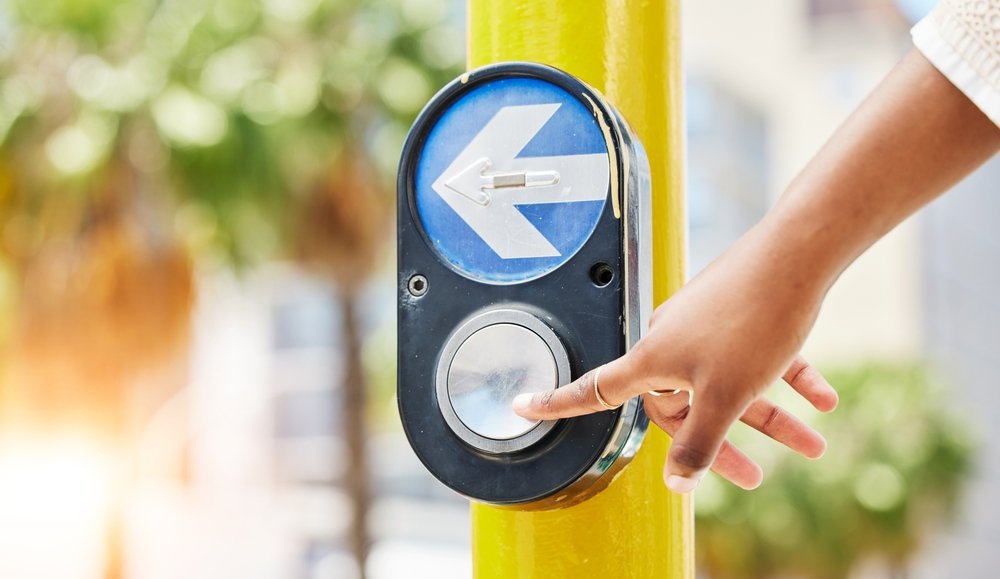
Pedestrian Accidents in Fort Myers: Who Is At Fault When Right Of Way Is Disputed?
Florida Statute 316.130 does not give pedestrians an automatic right to cross the road wherever and whenever they want. That surprises most people who call after a collision. The statute assigns yield duties — sometimes to the driver, sometimes to the person on foot — and those duties shift depending on whether the pedestrian was inside a marked crosswalk, where the nearest signalized intersection was, and whether the person stepped off the curb into a vehicle that had no room to stop. The gap between what people believe and what a jury is actually allowed to consider is where these cases get won or lost.
The right-of-way fight is almost never as simple as the police report makes it look. The driver tells one story at the scene. The pedestrian, if conscious, tells another. The witness who actually saw the impact is usually still standing on the sidewalk holding a phone. What follows is what Florida law actually says, the patterns we see along corridors like Cleveland Avenue and Colonial Boulevard, and how a serious pedestrian case really gets built.
What Florida law actually says about pedestrian right-of-way
The governing statute is Florida Statute 316.130, and the first thing to understand about it is what it does not say. Nowhere does the statute give pedestrians a blanket right to cross the road wherever and whenever they want. What it does is assign yield duties — sometimes to the driver, sometimes to the person on foot, depending on the geometry of the moment.
Inside a marked crosswalk or an unmarked crosswalk at an intersection, drivers must yield to pedestrians who are already in the road or close enough to the driver’s half of the roadway to be in danger. That is the rule most people half-remember. The other half of the statute is the part that gets pedestrians hurt: outside a crosswalk, the person on foot must yield to all vehicles. If the pedestrian is between two adjacent intersections that both have working traffic signals, crossing anywhere except a marked crosswalk is prohibited. And under 316.130(8), a pedestrian may not suddenly leave a curb and step into the path of a vehicle that is too close to stop — the so-called darting-out rule.
Two more statutes matter in the cases we see. Florida Statute 627.736 is the PIP statute, and it follows you when you are walking. If your household has any car insured in Florida, that PIP policy pays the first ten thousand dollars of medical bills and lost wages after a pedestrian crash, regardless of who was at fault. Florida Statute 627.727 governs uninsured-motorist coverage and is the layer we reach for when the driver who hit our client was uninsured or carrying state-minimum bodily injury limits, which in pedestrian cases is depressingly common.
Florida is also a modified comparative fault state now. After the 2023 tort reform, an injured pedestrian who is found more than fifty percent at fault recovers nothing. At fifty percent or less, recovery is reduced by the assigned percentage. That single number — the share of blame a jury would put on you — is what every pedestrian case really turns on.
The seven patterns we see along Fort Myers roads
Pedestrian crashes in this part of Florida are not random. They cluster, and they cluster in patterns that any seasoned personal injury lawyer in Lee County will recognize on sight:
- Left-turning driver at a signalized intersection. The driver is watching for a gap in oncoming traffic and never looks down at the crosswalk on his left. These are some of the cleanest liability cases we handle, especially at corridors like Colonial Boulevard and U.S. 41.
- Right-on-red rolling stops. Driver creeps into the crosswalk looking left for traffic, pedestrian steps off the curb from the driver’s right side, contact happens at one or two miles an hour but the fall does the damage. Older clients with hip and ankle injuries are common here.
- Multi-lane crossings where the near-lane driver stops and waves the pedestrian across. The driver in the far lane never sees the person and does not stop. The kindly wave from lane one becomes the worst decision the pedestrian made that day.
- Mid-block crossings near bus stops and shopping plazas. Cleveland Avenue is the textbook example. People cross to the bus stop, the strip mall, the convenience store. Drivers are doing forty-five and not expecting anyone in the road.
- Parking lot and parking garage strikes. Drivers backing out of spaces, drivers cutting across rows. Speeds are low. Injuries are often not.
- Resort and tourist-district sidewalks at night. Visitors unfamiliar with the road, drivers leaving restaurants, poor lighting along some of the older McGregor Boulevard stretches.
- School zones and trail crossings. Drivers ignoring posted speed reductions, particularly along the Six Mile Cypress Parkway corridor where the trail crosses arterial roads.
Pedestrian cases — why they are harder than they look
The thing that surprises clients most is how aggressively the defense will fight a case that, from the sidewalk, looked open-and-shut. There are a few reasons for that.
First, the comparative-fault math gives the insurance carrier room to negotiate downward on almost any case. If they can argue a pedestrian was twenty percent at fault for crossing slightly outside the painted lines, a million-dollar case becomes an eight-hundred-thousand-dollar case. They do that math on every file.
Second, pedestrian injuries tend to be severe in ways that drive up the medical record but also give the defense more targets. A shattered ankle with surgical hardware, a fractured pelvis, a closed-head injury — these are the typical injury profiles, and each one comes with months of imaging and consults that the defense will pick through looking for a pre-existing degenerative finding to blame.
Third, the driver almost always tells the responding officer that the pedestrian darted out. I have read that sentence in hundreds of police reports. Sometimes it is true. Most of the time the physical evidence — the point of impact on the vehicle, the throw distance, the absence of skid marks — tells a different story than the driver did at the scene. Pulling that evidence apart takes a reconstruction engineer, not a paralegal with a checklist.
Fourth, the driver’s insurance limits are often nowhere near enough to cover a serious pedestrian injury. This is where the household auto policy — the PIP and the UM coverage I mentioned above — quietly becomes the most important policy in the file. Clients are surprised to learn their own car insurance is paying when they were on foot. It is, and it should be.
The Estero case that changed the opening offer
A pedestrian was crossing at the intersection of Three Oaks Parkway and Coconut Road in Estero when a driver making a turn struck him. He went down on the asphalt and could not get up. The diagnosis at the hospital was a shattered ankle — the kind that requires plates and screws, an open reduction, and months on a knee scooter before any weight goes through the joint again.
The driver’s story at the scene was the usual one. Our client had stepped off the curb without warning. The responding officer wrote it up that way. The carrier’s first offer reflected that version of events and would not have covered the surgical bill, let alone the rehabilitation and the permanent scarring around the surgical site.
What changed the case was the work that happened in the first two weeks after we opened the file. We pulled camera footage from a nearby business before it cycled off the system. We had a reconstruction engineer walk the intersection and lay out the sight lines from the driver’s seat. The combination of the camera angle and the engineer’s geometry made the darting-out story untenable.
The settlement that followed covered the surgical care, the loss of mobility in that ankle, the permanent scarring, and a future-care component for the hardware that will eventually need to come out. The point of telling the story is not the number. The point is that the case that looked unwinnable on day one became a strong case once the evidence was actually in front of someone who knew what to do with it.
What to do if you or someone in your family is hit while walking
The advice that follows is drawn from cases we have actually worked, not from a generic checklist. Treat it that way.
- Get the medical attention first. Pedestrians strike the ground in ways that hide injuries. Ankle and hip fractures present as soft-tissue pain in the first hour. A CT scan at the hospital is worth the trip even if you can walk.
- Do not give a recorded statement to the driver’s insurance carrier. They will call within forty-eight hours. The questions are friendly. The transcripts get used to argue you contributed to the crash. Politely decline until you have spoken with a lawyer.
- Get the names and numbers of anyone who stopped at the scene. The witness who told the responding officer what they saw may move, change numbers, or simply not want to be involved a year later. Get their contact information yourself if you can.
- Photograph the shoes you were wearing. I know how that sounds. Defense lawyers raise shoe questions in deposition more often than you would believe. A photograph of the actual shoes, taken the day of the crash, ends that line of questioning before it starts.
- Ask the responding officer for the crash report number before you leave the scene. The report itself will not be available for a few days, but the number lets your lawyer pull it the moment it posts.
- Save the clothing you were wearing if there is blood, tire mark transfer, or paint transfer on it. Evidence on fabric is admissible. Evidence that went through the washing machine is not.
- Call a lawyer before the carrier offers a settlement. The first offer in a pedestrian case is almost always built on the assumption you will accept it before you understand what the medical bills actually look like six months in.
Key Takeaways
- Florida Statute 316.130 does not give pedestrians automatic right-of-way. The duty to yield shifts depending on whether you were inside a crosswalk and whether the nearest intersections were signalized.
- Modified comparative fault means a pedestrian who is more than fifty percent at fault recovers nothing. Below that line, recovery is reduced by the assigned percentage.
- Your own household auto PIP and uninsured-motorist coverage follow you when you are walking. In serious cases those policies are often more valuable than the driver’s bodily injury limits.
- The “pedestrian darted out” defense appears in nearly every police report. Physical evidence and reconstruction work usually tell a different story than the driver did at the scene.
- Two-year filing deadline applies to most pedestrian negligence and wrongful death claims under the 2023 statute of limitations changes. Evidence preservation matters most in the first two weeks.
Frequently Asked Questions
Q1. Do pedestrians always have the right of way in Fort Myers?
No. Florida Statute 316.130 does not grant pedestrians automatic priority. Drivers must yield to people lawfully inside a crosswalk, and pedestrians must yield to traffic when crossing outside a marked or unmarked crosswalk. Either side can be partly or wholly at fault depending on where the person was and what the signals showed.
Q2. I was crossing mid-block when a car hit me. Can I still recover?
Often, yes. Florida uses modified comparative negligence, so as long as a jury would assign you fifty percent or less of the blame, you can still recover, with your award reduced by your share. A driver who was speeding, looking at a phone, or running a yellow can carry more fault than a pedestrian who picked the wrong spot to cross.
Q3. Does my own car insurance pay if I was on foot when I was hit?
Usually yes. Under Florida Statute 627.736, your household auto PIP follows you as a pedestrian and pays the first ten thousand dollars of medical bills and lost wages. If the driver who hit you was uninsured or carried minimum limits, your uninsured motorist coverage under 627.727 can stack on top of that.
Q4. The driver says I jumped out in front of him. What happens now?
That is the most common defense we see in pedestrian cases. The investigation turns on physical evidence, including skid marks, vehicle damage location, point of impact on the body, camera footage from nearby businesses, and the driver’s phone records. Most of the time the story the driver told at the scene does not match what the evidence shows once we pull it together.
Q5. How long do I have to file a pedestrian-injury claim in Florida?
For incidents on or after March 24, 2023, the deadline to file a negligence lawsuit is two years from the date of injury. Wrongful death claims also run two years. Waiting is the single most common way a strong case gets weaker, so the sooner we open a file and lock down evidence, the better.
Talk to our firm before you talk to the driver’s carrier
If you or someone in your family was struck while walking anywhere from McGregor Boulevard to Daniels Parkway, from Cleveland Avenue down through Colonial Boulevard, or out along I-75 near Alico Road, our office handles cases like yours every week. The first conversation is free, and there is no fee unless we recover for you. Call 239-992-8259 or reach us through dontgethittwice.com for a free consultation.
About the Author

David B. Pittman, Esq., the founder of Pittman Law Firm, P.L., has spent more than three decades representing injured Floridians in Fort Myers and across Lee County, with a sustained focus on pedestrian-injury and crosswalk cases. The firm’s Fort Myers presence handles a steady stream of serious-injury work along the Daniels Parkway, Six Mile Cypress, McGregor Boulevard, Cleveland Avenue, and Summerlin Road corridors, and along I-75 between Estero and Bell Tower.
David’s training began at The Citadel, The Military College of South Carolina, where he completed his undergraduate degree, and continued at the University of South Carolina School of Law, where he earned his JD. He is AV-Preeminent rated by Martindale-Hubbell and a member of the Multi-Million Dollar Advocates Forum, recognitions that reflect three decades of seasoned practice rather than any self-described title.
David has held a Florida real estate broker license for twenty-five years, a credential that shapes how the firm reads the property side of premises cases. The firm handles personal injury cases across Lee and Collier Counties, serving Fort Myers, Bonita Springs, Naples, Cape Coral, Estero, and Lehigh Acres, with offices at Windsor Place in Bonita Springs (main) and Fort Myers (satellite). Call 239-992-8259 for a free consultation.
Attorney advertising. The information in this article is for general information only and is not legal advice. Reading it does not create an attorney-client relationship with Pittman Law Firm, P.L. Past results do not guarantee a similar outcome. For advice on your situation, contact our office directly.