

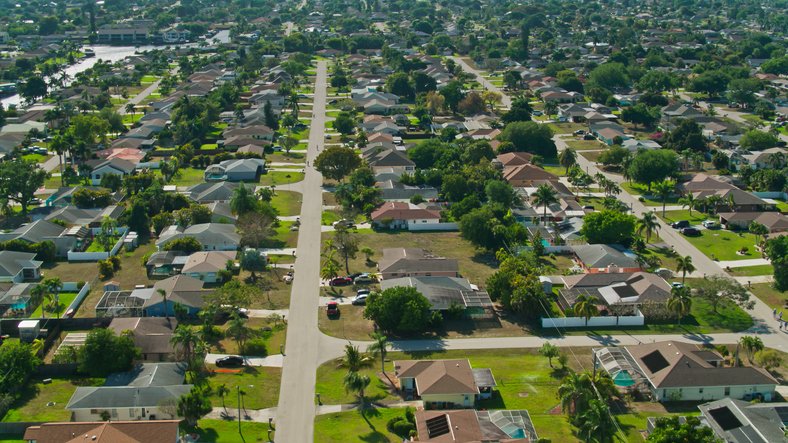
New Road Projects in Cape Coral Could Actually Reduce Car Accidents
Cape Coral’s crash counts have climbed sharply as the city’s population grew — and for a personal injury lawyer who has been working Lee County files for thirty years, road design and signal timing are not abstractions. They show up in our case files, sometimes as the reason a wreck happened and sometimes as the reason a wreck did not become a fatality. The city’s Multimodal Transportation Master Plan, the roundabout work on Diplomat Parkway, the signal retiming along Cape Coral Parkway, and the sidewalk-to-schools push are real responses to a problem that was getting measurably worse.
I want to walk through what the law actually says about a crash on these roads, what we are seeing in our cases, and where the new projects are likely to make a real difference for the people who drive Pine Island Road and Del Prado Boulevard every day.
What Florida law actually says about a Cape Coral car accident
Florida changed the rules of the road for injury cases in March 2023, and a lot of drivers in Cape Coral still have not caught up. There are four statutes you should know about before you even think about how road design affects a case.
The first is section 768.81, Florida Statutes — modified comparative negligence. The plain-English version: a jury assigns each party a percentage of fault, and if your share is 50 percent or more, you recover nothing at all. Before March 2023 you could still recover something even if you were 80 percent at fault, just reduced. That changed. In a Cape Coral multi-vehicle wreck where everyone is pointing fingers, the difference between 49 percent and 50 percent is the entire case.
The second is section 95.11(4)(a) — the statute of limitations. Plain-English version: two years from the date of the crash to file suit on a negligence claim. It used to be four. If your wreck happened in 2024 or 2025, that clock is already running, and we have had to turn away people who walked through our door at month twenty-three because by the time we investigated and prepared the file, the deadline would already be past.
The third is section 627.736 — PIP, Personal Injury Protection. Plain-English version: every Florida driver carries $10,000 in no-fault medical coverage on their own policy that pays first regardless of who caused the crash, and you must get initial treatment within 14 days or you lose it. In a serious wreck on Pine Island Road, that $10,000 disappears at the emergency room. Everything after that comes from elsewhere.
The fourth is section 627.727 — uninsured and underinsured motorist coverage. Plain-English version: this is the coverage on your own policy that steps in when the at-fault driver has no insurance or not enough of it. In Cape Coral, where a lot of drivers carry minimum bodily-injury limits, UM is sometimes the only meaningful coverage left after PIP is exhausted. If you turned it down in writing when you bought the policy, that is one of the conversations I dread having.
One more worth mentioning: section 316.066 requires a crash report any time there is an injury, a death, or apparent property damage of $500 or more. Call 911. Let the officer write it. That report is the spine of every claim file we open.
The crash patterns we actually see on Cape Coral roads
The crash patterns in Cape Coral are not random. They concentrate, and they concentrate at the same places year after year. Here is what comes through our door:
- Pine Island Road and Del Prado Boulevard intersection wrecks. Heavy through-traffic meeting heavy turning traffic, plus a constant stream of commercial vehicles. Rear-end and left-turn collisions dominate.
- Cape Coral Parkway corridor rear-enders. Signal timing along this stretch has been a long-running issue. Eastbound rush-hour queues stack up, and the driver who looks down at a phone for two seconds rear-ends the car in front at 35 miles an hour. We see soft-tissue, disc, and concussion injuries from these constantly.
- Veterans Parkway high-speed collisions. Wider lanes, faster posted speeds, and more aggressive merging. The injuries are more serious because the speeds are higher.
- Cape Coral Bridge and Midpoint Memorial Bridge approaches. Sun-glare in the morning eastbound, traffic stacking at the toll plazas, distracted lane changes. We have handled multiple multi-vehicle pileups in this corridor.
- Residential cut-through wrecks. Drivers using neighborhood streets like Southeast 17th Place to skip Veterans Parkway, hitting children and bicyclists who do not expect the volume.
- Diplomat Parkway and the north Cape T-intersections. The new roundabout work targets these specifically, and rightly so — the conflict-point geometry of the existing layout creates angle collisions that produce the worst injuries.
The Cape Coral Multimodal Transportation Master Plan, the Diplomat Parkway roundabouts, the Pine Island Road turn-lane extension at Veterans Parkway, the sidewalks-to-schools work, the Kismet Multiuse Trail, and the signal retiming along Cape Coral Parkway are responses to exactly these patterns. A roundabout removes most of the angle-collision conflict points at an intersection. Better signal timing reduces the rear-end rate by smoothing the queue. Sidewalks within a one-mile radius of an elementary school keep children off the road shoulder during rush hour. These are not abstractions to me. Every one of these projects targets a crash type we have litigated.
Why Cape Coral car accident cases are harder than they look
From the outside, a car wreck case looks straightforward. Driver A hit Driver B, the police report says Driver A was at fault, the insurance company should pay. In thirty years of practice I have learned that the cases that look simple at the curb almost never stay simple by the time they reach a demand letter.
Here is what makes them harder, particularly in Cape Coral:
Comparative-fault arguments. Since the 2023 reform, every defense lawyer’s first move is to find a way to push the plaintiff to 50 percent fault. Were you looking at your phone? Were you over the posted speed? Did you have a working brake light? In a multi-vehicle pileup on the Cape Coral Bridge, the carriers will try to spread fault across every driver involved to dilute any single one’s exposure. We document the scene, the vehicle data, the witness statements, and the cell-phone records to lock the percentage where it should be.
Layered coverage. A serious wreck rarely involves a single policy. PIP, the at-fault driver’s bodily-injury policy, any commercial umbrella if a work vehicle was involved, your own UM, sometimes a resident relative’s UM. Each carrier has its own incentive to point at the others.
Medical billing gauntlet. Cape Coral Hospital, Lee Memorial, the surgery centers, the imaging providers, and the orthopedist all bill separately. PIP pays first, then group health, then liens attach. If nobody is paying attention to the medical billing in the first ninety days, the lien picture becomes a mess that eats into the recovery.
Road-design and third-party angles. Sometimes the wreck is not just driver-versus-driver. A blown signal, a missing sign, a sight-distance problem at a poorly designed intersection — these can open additional avenues against a municipality or a contractor. Sovereign-immunity caps are real, but the analysis is worth doing in any serious Cape Coral wreck where the geometry of the intersection was part of the cause.
The recorded statement trap. The adjuster calls within 48 hours, sounds friendly, asks if you would mind giving a quick recorded statement. People agree because they want to be helpful. The statement is then used to argue you minimized your injuries, that you said you were fine at the scene, that you were not paying attention. Do not give a recorded statement to the opposing carrier without your lawyer on the line.
A case from the multi-carrier end of the file
A Cape Coral family came to us after a high-speed multi-vehicle collision that took the life of someone they loved. There were several cars involved and several insurance carriers, and from the day we opened the file the carriers were trying to complicate the liability picture — pointing at one another, pointing at the decedent, arguing about which driver started the chain reaction and who could have avoided what.
The probate piece had to be opened in parallel with the injury investigation, because nothing moves on a wrongful-death claim in Florida until a personal representative is appointed. We worked the reconstruction with an engineering witness who put the speeds, the impact angles, and the sequence on a timeline the carriers could not credibly argue with.
The case went through a layered settlement involving more than one policy. We did not get the family back what they lost. No case ever does. What we did get them was a fair multi-policy resolution that took the financial pressure off and let them turn their attention to grieving, instead of fighting carriers. Cases like this one are why I tell people that the day-one decision to slow down and document, instead of giving a recorded statement, can shape what the outcome looks like a year later.
What to do if you are in a Cape Coral car accident
This is the action list I give people who call our office in the first few days after a wreck. It is short on purpose. Generic action lists are how AI-written legal blogs sound. Specific, reasoned steps are how a lawyer who has actually worked these cases sounds.
- Call 911 from the scene and let the officer write the report. Section 316.066 requires it any time there is injury or property damage at or above $500. Get the report number before you leave. We have had clients try to handle a fender-bender informally on Del Prado and then discover three days later that the neck pain is a disc — and there is no police report to anchor the claim file.
- Photograph the scene before anything moves. All four sides of every vehicle, the resting positions, skid marks, debris field, traffic signals, and any sight-line obstructions. Photograph the other driver’s license, registration, and insurance card. The angle and distance details matter at deposition.
- Get evaluated within 14 days. Section 627.736 will deny your PIP benefits if you do not. Even if you feel fine, see a physician. Adrenaline masks soft-tissue and concussion symptoms for 48 to 72 hours. Cape Coral Hospital, an urgent care, or your primary — but go.
- Save the vehicle and the gear. Do not let the body shop dispose of damaged parts until your lawyer has had a chance to inspect them. We have had cases where the seat-belt buckle, the airbag module, or the broken headrest was the proof that turned a low offer into a fair one.
- Notify your own insurer of the claim — and stop there. You are contractually required to put your own carrier on notice. You are not required to give a recorded statement to the other driver’s carrier. Politely decline until you have a lawyer.
- Write down the sequence while it is fresh. Time of day, weather, lane positions, what you heard, what you saw, who you spoke to. Memory blurs within a week. A page of notes written the night of the wreck is worth more than ten depositions taken a year later.
- Call a personal injury lawyer before you call the at-fault carrier back. The first call from the adjuster is almost always a fishing trip. Our consultation is free. If we take the case, there is no fee unless we recover for you.
Key Takeaways
- Florida’s 2023 reform cut the negligence statute of limitations from four years to two years under section 95.11(4)(a). If your Cape Coral wreck is approaching the two-year mark, call a lawyer this week.
- Modified comparative negligence under section 768.81 means that at 50 percent fault or more you recover nothing. In multi-vehicle Cape Coral crashes the fault apportionment fight is the case.
- PIP under section 627.736 caps at $10,000 and requires initial treatment within 14 days. Everything above the cap comes from bodily-injury, UM, or layered coverage under section 627.727.
- The new Cape Coral road projects — Diplomat Parkway roundabouts, Cape Coral Parkway signal retiming, Pine Island Road turn-lane extension, sidewalks to schools — target the exact crash patterns we see in our case files.
- Do not give a recorded statement to the opposing carrier before you have a lawyer on the line.
Frequently Asked Questions
Q1. If a Cape Coral intersection that the city already flagged as dangerous is where my crash happened, does that help my case?
It can help on damages and on countering a low offer, but it does not automatically increase a settlement. The other driver still has to have been negligent. What the public crash data does is corroborate that the road design or signal timing was a known issue, which sometimes opens additional avenues against a third party such as a contractor or municipality. We pull the city and county records as a matter of course in serious Cape Coral wrecks.
Q2. How long do I have to file a car accident lawsuit in Florida after a Cape Coral crash?
Two years from the date of the crash for most negligence claims, under section 95.11(4)(a) as amended in March 2023. Before the 2023 reform it was four years. Wrongful-death claims also run two years. Do not wait. PIP benefits also have a 14-day initial-treatment window under section 627.736.
Q3. I was partly at fault in a Cape Coral collision. Can I still recover anything?
Maybe. Florida shifted to modified comparative negligence in 2023, under section 768.81. If a jury finds you 50 percent or more at fault, you recover nothing. At 49 percent or less, your recovery is reduced by your percentage of fault. In multi-vehicle Cape Coral cases the fault apportionment fight is usually where the case is won or lost.
Q4. Do I have to file a crash report after a Cape Coral accident?
Under section 316.066, a crash that involves injury, death, or apparent property damage of $500 or more requires a report. In practice, call 911, let the responding officer write the report, and get the report number. That document is the spine of the claim file when we present it to the carrier.
Q5. My PIP only paid $10,000 and my medical bills are far higher. What now?
PIP under section 627.736 is capped at $10,000 and is no-fault. Anything beyond that comes from the at-fault driver’s bodily-injury coverage, your own uninsured/underinsured motorist coverage under section 627.727, or a combination. In a serious Cape Coral wreck we routinely stack policies — the at-fault driver, any commercial coverage, your own UM, and sometimes a household resident’s UM.
Talk to a Cape Coral car accident lawyer
If you or someone in your family has been hurt in a wreck on Cape Coral Parkway, Pine Island Road, Del Prado Boulevard, Veterans Parkway, or anywhere across Lee County, our office will sit down with you and walk through what the case looks like. Call 239-992-8259 for a free consultation. There is no fee unless we recover for you.
About the Author

Pittman Law Firm, P.L., founded by David B. Pittman, Esq., has built thirty-plus years of personal injury practice in Cape Coral and the Lee County waterfront, with a sustained focus on serious-injury auto and complex-liability cases. Cape Coral cases concentrate along Cape Coral Parkway, Pine Island Road, Del Prado Boulevard, and Veterans Parkway, with steady serious-injury auto work feeding in from the Cape Coral Bridge corridor.
Educationally, David is a graduate of both The Citadel, The Military College of South Carolina, and the University of South Carolina School of Law. Professionally, he holds AV-Preeminent status with Martindale-Hubbell and Multi-Million Dollar Advocates Forum membership.
David has held a Florida real estate broker license for twenty-five years, a credential that shapes how the firm reads the property side of premises cases. The firm handles personal injury cases across Lee and Collier Counties, serving Fort Myers, Bonita Springs, Naples, Cape Coral, Estero, and Lehigh Acres, with offices at Windsor Place in Bonita Springs (main) and Fort Myers (satellite). Call 239-992-8259 for a free consultation.
Disclaimer: This article is for general informational purposes only and is not legal advice. Reading it does not create an attorney-client relationship with Pittman Law Firm, P.L. Every case is different. If you have been injured, contact a Florida-licensed attorney to discuss your specific situation. Attorney advertising. Prior results do not guarantee a similar outcome.