

Recognizing Concussion Symptoms After a Bonita Springs Car Crash
Three or four days after a wreck on Old 41 or Bonita Beach Road, clients walk into our Windsor Place office saying some version of the same thing: “I didn’t hit my head. The paramedics checked me out. Now I can’t remember a phone call I had this morning and the kitchen light is unbearable.” That pattern is not unusual. It is the rule, not the exception, on rear-end crashes around Bonita Springs.
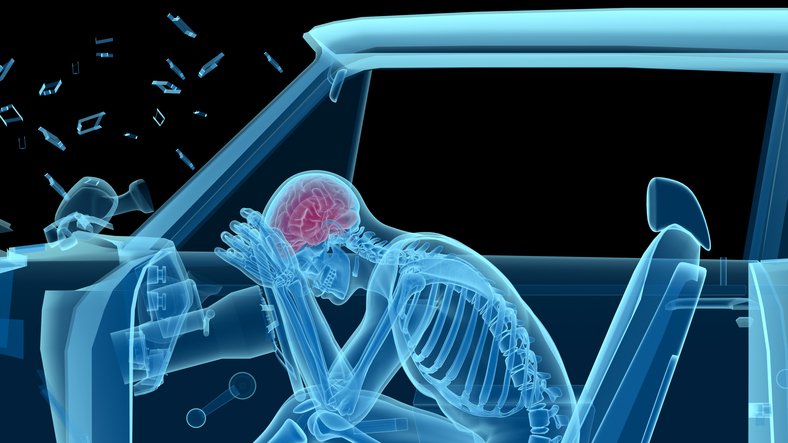
A concussion is a brain injury, even when the imaging looks clean and the ER paperwork says “minor.” The brain sits in fluid inside the skull. In a rear-end on Imperial Parkway at thirty-five miles per hour, your head can snap forward and back hard enough to bruise the brain against the inside of the skull without your forehead ever touching the airbag. The medicine on this has tightened up over the last decade, and so has the case law. Both matter for what you do next — starting with the fourteen-day PIP window that closes whether you feel injured or not.
What Florida law actually says about concussion claims after a car crash
There are four statutes worth knowing if you are looking at a possible brain injury after a Bonita Springs collision. I am going to give you the citation, then the plain-English version.
§627.736, Florida Statutes — PIP (Personal Injury Protection). Florida is a no-fault state for the first layer of medical bills. Your own auto policy carries $10,000 in PIP that pays 80 percent of reasonable medical costs and 60 percent of lost wages regardless of who caused the wreck. The catch nobody tells you about at the scene: you must be seen by a qualifying medical provider within fourteen days of the crash, or PIP coverage drops to $2,500 and emergency-only. For a concussion that does not announce itself for two or three days, that fourteen-day clock is the most important deadline in the early life of your case.
§627.727, Florida Statutes — Uninsured/Underinsured Motorist (UM/UIM). This is the coverage I tell every Floridian to buy and keep. Florida has one of the highest rates of uninsured drivers in the country, and our minimum bodily injury limits are low. If the driver who hit you on Bonita Beach Road is carrying a $10,000 BI policy and you have a six-month concussion recovery, $10,000 will not pay your bills. Your own UM coverage fills the gap. We recover under UM policies routinely in head-injury cases.
§768.81, Florida Statutes — Modified comparative negligence. In March 2023, the Florida legislature changed the rules of the game. Under the old pure-comparative system, if a jury found you 80 percent at fault, you still recovered 20 percent of your damages. Under the new modified rule, if a jury finds you more than 50 percent at fault, you recover nothing. At fifty percent or less, your recovery is reduced by your share of fault. In a concussion case where the defense will argue you were distracted, looking at your phone, or following too closely, that 50-percent line matters more than people realize.
§95.11(4)(a), Florida Statutes — Statute of limitations. The same 2023 reform cut the negligence statute of limitations from four years to two. For a crash on or after March 24, 2023, you have two years from the date of the wreck to file suit. Concussion cases tend to be slow movers — symptoms linger, treatment plans evolve, MRIs get ordered late — and we have seen people miss the window because they assumed they had four years like everyone used to. They do not.
Five concussion presentations we see in Bonita Springs and Lee County cases
After thirty years of representing injured Floridians, the concussion cases that walk into our Bonita Springs office tend to fall into one of these patterns:
- The “I’m fine” rear-ender on Bonita Beach Road. Low-speed rear-end, no visible damage to either bumper, driver declines the ambulance. Forty-eight hours later: headache that will not quit, light sensitivity, trouble following a conversation. The insurance carrier has already opened a file calling it a “minor impact, soft tissue” claim.
- The T-bone at a left-turn arrow. Side impact at an intersection like Old 41 and Bonita Beach Road, or Imperial Parkway and US-41. The head whips laterally, the temple takes the airbag, and the cognitive symptoms — word-finding, short-term memory, irritability — show up before the physical ones.
- The senior driver in a slow-speed parking-lot strike. We see this a lot in the Pelican Landing and Bonita Bay corridors, and around the shopping plazas off US-41. A fifteen-mile-per-hour impact does not sound serious, but in a seventy-five-year-old on blood thinners, even a mild concussion can mean a subdural hematoma that does not show on the first scan.
- The child-pedestrian or bicycle case. A child struck by a vehicle in a residential corridor off Imperial Parkway or near a Spanish Wells school zone. These cases are usually catastrophic when they happen, and the brain-injury component dominates the medical picture for years.
- The delayed-onset case. A driver who walked away from the scene calls us a month later because they cannot get back to their job. The medical record from the ER says “no acute findings,” and now the carrier is using that line to deny everything.
Each of these has its own defenses, its own medical workup, and its own valuation arc. None of them get handled well by treating the claim as a generic “soft tissue” file.
Why the defense fights concussion claims harder than broken bones
The hard part of a head-injury claim is not proving that the wreck happened. It is proving that the wreck caused the cognitive and emotional symptoms the client is living with six months later. A concussion is what doctors call a clinical diagnosis — there is rarely a single image you can hold up to a jury and say “here it is.” That is why these cases get fought.
The defense playbook is consistent. First, attack the gap in treatment — if you waited a week to see a doctor, the carrier will argue your headaches came from something else. Second, attack the imaging — a clean CT scan at the ER will be used to argue you were never really hurt, even though CT scans were never designed to detect a concussion. Third, attack the symptoms as subjective — irritability, poor sleep, sensitivity to light, all of which are real and well-documented but cannot be measured by a machine. Fourth, attack the pre-existing record — old migraines from college, an anxiety diagnosis from a decade ago, a prior fender-bender no one remembers.
What beats that playbook is documentation done right from the first week. Same-day or next-day urgent care. A referral to a neurologist or a concussion clinic, not just primary care. Symptom journaling, ideally on paper with dates. Witness statements from family members and coworkers about cognitive changes they are actually observing. Neuropsychological testing at the right point in the recovery curve. And no missed follow-up appointments. We have seen seven-figure brain-injury cases turn on whether the client wrote down their headache pattern in the first thirty days.
A head injury case that started on a residential street and stayed with me
One of the cases I think about often was from earlier in my practice. A six-year-old boy chased a ball into the road. He was hit so hard he was thrown across the road — out of his shoes — and landed on his head. He was in the hospital for months. When he came out, he had moderate permanent brain damage. He was the son of a single mom who was holding the family together by herself and doing the best she could.
I would visit him in the hospital. Sometimes we would bring food, because his mother had stopped being able to think about anything as ordinary as making dinner. That part of the job is not in any textbook. It is the part our family does because the families we represent are going through the worst stretch of their lives, and the people in the room with them ought to act like it matters.
The case settled at the at-fault driver’s policy limit. Because our client was a minor, Florida law requires a judge to approve the settlement under what is called a minor-court settlement — the money goes into a court-supervised account and stays there until the child turns eighteen. By the time he reached that age, the now-young-man had enough to pay for college and get a real start in life. He did. I am still proud of that one.
I tell that story because parents in Bonita Springs ask me, after a child-pedestrian case or a serious crash that injured their kid, whether the system will actually take care of their family long-term. the answer is that the system is imperfect, but the minor-court trust mechanism in Florida is one of the parts that works. It exists to protect children from their settlements being spent on anything other than their own future. It does that job.
What to do in the first two weeks if you think you have a concussion
This is the practical part. Thirty years of watching what helps versus what hurts:
- Get seen within fourteen days, even if you feel okay. The PIP statute makes this a financial issue, but the medicine makes it a health issue. Urgent care or a primary care visit counts. Tell them you were in a crash and you want a concussion evaluation, not a generic check-up. Use the words “head injury” so it lands in the chart.
- Keep a symptom journal on paper. Date, time, what symptom, how bad on a one-to-ten scale, what you were doing. I have watched clients do this and seen it become the most useful exhibit at mediation. Phones are fine, but paper is better because it does not get overwritten and it photographs cleanly.
- Ask for a neurology or concussion-clinic referral by week two. Primary care is fine for triage. A concussion claim that goes anywhere in negotiation has documentation from a brain-injury physician, not just a family doctor.
- Skip the screens, the alcohol, and the gym for the first week. I am not your doctor, but every concussion physician I have worked with says the same three things. Symptoms get worse when the brain is asked to do too much too soon. Honor the cognitive rest period.
- Tell your spouse, your parent, or a close friend what is going on. They will notice the changes you cannot — the word you could not find, the mood swing at dinner, the second cup of coffee that did not help. Their observations become witness testimony if your case ever sees a courtroom.
- Do not give a recorded statement to the at-fault carrier. Not in the first two weeks, not later. They will call and they will be polite. Politely tell them you will get back to them and then talk to a lawyer first. A recorded statement made while you are still cognitively impaired from a head injury is a gift to the defense.
- Save every piece of paper. ER discharge, follow-up notes, prescription receipts, the crash report from §316.066. The case gets built out of paper.
Key Takeaways
- Concussion symptoms often appear 24 to 72 hours after a Bonita Springs crash, not at the scene. A clean ER visit on day one is not the end of the story.
- Florida PIP under §627.736 requires medical contact within 14 days. Miss that and you lose most of the $10,000 in no-fault coverage.
- Since the 2023 reform, you have two years to file under §95.11(4)(a), and you recover nothing if a jury finds you more than 50 percent at fault under §768.81.
- UM coverage under §627.727 is the most useful coverage you can carry in a state full of low-limit and uninsured drivers. Brain-injury cases routinely outrun the at-fault driver’s BI policy.
- The cases that win at mediation have a symptom journal, a neurology referral by week two, and no recorded statement to the other carrier. The cases that lose have a treatment gap.
Frequently Asked Questions
I feel fine right after the crash. Could I still have a concussion?
Yes, and this is one of the most common patterns we see. Concussion symptoms often surface 24 to 72 hours after the wreck, once the adrenaline wears off. If you feel off in the days after a crash on Bonita Beach Road or US-41 — headache that does not respond to Tylenol, light or sound sensitivity, trouble focusing at work — get checked even if the ER cleared you at the scene.
Does Florida PIP cover a concussion diagnosis and follow-up?
Florida’s PIP statute, §627.736, gives you up to $10,000 in no-fault medical benefits, but only if you are seen by a qualifying medical provider within 14 days of the crash. Miss the 14-day window and PIP coverage drops to $2,500 and emergency-only. For a head injury that does not declare itself for two or three days, that 14-day clock is the most important early deadline in your case.
How long do I have to file a concussion injury lawsuit in Florida?
Under the 2023 tort reform amendment to §95.11(4)(a), Florida shortened the negligence statute of limitations from four years to two. For most car crashes on or after March 24, 2023, you have two years from the date of the crash to file suit. Concussion claims tend to move slowly, which is exactly why we file early in close cases.
What if the at-fault driver had no insurance or low limits?
Your own Uninsured/Underinsured Motorist coverage under §627.727 steps in. Florida has one of the highest uninsured-driver rates in the country, and our minimum bodily injury limits are low. We recover under our client’s UM policy frequently in head-injury cases, because a six-month concussion recovery routinely outruns a $10,000 or $25,000 BI policy.
Can I still recover if I was partly at fault in the crash?
Sometimes. Under §768.81, Florida now uses modified comparative negligence. If a jury finds you more than 50 percent at fault, you recover nothing. At 50 percent or less, your recovery is reduced by your percentage of fault. The 2023 change tightened the old pure-comparative rule and matters a great deal in concussion cases where the defense will argue distraction.
Talk to a Bonita Springs car accident attorney about your concussion claim
If you or someone in your family is dealing with concussion symptoms after a crash in Bonita Springs, Fort Myers, Naples, Estero, Cape Coral, or Lehigh Acres, our office would be glad to talk with you. The first call is a free consultation. We work on a contingency fee, which means there is no fee unless we recover for you. Call 239-992-8259, or stop by our Windsor Place office at 3525 Bonita Beach Road, Suite 107. The sooner we get involved, the more we can do with the PIP window, the medical workup, and the evidence trail.
About the Author

David B. Pittman, Esq. has practiced personal injury law from the firm’s Windsor Place office on Bonita Beach Road for more than thirty years, founding Pittman Law Firm, P.L. along the way, with a sustained focus on serious-injury auto and complex-liability cases. Bonita Springs is home for the firm, and most of its child-pedestrian, premises, and family-injury cases come from the residential corridors off Old 41 and Imperial Parkway, the school zones around the Bonita Beach Road corridor, and the surrounding Lee County neighborhoods.
David earned his undergraduate degree at The Citadel, The Military College of South Carolina, and his law degree at the University of South Carolina School of Law. He is rated AV-Preeminent by Martindale-Hubbell and belongs to the Multi-Million Dollar Advocates Forum.
David has held a Florida real estate broker license for twenty-five years, a credential that shapes how the firm reads the property side of premises cases. The firm handles personal injury cases across Lee and Collier Counties, serving Fort Myers, Bonita Springs, Naples, Cape Coral, Estero, and Lehigh Acres, with offices at Windsor Place in Bonita Springs (main) and Fort Myers (satellite). Call 239-992-8259 for a free consultation.
The information on this website is for general information purposes only. Nothing on this site should be taken as legal advice for any individual case or situation. This information is not intended to create, and receipt or viewing does not constitute, an attorney-client relationship. Pittman Law Firm, P.L. is an attorney advertising communication.