

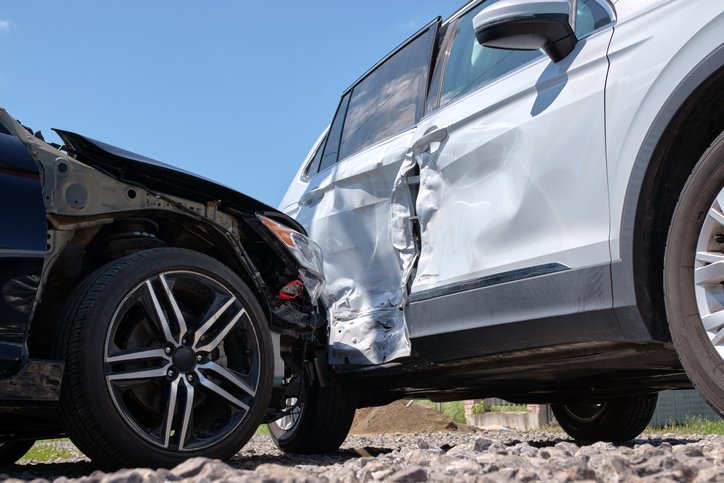
Side Impact Collisions: How Car Accident Lawyers Determine Fault in Southwest Florida
People assume that because the other driver hit them in the side, the other driver is automatically 100% at fault. I understand why. The physics feel straightforward. But after thirty years of practice in Lee and Collier Counties, I can tell you the side-impact cases are the ones carriers fight hardest, because a few percentage points of comparative fault can move six figures off the table. The through driver — the one who had the green light — can and does pick up fault, and under Florida’s 2023 tort reform, the carrier only needs to push that number past 50% to end your case entirely.
Most of the broadside crashes our firm handles happen at intersections along US-41 (Tamiami Trail) and the I-75 corridor through Lee and Collier Counties — Bonita Beach Road, Daniels Parkway, Immokalee Road, Estero Parkway. The pattern is consistent. One driver fails to yield, the other enters on a green, and the geometry of a door against a bumper does what physics says it will do. Side airbags help. They do not solve the underlying problem: the side of a car is not built to absorb the same energy as the front or rear.
What Florida law actually says about fault in side-impact crashes
Three statutes do most of the work in a T-bone fault analysis, and clients deserve a plain-English read on each one before signing anything.
§768.81, Florida Statutes — modified comparative negligence. Florida changed this rule in March 2023. If a jury finds you more than 50% at fault, you recover nothing. At 50% or below, your damages get reduced by your fault percentage. In plain English: if you had the green light but were doing 52 in a 45, the defense will argue you contributed to the crash and push your number above 50 to zero you out. The whole defense playbook in a side-impact case is built around that math.
§95.11(4)(a), Florida Statutes — the two-year statute of limitations. The same 2023 reform cut the negligence deadline from four years to two. Two years from the date of the crash to file suit. Miss it and the case is gone, no matter how clear the fault picture is. We see clients who waited because PIP was paying the bills and then woke up at month twenty-three with no time to investigate and no standing left at the table.
§627.736, Florida Statutes — PIP. Personal Injury Protection pays the first $10,000 of your medical bills and 60% of your lost wages no matter who caused the crash. T-bone injuries chew through $10,000 fast — one MRI, one ER visit, and a handful of physical therapy sessions and you are out. To recover beyond PIP, you need a permanent injury and the at-fault driver’s bodily injury liability coverage, or your own UM.
§627.727, Florida Statutes — Uninsured Motorist coverage. UM does the heavy lifting when the other driver has no insurance, not enough insurance, or runs from the scene. Florida does not require drivers to carry bodily injury liability, which is why so many of our T-bone clients recover primarily from their own UM policy. Pull your declarations page in the first 48 hours.
Four crash patterns we work through our office
Most broadside crashes in our office fall into one of four patterns. The fault analysis is different for each.
- The failure-to-yield left turn. Driver A goes straight through a green. Driver B turns left across A’s path. B is almost always at fault, but the defense will press on whether A was speeding or distracted. EDR (event data recorder) downloads and intersection-camera footage matter here.
- The run stop sign or run red light. One driver enters against a control device. Cleanest fault picture on paper, but the defense hunts for inattention by the through driver. A doorbell camera on a nearby house has won more of these cases than I can count.
- The simultaneous-arrival right-of-way dispute. Two drivers arrive at an uncontrolled intersection at roughly the same moment. Under §316.121, the driver on the left yields to the driver on the right. These cases produce split-fault verdicts — exactly where the new 50% bar can swallow the case.
- The impaired or distracted driver. Sometimes the broadside is not about right-of-way — it is about a driver who was not in any condition to be behind the wheel. Impaired-driver crashes change the case entirely, including punitive damages and dram-shop claims against the establishment that overserved.
What makes side-impact cases harder than the fact pattern suggests
Three things make these cases harder than the fact pattern suggests. First, the physical damage tells a story the carrier often does not want to tell. A door caved in at the B-pillar with the airbag deployed and the driver hospitalized is not a “minor impact, soft tissue” claim, no matter what the adjuster’s first letter says. We send our own engineering witness to the storage yard before the vehicles get released. Once the cars are gone, the evidence is gone.
Second, side-impact injuries are often delayed-onset. Herniated discs at L4-L5 do not always show on the day-one ER film. Concussions get missed when the patient was alert at the scene. Adjusters point at any gap in treatment and argue the injury was not real. Get to a qualified physician within a week and follow the treatment plan without long gaps. PIP requires initial services within 14 days — miss it and the $10,000 in no-fault benefits is gone.
Third, the through driver almost always picks up some fault in the defense’s first offer. Five percent here, ten percent there. Over thirty years I have watched carriers chip at the through driver’s number until the case sits right at the 50% line, which under the new statute is the difference between a full recovery and zero. The answer is to lock down the liability picture early — police crash report under §316.066, witness statements, signal-timing records, EDR downloads — and refuse to negotiate a fault number that does not match the evidence.
A case from Lehigh Acres
One we worked recently involved a client in Lehigh Acres who was driving home in the early evening when an impaired driver blew through a stop sign and broadsided her on the driver’s side. She walked out of the ER that night with what the discharge paperwork called “neck strain.” Within two weeks she could not turn her head to check a blind spot, and within a month an MRI was showing herniated lumbar discs and severe whiplash that radiated into her left arm.
The carrier’s first move was the one I have come to expect — a quick lowball offer with language about “soft tissue” and a hint that our client should have been more alert at an intersection she drove through every day. The client went through a series of injections and a focused course of physical therapy with a physician who actually treats spine injuries, not a mill.
By the time we were ready to talk numbers, the impaired-driver piece of the file had changed the conversation. The carrier knew a jury was going to hear about a stop sign blown by a driver who should not have been behind the wheel, and the comparative negligence argument went away. We resolved the case for a number that covered her medical care, her lost wages, the surgical consult her physician had recommended, and a meaningful amount for what the herniated discs will mean for the rest of her life.
What to do if you are hit in a side-impact crash in Southwest Florida
This is not a generic checklist. These are the moves I have watched protect clients’ cases over thirty years of practice.
- Call 911 from the scene, every time. A Florida crash report under §316.066 anchors the liability picture. Private insurance exchanges after a serious crash almost always favor the at-fault driver later.
- See a physician within 14 days — not 15. PIP requires initial services within 14 days under §627.736. Miss it and the $10,000 in no-fault medical benefits is gone. I have had clients lose PIP because they “felt fine” on day twelve and waited until day sixteen.
- Photograph the intersection before the lights change. Signal phasing, sight lines, sun angle, road debris, skid marks. Doorbell cameras get power-cycled. Witnesses move.
- Do not give a recorded statement to the other driver’s carrier. It is not for your benefit. It is for impeachment at trial. Politely decline.
- Pull your own declarations page. Your UM limits and med-pay specifically. If the at-fault driver carries minimum limits, your UM is the case.
- Tell your treating physician the truth, including the unflattering parts. Aggravation of a pre-existing condition is compensable under Florida law. A surprise prior injury in discovery is what kills cases.
- Do not post about the crash on social media. “Feeling better today” is exhibit A at trial.
Key Takeaways
- Side-impact fault is rarely as clean as it looks — the through driver still has to defend against a comparative negligence push, and under the 2023 reform that push can zero out the case at 50%.
- You have two years to file under §95.11(4)(a), Florida Statutes — not four. Crashes on or after March 24, 2023 are on the shorter clock.
- PIP covers the first $10,000 in medical bills and lost wages but only if you see a physician within 14 days. Past the 14-day window, the $10,000 goes away entirely.
- Uninsured Motorist coverage is often the largest pot of money on a serious T-bone case because Florida does not require drivers to carry bodily injury liability. Pull your declarations page in the first week.
- Lock down the liability evidence early — signal-timing records, EDR downloads, doorbell and intersection video, and witness statements. Once those vanish, the case is whatever the adjuster says it is.
Frequently Asked Questions
Who is usually at fault in a T-bone crash at a Florida intersection?
Usually the driver who failed to yield — running a red light, rolling a stop sign, or turning left across oncoming traffic. But Florida is a modified comparative negligence state, so the through driver can still pick up fault for speeding, distraction, or running a yellow that had already turned red. We look at signal timing, the police report, any traffic-cam or doorbell video, and the damage angles before agreeing to any fault split.
How long do I have to file a side-impact claim in Florida?
Two years from the date of the crash under §95.11(4)(a). The 2023 reform cut the old four-year deadline in half, and it applies to crashes on or after March 24, 2023. Wrongful death is also two years, but from the date of death.
Will my PIP cover a T-bone injury, or do I need to sue the other driver?
PIP covers the first $10,000 of medical bills and lost wages no matter who caused the crash, under §627.736. T-bone injuries almost always blow through $10,000 in the first month. To recover beyond PIP for pain and suffering, you need to meet Florida’s permanent-injury threshold and pursue the at-fault driver’s bodily injury liability coverage.
What if the driver who hit me had no insurance or fled?
That is what Uninsured Motorist coverage is for, under §627.727. UM steps in when the at-fault driver has no insurance, not enough insurance, or cannot be identified — including hit-and-run. Clients often forget they carry UM, and it is frequently the largest pot of money available on a serious side-impact case.
Does Florida’s 50% bar mean I get nothing if I was partly at fault?
If a jury finds you more than 50% at fault, yes — you recover nothing under the 2023 version of §768.81. At 50% or less, your recovery is reduced by your fault percentage. If your damages are $200,000 and the jury finds you 20% at fault, you collect $160,000.
Talk to Our Firm Before the Carrier Locks You In
If you were broadsided in Bonita Springs, Fort Myers, Naples, Estero, Cape Coral, or Lehigh Acres, the worst thing you can do is wait. The carrier is already building its file. The 14-day PIP window is already running.
Call us at 239-992-8259 for a free consultation. I will look at the police report, your policy, and the medical picture, and tell you straight whether you have a case worth pursuing. There is no fee unless we recover for you.
About the Author

Personal injury is the focus of David B. Pittman, Esq.’s practice across Southwest Florida, and has been since he founded Pittman Law Firm, P.L. more than three decades ago, with a sustained focus on serious-injury auto and complex-liability cases. The firm represents injured clients across Lee and Collier Counties — from the firm’s main office at Windsor Place on Bonita Beach Road through Fort Myers, Naples, Estero, Cape Coral, and Lehigh Acres.
After undergraduate work at The Citadel, The Military College of South Carolina, David earned his JD at the University of South Carolina School of Law. He is AV-Preeminent at Martindale-Hubbell and a member of the Multi-Million Dollar Advocates Forum.
David has held a Florida real estate broker license for twenty-five years, a credential that shapes how the firm reads the property side of premises cases. The firm handles personal injury cases across Lee and Collier Counties, serving Fort Myers, Bonita Springs, Naples, Cape Coral, Estero, and Lehigh Acres, with offices at Windsor Place in Bonita Springs (main) and Fort Myers (satellite). Call 239-992-8259 for a free consultation.
The information on this website is for general information purposes only. Nothing on this site should be taken as legal advice for any individual case or situation. This information is not intended to create, and receipt or viewing does not constitute, an attorney-client relationship. Prior results do not guarantee a similar outcome.