

State Farm Auto Claims: Low Payouts for Luxury Cars in Florida Leads To Class Action Lawsuit. How To Know If You Have A Case
A lot of luxury-car owners assume that if they carry full coverage, a repair will be paid in full. With State Farm and high-value vehicles in Florida, that assumption is breaking down. A client gets rear-ended on the I-75 corridor near Bonita Beach Road, the manufacturer-authorized shop quotes $8,300 to put the car back to factory condition, and State Farm writes its own estimate near $6,300 and offers the lower number. The owner is left to cover the gap or hand the car to a shop the manufacturer never approved. In our office, that is no longer a one-off. It is a pattern.
A class action filed in Broward County brought this fight into the open. The named plaintiffs own a 2022 Porsche Taycan insured for more than $100,000. After a 2022 collision, the manufacturer-authorized body shop wrote the repair at $8,360.87. State Farm wrote its own estimate at $6,267.03 and offered to pay that number, less the deductible. The complaint alleges State Farm has a company practice of refusing to pay the hourly labor rates charged by manufacturer-authorized facilities on high-value vehicles, even though the policy promises to restore the car to its pre-loss condition.
Below is how I read the situation, what Florida law actually says about it, the patterns we are seeing in our practice, and what to do if your claim looks like one of these.
What Florida law actually says about a short-paid repair claim
Two bodies of law matter here. The first is your contract. Your auto policy is a contract between you and State Farm. Florida courts read that contract by its plain language. If the policy says State Farm will pay the cost to repair the vehicle to its pre-loss condition, then a labor rate that does not reflect what an authorized facility actually charges is fair game for a breach-of-contract claim. The Broward complaint is built on that theory.
The second body of law matters when you were hurt in the same crash. If another driver caused the collision, the property-damage claim against State Farm under your own policy is one thing, and the injury claim against the at-fault driver is a separate matter. Three Florida statutes come up over and over on the injury side:
- §768.81, Fla. Stat. — modified comparative negligence. Florida changed the rule in 2023. If a jury finds you more than fifty percent at fault, you recover nothing. In plain English: cross the fifty-percent line and the case is gone. That is why how the crash gets investigated and how fault gets framed early matters so much.
- §95.11(4)(a), Fla. Stat. — statute of limitations. The 2023 reform shortened the negligence deadline from four years to two for crashes after March 24, 2023. Miss the two-year mark and the right to sue is gone, no matter how strong the underlying case was.
- §627.736, Fla. Stat. — Personal Injury Protection. Your own PIP carrier pays the first $10,000 of medical bills (or $2,500 if you are not found to have an emergency medical condition), regardless of fault. That is the no-fault baseline. It does not pay for car repairs — that is the collision side of the policy — but it is the system most of our clients are inside when these short-pay fights start.
The reason these statutes come up in a repair-rate post is simple: when an insurer is willing to lowball the property damage on a luxury car, the same adjuster is often the one tightening up the bodily-injury offer. The two numbers travel together more often than people realize.
The five scenarios we actually see on these claims
From our case files in Bonita Springs, Fort Myers, and Naples, the short-pay luxury fight tends to show up in one of these forms:
- The Porsche, BMW, or Mercedes owner with a structural hit. The authorized shop quotes the rate published by the manufacturer for trained technicians on aluminum welding, calibration, and ADAS reset. The insurer writes the estimate at a generic body-shop rate that ignores the training requirement. Difference: $1,500 to $4,000 out of pocket.
- The Tesla or EV owner with battery, sensor, or high-voltage damage. Tesla requires repairs at a manufacturer-authorized collision shop to preserve the high-voltage warranty. The insurer sometimes pushes a non-authorized shop that physically cannot reset the battery cooling lines or recalibrate Autopilot cameras.
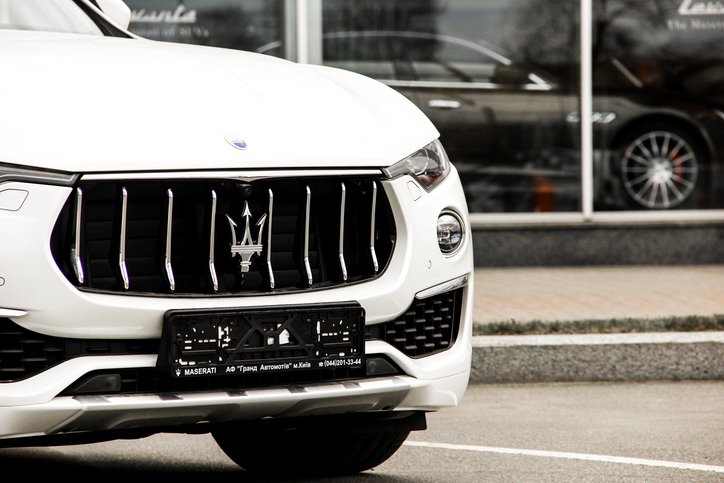
- The Maserati or low-volume marque owner. The “select service” approved-shop list does not include anyone who will work on the car. The owner is told to find a shop, then told the labor rate is capped at the local generic rate. Several of these owners get squeezed into long delays.
- The non-luxury owner with a modern ADAS-equipped Honda, Toyota, or Ford. This is the next frontier. Modern crash repairs require radar calibration, camera alignment, and blind-spot module programming. The same labor-rate dispute is starting to creep into ordinary claims.
- The injury-plus-repair claim. The driver was hurt in the same crash. The repair short-pay is the canary in the coal mine. If the adjuster is squeezing the property estimate, you can plan on a tight bodily-injury offer too.
The part of these claims insurers count on
A short-paid repair invoice sounds like a small fight on paper. In practice, it is layered. The shop has an estimate. The insurer has an estimate. The policy has a definition of pre-loss condition that is not as precise as you would think. The manufacturer has warranty rules that can void coverage if a non-authorized shop touches the wrong component. And the consumer is sitting at the dealership with a loaner-car bill running.
There is also a documentary problem. Most clients call us after they have already taken a recorded statement, signed a property-damage release, and accepted a check. Once a release is signed without the right reservation-of-rights language, the property-damage piece is usually gone for good. The bodily-injury claim is still live, but the use from a clean record is gone.
A point I make to every client at intake: read the policy. The declarations page tells you the labor-rate language is buried in the policy form, not in the marketing. The policy form is the contract. Florida courts read it by its plain words. So do we.
The steps these claims go through
A client called us from Lehigh Acres after a commercial truck rear-ended her on Lee Boulevard. The truck driver was on the clock, hauling for a regional company that ran a fleet out of Lee County. Our client’s vehicle was a total loss, but the more serious problem was her neck. The MRI showed severe nerve impingement at two levels in the cervical spine. She started with conservative care, moved to facet joint injections after that stopped giving her relief, and ended up in long-term physical therapy. The pain woke her up at night for the better part of a year.
On the liability side, we pursued the driver and his employer under vicarious liability, a Florida rule that says when an employee causes a crash on the job, the employer answers for it. That doubled the available coverage and gave us a real defendant to negotiate against. We worked the medical records, deposed the driver, pulled the company’s hours-of-service logs, and put the employer’s safety practices on the table.
The case resolved for a six-figure settlement before trial. The number was the result of pressure that built across many months: medical documentation that told the same story as the symptoms, a clean liability picture, and a client who answered every question the same way each time she was asked. Those are the cases that pay.
The reason I am telling that story in a State Farm repair-rate post is the through-line. The carrier that fights the labor rate on a high-value repair is the same carrier that fights the bodily-injury value on a serious neck injury. The skills that matter on one fight matter on the other: read the policy, document everything, and do not let the insurer write the narrative.
What to do if State Farm short-pays your repair estimate
Practical steps, in the order I would walk a client through them:
- Do not sign a release. Not the property-damage release, not the medical-authorization release, not anything that says “in full satisfaction of all claims.” If an adjuster sends you DocuSign paperwork, stop and read it before you click.
- Get the manufacturer-authorized shop’s estimate in writing, with the line items. Labor hours, labor rate, parts, sublet operations (calibration, alignment, programming), paint and materials. Every line.
- Get State Farm’s estimate in writing, with line items. Compare line by line. The dispute is almost always in the labor-rate column and sometimes in the operations they have flagged as “not necessary.”
- Ask the dealer or manufacturer in writing what happens to the warranty if a non-authorized shop performs the repair. Save the email. On EVs and German marques the answer is usually “warranty void on the affected systems.”
- Keep every text, email, and recorded-statement transcript. If you took a recorded statement, request the audio file and the transcript. State Farm has it. You are entitled to ask for it.
- If you were hurt in the same crash, treat consistently. Do not skip appointments. Do not stop and start physical therapy. Gaps in care are the first thing an adjuster points to when they want to cut a number.
- Call a lawyer before you accept the short-pay check. Once it clears, you are usually done on the property side. Our office reviews the paperwork at no cost.
One observed pattern from many years of doing this: clients who keep a simple one-page log (date, who I spoke to, what they said) come out of these fights in a stronger position than clients who try to remember it later. I have used this approach with clients across Bonita Springs, Fort Myers, and Naples and it consistently pays off when the adjuster’s story shifts.
Key Takeaways
- The Broward County class action against State Farm alleges a company practice of paying generic labor rates on repairs that require manufacturer-authorized facilities, potentially a breach of the policy’s pre-loss-condition language.
- The repair-rate fight is biggest on luxury and EV vehicles today, but the same dispute is creeping into ordinary modern cars with ADAS, radar, and aluminum structure.
- Florida’s 2023 tort reform shortened the negligence statute of limitations to two years and tightened the comparative-fault rule; over fifty percent at fault and you recover nothing.
- If you were hurt in the same crash, the property-damage short-pay is usually a preview of how the bodily-injury offer will look. The two fights are connected.
- Do not sign a release, get every estimate in writing, document the warranty position, and call a lawyer before you accept a check that says “in full satisfaction.”
Frequently Asked Questions
Does my State Farm auto policy cover the full cost of repairs at a manufacturer-authorized shop?
Your policy generally promises to restore the vehicle to its pre-loss condition, less the deductible. The fight is over what that phrase means in dollars and hours. State Farm typically pays a body-shop labor rate it calls prevailing in your ZIP code. A Porsche, Tesla, Maserati, or BMW shop with manufacturer training and tooling usually charges almost double that rate. The policy language is what controls, and the policy does not authorize a unilateral cap that ignores what the actual repair will cost.
What is the Florida class action lawsuit against State Farm about?
A Broward County complaint filed by the owners of an all-electric Porsche Taycan alleges that State Farm has a practice of refusing to pay the labor rate charged by manufacturer-authorized facilities on high-value vehicles. The plaintiffs claim State Farm wrote its own estimate roughly two thousand dollars under the shop estimate and offered to pay only the lower figure. The proposed class covers non-commercial State Farm policyholders with covered collision claims on high-value luxury vehicles after September 1, 2018, where the manufacturer-authorized labor rate was denied.
If I use a non-authorized shop to keep State Farm happy, what happens to my factory warranty?
It can be voided in whole or in part, especially on EVs and German marques where the manufacturer requires authorized tooling, calibration, and software updates. Read your warranty book and ask the dealer in writing before you let any non-authorized shop touch a structural panel, an ADAS sensor, or a high-voltage component. Get the answer in writing. We have seen too many clients told one thing on the phone and find out later the warranty position changed.
Does this issue only affect luxury cars, or could it spread to ordinary vehicles?
It is showing up first on luxury and EV claims because the rate gap is biggest there, but the same labor-rate dispute already exists on Toyota, Honda, and Ford repairs in Southwest Florida. Any modern vehicle with ADAS cameras, radar, blind-spot sensors, and aluminum structure costs real money to repair correctly. If insurers succeed in capping labor rates on high-value cars, every driver in Lee and Collier Counties will feel it on the next claim.
What should I do if State Farm short-pays my repair estimate after a Florida crash?
Do not sign a release. Get a written estimate from a manufacturer-authorized facility, get State Farm’s estimate in writing with line items, and keep every email and recorded-statement transcript. If the vehicle was damaged in a crash that also injured you, the property damage fight is connected to the bodily-injury claim and how the adjuster treats one tells you a great deal about how they will treat the other. Call our office at 239-992-8259 and we will review the paperwork at no cost.
Talk to our office before you accept a short-pay check
If a State Farm adjuster has offered you less than the manufacturer-authorized repair estimate, or if you were hurt in a Southwest Florida crash and the insurance offer feels light, I will review the paperwork at no charge. Our main office is at Windsor Place, 3525 Bonita Beach Road, Suite 107, in Bonita Springs, with a satellite office in Fort Myers. Call 239-992-8259 for a free consultation. There is no fee unless we recover for you.
About the Author

David B. Pittman, Esq. is the lead attorney and founder of Pittman Law Firm, P.L., a personal injury practice based across Lee and Collier Counties for more than thirty years. The firm represents injured clients across Lee and Collier Counties — from the firm’s main office at Windsor Place on Bonita Beach Road through Fort Myers, Naples, Estero, Cape Coral, and Lehigh Acres — with a particular focus on commercial-vehicle, complex-liability, and serious-injury cases.
David’s professional credentials include a JD from the University of South Carolina School of Law and an undergraduate degree from The Citadel, The Military College of South Carolina. He holds an AV-Preeminent rating with Martindale-Hubbell and is a member of the Multi-Million Dollar Advocates Forum.
David has held a Florida real estate broker license for twenty-five years, a credential that shapes how the firm reads the property side of premises cases. The firm handles personal injury cases across Lee and Collier Counties, serving Fort Myers, Bonita Springs, Naples, Cape Coral, Estero, and Lehigh Acres, with offices at Windsor Place in Bonita Springs (main) and Fort Myers (satellite). Call 239-992-8259 for a free consultation.
Disclaimer: This article is for general information only and is not legal advice. Reading it does not create an attorney-client relationship with Pittman Law Firm, P.L. Every case turns on its own facts. For advice about your situation, please call our office. This communication may be considered attorney advertising under Florida Bar rules.