

Alcohol and Boating in Southwest Florida: What I Tell People Before They Head Out
Florida Statute 327.35 sets the boating-DUI threshold at 0.08 blood-alcohol — the same number as the highway DUI under §316.193. People know the highway number because it is on every safe-driving sign they have passed for thirty years. They do not know the boating number, and the gap between those two pieces of knowledge is where a lot of Southwest Florida boat days go badly wrong.
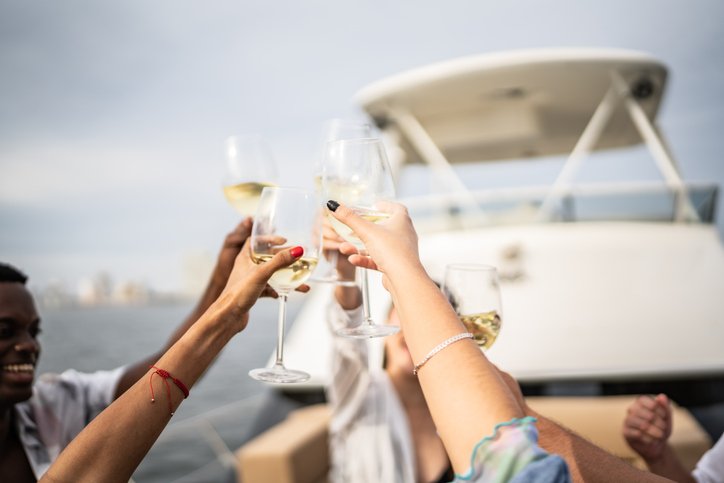
Southwest Florida is a boating place. Between the back bays off US-41, the Gulf access from Bonita Springs down through Naples, and the Estero Bay corridor off I-75, our office sees boat-related calls in a steady stream from spring through Thanksgiving. The pattern I see over and over: people who would never drive home from a restaurant after three beers will happily run a twenty-five-foot center console back to the dock after six. Different rules in their head. Same physics, same statute, and often worse outcomes.
What Florida Law Actually Says About Alcohol and Boating
The governing statute is Florida Statute 327.35, the boating-under-the-influence law. In plain English: it is a crime to operate a vessel in Florida with a blood or breath alcohol level of 0.08 or higher, or while your normal faculties are impaired. The threshold mirrors the highway DUI standard at Florida Statute 316.193 — same number, same proof, same kind of penalties on a first conviction, including fines, possible jail, license consequences on the highway side, and mandatory substance-abuse evaluation.
Two pieces of Florida law matter just as much on the civil side, and most boat owners do not know either one.
First, the dangerous-instrumentality doctrine. Florida courts treat boats — like cars — as dangerous instrumentalities. If you own the vessel and you hand the keys to a friend who then hits someone, the law lets the injured person come after you, the owner, in addition to the operator. The reasoning is plain-English fairness: you put a powered machine into the hands of someone you chose, and you carry some of the risk for that choice. In practice, that doctrine is often what makes a serious case collectible, because the owner’s insurance is frequently larger than whatever the operator carries personally.
Second, the 2023 statute-of-limitations change. For accidents on or after March 24, 2023, Florida’s general negligence window is two years, not four. Wrongful-death claims are two years from the date of death. The shorter window is one of the most quietly damaging changes the legislature has made for injured people in my career, and on the water it is even more dangerous because witnesses scatter, marine evidence disappears, and Coast Guard and FWC reports take time to surface. Two years feels like a lot until you are eighteen months in and still chasing records.
One more layer, briefly. Some open-water cases — collisions outside state navigable lines, certain commercial-vessel claims — fall under federal admiralty rules, which carry their own three-year window and their own quirks. We sort that out case by case. The safe rule for any reader: do not assume you have time.
Six alcohol-and-boating patterns we see in Lee and Collier Counties
Behind the boating-injury calls our firm has handled across Lee and Collier Counties, the same handful of fact patterns repeat. If you have ever been on the water in Southwest Florida you will recognize them.
- Late-afternoon return runs. The group has been on the sandbar since lunch. The operator is now four hours into a slow drink-and-sun cycle, and is steering home into glare with reduced reaction time. Most of the collisions and wake injuries we see happen on the back half of the day, not the morning.
- Fixed-object impacts. Channel markers, dock pilings, jetties at the mouths of canals off Estero Bay and the back of Naples. A sober operator usually sees these. An impaired one often does not, and the impact is at cruising speed.
- Personal watercraft and rental boats. Jet skis and short-term rentals out of Fort Myers Beach, Naples Pier, and the Bonita Springs marinas put inexperienced operators on the water in busy traffic. Add alcohol and the margin disappears.
- Wake injuries to seated passengers. Spine and lower-back injuries from being slammed against a bench seat at speed. The operator did not feel the hit because he was standing at the wheel. The passengers — often kids or older relatives — took the full force.
- Falls overboard. Most drowning deaths we read about involved no life jacket and at least some alcohol. The water around the Gulf passes is unforgiving even when sober.
- Commercial-vessel and charter incidents. Charter captains operating with passengers on board carry a heightened duty of care. When alcohol is in the mix on a chartered trip, both the captain’s employer and the boat owner may share responsibility.
Three things that make boating-DUI injury cases difficult
From the outside, an alcohol-related boating case sounds straightforward — drunk driver, injured passenger, insurance pays. In practice it is one of the harder categories of personal-injury work we handle, for a few reasons that are worth understanding before you sign anything or give a recorded statement.
The evidence vanishes fast. Skid marks and traffic cameras are land tools. On the water, the scene is the scene for about ten minutes before wakes, tide, and weather rearrange it. FWC and Coast Guard investigators do solid work, but their reports take weeks to finalize, and witness contact information slips away in the meantime. We try to get a marine accident reconstructionist on the file inside the first thirty days when we can.
The “one drink on the water equals three on land” rule is real. Sun, dehydration, wave motion, engine vibration, and noise compound alcohol’s effect on judgment and reaction time. The Coast Guard has measured the effect — a useful overview lives at nhtsa.gov on the recreational-safety side. The practical consequence is that an operator can be well under 0.08 on a breathalyzer and still be functionally impaired in a way a civil jury will recognize.
Insurance coverage gets complicated. Many boat policies carry exclusions for criminal acts or intentional misconduct. Carriers will sometimes use those clauses to walk away from an alcohol-related claim entirely. Whether the exclusion actually defeats coverage depends on the policy language and the facts, and we have pushed back on a number of those denials successfully. A denial letter is the start of the conversation, not the end.
Comparative fault questions come up. Under Florida’s modified comparative-negligence rule — meaning the law that splits responsibility between parties and reduces a recovery by whatever percentage of fault the injured person carries — a defense lawyer will try to argue the passenger knew the operator was drinking and chose to ride anyway. Sometimes that argument goes nowhere. Sometimes it lands with a jury. The way the case is built early matters a great deal to how that question lands later.
A case that shows how the carrier playbook works
A semi-truck jackknifed on I-75 in North Naples in a driving rainstorm and struck our client’s vehicle in the next lane. Not a boating case, but the playbook is the same one we run when a commercial defendant is on the other side — and it is worth describing here because the calls we get from boating families often follow the same arc: a moment of bad weather or bad judgment, a heavy machine, and serious injuries that are harder to treat than they look on the first ER visit.
That early contact mattered. Big commercial carriers move fast in the first week — they want recorded statements, signed authorizations, and a quick low-ball offer on the table before the injured driver has even seen a physician for the long-haul evaluation.
The medical workup was the part most clients do not anticipate. Back and shoulder pain after a heavy collision often does not show clearly on the first MRI. Our client needed a longer course — including a series of diagnostic nerve blocks, the kind a physician uses to confirm where the pain is actually originating — before the treating physicians could put a complete picture together. That workup is the difference between a fast small settlement and a full recovery.
We resolved the file with a settlement that covered the full vehicle replacement, the entire course of medical care, and a meaningful amount for pain and suffering. The lesson I draw from the file — and the one I’d carry into a boating case with a heavy commercial defendant — is that the early weeks set the ceiling on what is possible at the end. Bring a lawyer in early, let the medical workup be as thorough as the injury requires, and do not let the carrier dictate the timeline.
What to Do If You’re Hurt in an Alcohol-Related Boating Crash
I have walked enough boating clients through these first steps to have a short list I trust. None of it is generic. Each item is on the list because, at some point, doing the opposite cost a client real money.
- Get Coast Guard or FWC on scene before anyone leaves. A self-reported crash without an official report on file is a much harder case three months later. If you are physically able, call it in. If you are not, ask another passenger to.
- Photograph the vessels, the water conditions, and any visible alcohol. Open containers, cooler contents, and even the operator’s posture matter. Phones work fine. You do not need professional equipment, you need the photos to exist.
- Get the names and phone numbers of everyone on both boats. Witnesses on the water scatter back to homes in five different counties within an hour. Get the contact information while you have it.
- See a physician the same day, even if you feel fine. Adrenaline and sun exposure mask injuries. Wake-induced back and neck injuries in particular have a habit of emerging on day three. A same-day medical record anchors the timeline.
- Do not give a recorded statement to any insurance carrier until you have spoken with a lawyer. Not the operator’s, not your own. The questions sound friendly. They are not.
- Save the gear. Life jackets, sunglasses, phones, the clothes you were wearing. Anything damaged in the crash. Put it all in a box and do not wash, repair, or throw out a single item.
Key Takeaways
- Florida Statute 327.35 sets the boating-DUI threshold at a 0.08 blood-alcohol level — the same as the highway DUI standard — and a conviction carries criminal penalties on top of any civil exposure.
- Under Florida’s dangerous-instrumentality doctrine, a boat owner can be held responsible for the negligence of anyone they allow to operate the vessel, which often opens up a second insurance layer.
- For accidents on or after March 24, 2023, you have two years to file a personal injury lawsuit in Florida — half of what the deadline used to be — so do not wait to talk to a lawyer.
- One drink on the water has roughly the effect of three on land once sun, dehydration, and wave motion are factored in, and that compounding matters in both criminal and civil cases.
- The first thirty days of a boating case set the ceiling on the recovery — early documentation, an FWC or Coast Guard report on file, and a thorough medical workup are what protect the value of a serious claim.
Frequently Asked Questions
Q1. Is it illegal to drink while boating in Florida?
Operating a vessel with a blood alcohol level of 0.08 or higher is a criminal offense under Florida Statute 327.35, the boating-under-the-influence law. Passengers are allowed to drink, but the operator is held to the same threshold as a driver on the highway. A first conviction carries fines, possible jail time, and mandatory substance-abuse evaluation.
Q2. Can I sue the boat operator if I was hurt as a passenger?
Yes. A passenger injured by a drunk or careless operator can bring a civil claim for medical bills, lost wages, and pain and suffering. The fact that the operator was drinking does not block your claim. It usually helps it, because intoxication is strong evidence of negligence and can support a punitive-damages argument under Florida law.
Q3. What if the boat owner was not the one driving?
Florida treats vessels as dangerous instrumentalities. Under the dangerous-instrumentality doctrine the owner can be on the hook for the negligence of anyone they let operate the boat, even a friend or a relative. That second layer of liability often matters because the owner’s insurance may have higher limits than the operator’s.
Q4. How long do I have to file a boating injury lawsuit in Florida?
For accidents on or after March 24, 2023, Florida’s general negligence statute of limitations is two years. Wrongful-death claims are also two years from the date of death. Federal admiralty rules can apply in some open-water cases, with a separate three-year window. Because the deadlines can overlap and vary, call a lawyer well before the two-year mark.
Q5. Does my homeowner’s or boat insurance cover an alcohol-related accident?
Many boat policies and umbrella policies contain exclusions for criminal acts or intentional conduct, and carriers sometimes try to use those clauses to deny alcohol-related claims. Whether the exclusion actually applies depends on the policy language and the facts. Do not accept a denial letter at face value — have it reviewed.
Talk to Our Office
If you or someone in your family was hurt in a boating crash on the I-75 corridor, anywhere along US-41, or out on the water from Bonita Springs through Fort Myers and Naples, our firm would be glad to talk through the case with you at no charge. Call 239-992-8259 for a free consultation. There is no fee unless we recover for you.
About the Author

For more than thirty years, David B. Pittman, Esq. has handled personal injury cases out of the firm he founded, Pittman Law Firm, P.L., with a sustained focus across Southwest Florida. The firm represents injured clients across Lee and Collier Counties — from the firm’s main office at Windsor Place on Bonita Beach Road through Fort Myers, Naples, Estero, Cape Coral, and Lehigh Acres — with a particular focus on commercial-vehicle, complex-liability, and serious-injury cases.
Before founding Pittman Law Firm, P.L., David completed his undergraduate work at The Citadel, The Military College of South Carolina and his JD at the University of South Carolina School of Law. He is AV-Preeminent at Martindale-Hubbell and a member of the Multi-Million Dollar Advocates Forum.
David has held a Florida real estate broker license for twenty-five years, a credential that shapes how the firm reads the property side of premises cases. The firm handles personal injury cases across Lee and Collier Counties, serving Fort Myers, Bonita Springs, Naples, Cape Coral, Estero, and Lehigh Acres, with offices at Windsor Place in Bonita Springs (main) and Fort Myers (satellite). Call 239-992-8259 for a free consultation.