

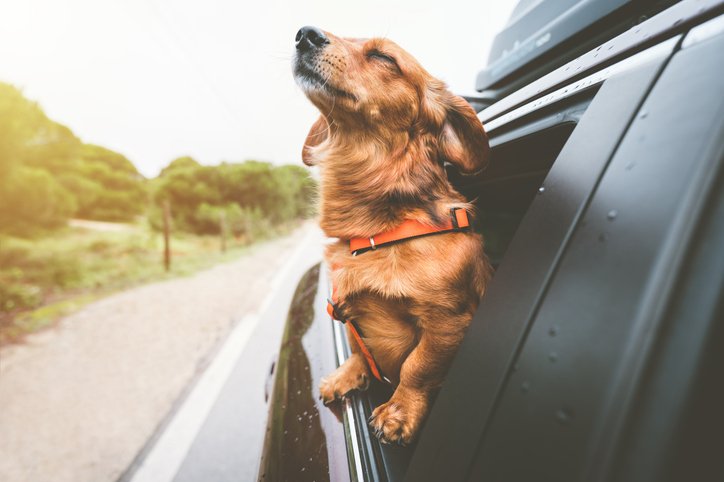
What Are Your Dog’s Rights in a Florida Car Accident?
Florida law calls your dog personal property. That short phrase controls almost everything that happens after a crash injures your animal, and most people do not know it until they are already sitting across from an adjuster who is offering $400 to close the file. The calls about a hurt dog often arrive with the same shaking voice as the calls about a hurt child — the dog was in the back seat, in someone’s lap, thrown into a dashboard along the I-75 corridor or pinned in a crushed cargo area off US-41. The law’s label does not come close to describing what the family lost. But the label is where we start, and then we build from there.
“Property” is the floor, not the ceiling. Our firm has worked these claims for years, and the practical recovery is often broader than clients expect once we walk them through it.
What Florida law actually says about dogs hurt in a crash
The starting point is the property classification. Under Florida common law, a dog is the owner’s personal property, which means an at-fault driver’s property damage liability coverage is the usual source of money for veterinary bills, medication, post-crash imaging, surgery, and burial or cremation costs if the dog does not survive. Florida law requires every driver to carry at least $10,000 in property damage liability. That ten-thousand-dollar floor is the same pot that pays for the dent in your bumper.
A few Florida statutes carry over to these cases even though they were written for the human side of the crash:
- §316.1985, Fla. Stat. — Florida’s backing-vehicle rule. A driver backing out of a driveway or parking spot has the burden of confirming the path is clear. That includes a dog on a leash crossing a residential street in Bonita Springs or a service dog being walked through a Naples parking lot. The burden is on the driver, not the pedestrian and not the leash holder.
- §316.130, Fla. Stat. — Florida’s crosswalk yield duty. When a person and a dog are crossing in a marked or unmarked crosswalk in Fort Myers, the approaching driver yields. Period.
- The Wrongful Death Act does not extend to pets. I say that bluntly because clients sometimes ask. Florida wrongful death recovery is reserved for human family members. A dog’s death is a property claim plus, in narrow circumstances, additional theories.
The driver’s duty of care — including to the animal in the other car
Every Florida driver owes a duty of reasonable care to the people and the property they share the road with. That duty does not pause for a dog in a crate in the back of a Subaru on the way home from a Naples vet appointment. When a distracted driver rear-ends you on Tamiami Trail and your dog goes into the dashboard, the legal analysis on duty and breach is the same as if a child’s car seat had taken the hit. The damages math is different. The duty is not.
Where I see drivers get into the most trouble is the dart-out scenario at low speed in a residential setting — a dog off-leash for a moment in a Cape Coral driveway, a puppy slipping a collar in a Lehigh Acres front yard. Even there, the statutory burden on a backing driver under §316.1985 is real. I have seen defense lawyers try to argue that an animal is unforeseeable. Florida case law and Florida statutes say otherwise.
What carriers actually argue — and how we answer
The insurance carriers I have negotiated against for thirty years run a fairly predictable set of plays in pet cases. The most common three:
- Market-value capping. “We will pay you what the dog is worth on the open market.” The carrier offers $400 for a mixed-breed rescue and walks away. Florida courts have recognized recovery of reasonable veterinary expenses even when those bills exceed an animal’s market value, particularly when treatment was prompt and reasonable. We push back on market-value capping in writing, with the records, every time.
- Pre-existing condition. “Your dog had hip issues before the crash, so the surgery was not caused by our insured.” This is the same argument carriers run on human soft-tissue cases. The answer is the same: aggravation of a pre-existing condition is compensable.
- Owner negligence — the unrestrained-pet argument. The carrier blames you for not having the dog in a harness or crate. Florida does not have a statute mandating pet restraints in passenger vehicles, and a driver who rear-ends a stopped car does not get to shift blame to the cargo arrangement of the car they hit.
What 2023 tort reform changed for these cases
Florida’s 2023 tort reform legislation matters here in two ways. First, the statute of limitations for general negligence claims arising from crashes on or after March 24, 2023 was cut from four years to two years. That is the new deadline to either settle or file suit on the human bodily injury claim. Property damage actions, which is the bucket your dog’s veterinary bills usually fall into, generally still operate on a four-year clock — but I do not encourage anyone to test that line.
Second, Florida moved to a modified comparative negligence standard. If the injured party is found more than 50% at fault, they recover nothing. In plain English: if a jury thinks you were 51% responsible for the crash, you go home with zero. That standard applies to the human injury claim and frames every settlement conversation we have with adjusters now.
A rear-end claim we worked
One I think about often involved a first-time-accident client who came to our office shaken — not because the property damage was catastrophic, but because she had never been hit before and the carrier had already started leaning on her by the time she called. She had been stopped in traffic when a driver who was not paying attention rear-ended her and shoved her vehicle forward into the car ahead. Soft-tissue injuries through the neck and back, with the kind of pain that does not show up on the first emergency-room x-ray and gets worse a week later.
She went through a course of chiropractic care and physical therapy, and her records started telling the real story of what the crash had done to her spine. While she focused on getting better, our office handled the property damage on her vehicle, the PIP coordination, and the back-and-forth with the bodily injury carrier.
The settlement we secured covered her medical care, her future treatment needs, and meaningful compensation for the chronic pain she will live with. What stays with me from that case is something she said at the closing: she had spent the first three weeks after the crash thinking the carrier was on her side. That assumption is the single most expensive mistake first-time-accident clients make in our office.
What to do if your dog was hurt in a Florida car crash
Most action lists on the internet are written by people who have never sat across a desk from a hurt family. Here is what I tell clients, drawn from the cases I have actually worked:
- Get the dog to a vet immediately — and tell the vet it was a car crash. The intake note that says “MVA” is the single most useful document the carrier will see later. I have watched cases turn on that one line in a chart.
- Photograph the dog before the vet visit if you safely can. Bruising on a black-coated dog disappears in 48 hours under fur. Visible blood, eye injuries, limb position — get it on a phone before it is cleaned up.
- Keep every receipt — not just the surgery bill. The chew-resistant cone. The follow-up bloodwork. The medication. The boarding fees when your dog needs supervised recovery and you cannot stay home. All of it is compensable.
- Do not negotiate the property damage on your vehicle with the at-fault carrier until you have the full veterinary picture. Their property damage adjuster will try to close the whole bucket — car plus dog — for a single low number. Once you sign, it is closed.
- Call our office before you give a recorded statement. The adjuster’s questions sound friendly. They are not. We sit in on those calls or do them for you.
Key Takeaways
- Florida treats dogs as personal property, which means the at-fault driver’s property damage liability coverage — minimum $10,000 — is usually the first source of recovery for veterinary bills.
- Recovery is not capped at your dog’s “market value.” Florida courts have allowed reasonable veterinary expenses that exceed it.
- Pure emotional distress damages for a pet’s injury are narrow under Florida law and generally require reckless or intentional conduct by the at-fault party.
- The 2023 tort reform shortened the statute of limitations on bodily injury claims to two years for crashes on or after March 24, 2023, and adopted a modified comparative negligence rule with a 50% bar.
- Do not settle the vehicle property damage piece with the at-fault carrier until the dog’s full veterinary picture is in. Once the property damage release is signed, the dog’s bills go with it.
Frequently Asked Questions
Q1. Is my dog treated as property under Florida law if she is hurt in a car crash?
Yes. Florida treats dogs as personal property, which means a negligent driver’s property damage liability coverage is the usual source of recovery. Florida requires drivers to carry at least $10,000 in property damage liability, and that coverage can pay for veterinary bills, medication, and burial costs if your dog does not survive.
Q2. Can I recover for my own injuries and my dog’s injuries from the same crash?
Yes. Those are two separate buckets. Your bodily injury claim goes through the at-fault driver’s bodily injury coverage and your own PIP. Your dog’s veterinary bills and related costs go through the at-fault driver’s property damage liability coverage. We routinely handle both at once.
Q3. What if the at-fault driver only carries the Florida minimum $10,000 property damage coverage?
Then $10,000 is the ceiling for everything that falls under property damage, including your vehicle and your dog’s veterinary care. If your dog’s care plus your vehicle damage exceeds that limit, we look at the driver’s personal assets, any umbrella policy, and your own collision coverage. This is one of the strongest arguments for buying more than the legal minimum.
Q4. Does Florida allow emotional distress damages for the loss of a pet?
Florida courts have been reluctant to award pure emotional distress damages for a pet’s injury or death in ordinary negligence cases. The path is narrower than people expect. Where the at-fault driver’s conduct was reckless or intentional, the door opens further. We are straight about this with clients before we file.
Q5. How long do I have to file a claim in Florida after a crash that injured my dog?
Florida’s 2023 tort reform shortened the statute of limitations for general negligence claims from four years to two years for crashes occurring on or after March 24, 2023. Property damage actions still generally fall within a four-year window, but the practical answer is the same in our office: do not wait. Evidence gets lost, witnesses move, and insurers stall.
Talk to our office before you talk to the adjuster
If you have been in a crash in Bonita Springs, Fort Myers, Naples, Estero, Cape Coral, or anywhere along the I-75 corridor through Lee and Collier Counties — and your dog was in the car — call our office at 239-992-8259. The consultation is free. There is no fee unless we recover for you. I will pick up the phone, listen to what happened, and tell you straight whether you have a case worth pursuing.
About the Author

Three decades into his personal injury career across Southwest Florida, David B. Pittman, Esq. continues to lead Pittman Law Firm, P.L., the firm he founded. The firm represents injured clients across Lee and Collier Counties — from the firm’s main office at Windsor Place on Bonita Beach Road through Fort Myers, Naples, Estero, Cape Coral, and Lehigh Acres — with a particular concentration in child-pedestrian injuries and family-injury claims.
Two schools made the lawyer: The Citadel, The Military College of South Carolina, and the University of South Carolina School of Law. The recognition followed: AV-Preeminent at Martindale-Hubbell and membership in the Multi-Million Dollar Advocates Forum.
David has held a Florida real estate broker license for twenty-five years, a credential that shapes how the firm reads the property side of premises cases. The firm handles personal injury cases across Lee and Collier Counties, serving Fort Myers, Bonita Springs, Naples, Cape Coral, Estero, and Lehigh Acres, with offices at Windsor Place in Bonita Springs (main) and Fort Myers (satellite). Call 239-992-8259 for a free consultation.
The information on this website is for general information purposes only and does not constitute legal advice for any individual case or situation. Reading this article does not create an attorney-client relationship with Pittman Law Firm, P.L. This is attorney advertising.