

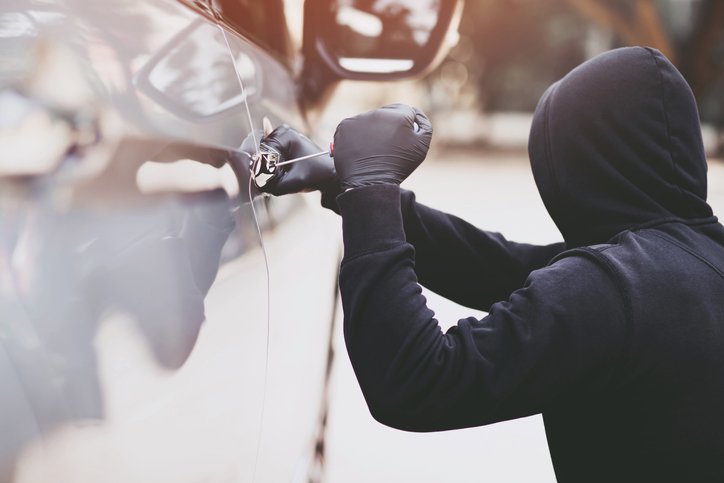
What Vehicles Are Most Likely To Get Stolen In Florida and Who Is Liable If You Are Injured During A Theft
Most people assume that if a car thief slams into them, the thief is the one who pays. That is almost never how it works. The thief is rarely insured, rarely has any money, and sometimes is never even identified. The real recovery comes from somewhere else entirely, and finding it takes a careful read of the policy in front of you and a sober look at Florida law.
I see this play out the same way over and over in Lee and Collier Counties. A client calls our office furious that the thief who totaled their pickup outside a Fort Myers strip mall is “going to get away with it.” Sometimes the criminal case does close that way. The civil recovery path is a separate road, and it is the one we actually have some control over.
The Vehicles Thieves Take in Florida — and Why That Matters
The National Insurance Crime Bureau publishes an annual list of the vehicles most often stolen in Florida. The list is not random. It is a guide to which cars are easiest to take, which cars sell fastest for parts, and which cars have known software or ignition weaknesses. Recent years have put older full-size Ford and Chevy pickups at the top, with late-model Honda Accords, Nissan Altimas, Toyota Camrys and Corollas, Honda Civics, Dodge Chargers, Honda CR-Vs, and Hyundai Sonatas filling out the rest. The Kia and Hyundai exposure that traced back to a social-media trick a few years ago is still working through the data, even after the manufacturers pushed software updates.
Why does this matter for an injury claim? Because the vehicle profile tells me something about the thief’s likely behavior. A full-size pickup taken for resale on parts will usually be driven straight to a chop location; that thief wants to avoid attention. A Charger or a Camry taken in an opportunistic snatch is more likely to be run hot, taken into a pursuit, and crashed at speed. The pattern of the theft shapes how the crash happens, and that shapes the injury claim that lands on my desk.
What Florida Law Actually Says About Liability When a Thief Causes a Crash
Three pieces of Florida law do most of the work here.
The dangerous instrumentality doctrine. Florida treats motor vehicles as dangerous instrumentalities, which means an owner who gives someone permission to drive their car is generally on the hook for what that driver does. The doctrine is one of the strongest owner-liability rules in the country. But it has a built-in limit: it only reaches owners who gave consent. A thief, by definition, did not have consent. So the registered owner of a stolen car is usually not liable for what the thief did with it. That is the rule.
The argument we sometimes make is a narrow one: the owner created the theft. The classic example is a car left running with the keys in it outside a Bonita Springs gas station, or a fleet vehicle with a magnetic spare-key box stuck to the frame. Some Florida courts have entertained the idea that an owner whose carelessness foreseeably enabled the theft can be reached. It is not a sure thing, and most judges set a high bar. But it is on the table in the right facts.
Modified comparative negligence — §768.81, Florida Statutes. Florida’s 2023 reform changed the math on shared-fault cases. Under §768.81, a person who is more than 50% at fault for their own injury recovers nothing. Before the reform, you could be 80% at fault and still collect the remaining 20%. That is gone. In a stolen-vehicle crash this matters less for the innocent driver who got hit and more for any cross-claims the carrier might raise about your own driving in the moments before impact.
Statute of limitations — §95.11(4)(a), Florida Statutes. The 2023 reform also cut the negligence window from four years to two. Two years from the date of the crash under §95.11(4)(a) is the rule now. UM and PIP claims under your own policy run on contract deadlines that can be even tighter; sometimes notice within days, suit within years. We read the policy on day one.
PIP and UM — your real funding sources. Florida is a no-fault state. §627.736 gives you $10,000 in PIP medical and lost-wage coverage regardless of who caused the crash, including a thief who fled the scene. Past that, §627.727 uninsured motorist coverage is the funding source we lean on in nearly every stolen-vehicle case I have handled. The thief functions, for UM purposes, as an uninsured driver. If you carry UM, you have a real claim. If you waived UM at signing (and Florida lets you waive it, which is one of the most painful provisions in our insurance code), you have a much harder road.
Where these cases come from
In thirty-plus years representing injured people across Lee and Collier Counties, the stolen-vehicle injury calls usually fall into one of four buckets.
- The pursuit crash. A thief in a stolen Charger is running from a deputy on I-75 through Lee County, blows a light at an exit, and T-bones a family heading home. The thief is sometimes injured, sometimes killed, and almost never has assets. The recovery here is the family’s UM coverage plus PIP, and sometimes a hard look at any agency involved in the pursuit if the pursuit policy was violated.
- The opportunistic snatch crash. A car taken from a driveway in Cape Coral or a parking lot in Naples, driven by a thief who has no experience with that vehicle, who then loses it on US-41 / Tamiami Trail and hits whoever is next to them. The vehicle is recovered, the thief sometimes is not. UM does the work.
- The keys-in-the-ignition case. The owner left the engine running at a gas station, a convenience store, or (and this happens) a daycare pickup line. The thief takes it and hits someone three blocks later. This is where the narrow “owner negligence enabled the theft” argument has its best shot.
- The catalytic-converter or parts theft turned violent. A homeowner confronts a thief sawing a catalytic converter off in their Estero driveway, and the thief flees in a way that injures someone: running over a foot, knocking the homeowner into the pavement. These cases blend criminal and civil theories, and sometimes a homeowner’s policy becomes part of the analysis.
Stolen-Vehicle Injury Cases — Why They Are Harder Than They Look
People assume a stolen-vehicle injury case is a clean one because the bad actor is obvious. The criminal liability is clean. The civil recovery is the part that is hard.
The thief is the wrong defendant for collection purposes. Even when we get a judgment, there is rarely anything to collect against. Their insurance, if they had any, is voided by the theft itself; almost every policy excludes losses caused by the named insured’s intentional criminal acts, and a thief is not a named insured anywhere. So the named defendant is essentially a placeholder. The carrier we are really negotiating with is your own.
And your own carrier is, in stolen-vehicle UM claims, often a tougher adversary than the at-fault driver’s carrier would have been in an ordinary crash. The carrier is trying to limit its own exposure under your policy. We have seen claims dragged out, examinations under oath demanded, and accusations of pre-existing condition raised against clients whose only mistake was being in the wrong intersection at the wrong moment.
The other complication is documentation. A thief flees. There is no exchange of information, no insurance card, sometimes no clear identification of the driver at all. You have to build the case from physical evidence, from camera footage, from the police pursuit records, and from witness statements collected fast. We have had cases where the parking-garage footage that proved the entry of the stolen vehicle into traffic was overwritten 96 hours after the crash, and we got it only because we sent a preservation letter within 48 hours. Speed matters.
What to Do If Your Vehicle Is Stolen — and What to Do If You Are Hit by a Stolen Vehicle
I have watched clients lose claims they should have won because of what happened, or did not happen, in the first 72 hours.
If your car is stolen.
- Call 911 first, then your insurer’s claims line. Have your VIN, plate, and policy number ready before you dial. Do not start with the agent’s voicemail; the claim number is what unlocks everything else.
- Walk back through where you were in the 24 hours before the theft. Note every business, garage, or lot with visible cameras. We will send preservation letters to each one; many systems overwrite within 72 to 96 hours.
- Check your policy for comp coverage. PIP and property damage liability are the only mandatory Florida coverages. Comp is what pays for the theft of the vehicle itself, and it is optional. If you dropped it, the vehicle loss is on you.
- Do not sign anything from the insurance carrier in the first week beyond the initial loss report. Release language buried in early forms has cost clients real money.
If you are injured by a stolen vehicle.
- Get medical attention within 14 days, even if you feel fine. PIP under §627.736 requires treatment within 14 days or you forfeit the benefit. We have seen clients lose the entire PIP layer because they “wanted to wait and see.”
- File the crash report. Under §316.066, Florida Statutes, the law-enforcement crash report is the foundation document. Get the case number from the responding agency: Lee County Sheriff, Collier County Sheriff, FHP, or the local PD depending on where it happened.
- Pull your own policy and look for UM coverage. If you have it, that is the funding source. If you do not, find out whether a resident relative’s policy covers you. UM can stack across household policies in Florida.
- Photograph everything before the tow truck moves the vehicles. The position of the cars, the debris field, the skid marks, the time on the traffic signal if visible; phones in 2026 capture all of that.
- Call us before you give a recorded statement to anyone. Your own carrier will ask for one. What you say in that first call shows up in deposition transcripts years later.
Key Takeaways
- The thief is the obvious defendant and almost never the source of recovery. Your own uninsured motorist coverage under §627.727 is where the real money is.
- Florida’s dangerous instrumentality doctrine does not reach the owner of a stolen vehicle, except in the narrow case where the owner’s own carelessness foreseeably enabled the theft.
- The 2023 reforms cut the negligence statute of limitations to two years under §95.11(4)(a). Insurance-contract claims can run on even tighter deadlines.
- Comp coverage is the only insurance that pays for the theft of the vehicle itself. It is optional in Florida; review your policy before you need it.
- The first 72 hours decide what evidence survives. Camera footage, witness memory, vehicle position: all of it degrades fast. Move quickly, and call counsel early.
Frequently Asked Questions
If someone steals my car and crashes into me, can I sue the thief?
Yes, but the practical problem is collection. A car thief who totals your vehicle and hurts you is almost never insured for that act and is almost never solvent. Your real recovery usually comes from your own uninsured motorist coverage under §627.727, Florida Statutes, and from your PIP under §627.736. We pursue the thief on the record for liability, then work the claim against your own carrier for actual money.
Is the owner of a stolen car liable when the thief causes a crash?
Usually no. Florida’s dangerous instrumentality doctrine holds an owner responsible when they give permission to use the vehicle. A thief by definition does not have permission, so the owner is generally not on the hook. The exception we look at: did the owner do something to make the theft foreseeable, such as leaving the engine running with the keys in it at a gas station. That is a fact-specific argument, and not every judge buys it.
Will my insurance cover a stolen vehicle?
Only if you carry comp coverage. Florida does not require comp — it only requires PIP and property damage liability. If you dropped comp to save on premiums, the loss of the vehicle itself is on you. Comp is the coverage that pays for theft, fire, flood, and vandalism.
How long do I have to file a claim after being injured by a car thief in Florida?
Two years from the date of the crash for a negligence claim under §95.11(4)(a), Florida Statutes. That is the post-2023 reform window — it used to be four years. Insurance contract claims, including UM, have their own deadlines that can be even shorter under the policy itself, so do not wait.
What should I do in the first hour after my car is stolen?
Call 911 and file a police report — the report number is what your insurer needs to open the claim. Then call your insurer’s claims line, not the agent’s voicemail. Have your VIN, plate, and policy number ready. If you think the theft happened on a property with cameras — a parking garage, an apartment lot, a restaurant — note the location so we can request footage before it overwrites, which is sometimes as little as 72 hours.
If You Have Been Hurt — Call Us
If your vehicle was stolen and you were injured in the aftermath — whether by the thief, in a pursuit, or in a crash involving a stolen vehicle — call our office for a free consultation. We have spent thirty years handling these claims across Lee and Collier Counties, and we know the carriers, the policy language, and the deadlines that decide these cases. Call 239-992-8259. There is no fee unless we recover for you.
About the Author

David B. Pittman, Esq. is a thirty-plus-year personal injury attorney across Southwest Florida and the founder of Pittman Law Firm, P.L. The firm represents injured clients across Lee and Collier Counties — from the firm’s main office at Windsor Place on Bonita Beach Road through Fort Myers, Naples, Estero, Cape Coral, and Lehigh Acres, with a particular focus on commercial-vehicle, complex-liability, and serious-injury cases.
After undergraduate work at The Citadel, The Military College of South Carolina, David earned his JD at the University of South Carolina School of Law. He is AV-Preeminent at Martindale-Hubbell and a member of the Multi-Million Dollar Advocates Forum.
David has held a Florida real estate broker license for twenty-five years, a credential that shapes how the firm reads the property side of premises cases. The firm handles personal injury cases across Lee and Collier Counties, serving Fort Myers, Bonita Springs, Naples, Cape Coral, Estero, and Lehigh Acres, with offices at Windsor Place in Bonita Springs (main) and Fort Myers (satellite). Call 239-992-8259 for a free consultation.
The information on this website is for general information purposes only. Nothing on this site should be taken as legal advice for any individual case or situation. This information is not intended to create, and receipt or viewing does not constitute, an attorney-client relationship. This is attorney advertising.