

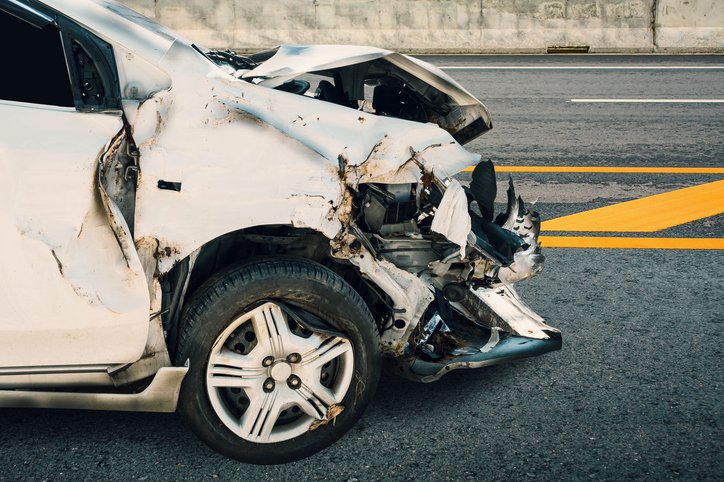
What Happens After Being Hit By an Uninsured Driver In A Fort Myers Car Accident?
Florida does not require drivers to carry bodily injury liability coverage. Most people find this out only after they have been hit. A client gets rear-ended on Cleveland Avenue or hit broadside at a Daniels Parkway intersection, the other driver hands over a registration but no insurance card, and within forty-eight hours the client is on the phone with us trying to figure out who is going to pay for the ambulance ride, the ER bill, and the missed work. That call is one of the most common ones we receive out of our Fort Myers practice.
PIP is not a magic wand. UM coverage is not automatic. And the two-year clock is shorter than most people realize. This is what actually happens after a Fort Myers crash with an uninsured or underinsured driver.
What Florida law actually says about uninsured-driver crashes
Four statutes do most of the heavy lifting in these cases. Each one has a plain-English meaning that matters more than the section number.
§627.736 — PIP (no-fault medical). Every Florida driver is required to carry at least $10,000 of Personal Injury Protection. PIP pays 80% of reasonable and necessary medical bills and 60% of lost wages, regardless of who caused the crash. The catch most people miss: to access the full $10,000, you generally need a doctor to find an “emergency medical condition” within fourteen days. Miss that window and PIP is capped at $2,500. The fourteen-day rule is the single most under-known part of Florida auto law.
§627.727 — Uninsured Motorist (UM) coverage. Florida insurers are required to offer UM, but drivers can reject it in writing. In plain English, this is the coverage that steps in when the other driver has no insurance, not enough insurance, or fled the scene. UM picks up where PIP stops. It pays for medical bills above the PIP cap, full lost wages, pain and suffering, and future care. If you carry it, you have a real recovery path. If you signed the waiver, you do not.
§768.81 — Modified comparative negligence. Since the 2023 tort reform, Florida is a modified comparative negligence state. In plain English: if a jury finds you more than 50% at fault for the crash, you recover nothing. If you are 50% or less at fault, your recovery is reduced by your percentage. Insurers know this rule. Adjusters will sometimes assign 20-30% of the fault to my client on a clean rear-end, just to test whether we will accept a smaller number. We do not.
§95.11(4)(a) — Two-year statute of limitations. For any negligence claim arising on or after March 24, 2023, you have two years from the date of the crash to file suit. That used to be four. A UM claim against your own insurer is a contract claim with a five-year window, but the underlying facts get cold long before five years. Wait six months and witnesses move, cameras overwrite footage, and skid marks on Summerlin Road are long gone.
§316.066 — Crash report. If anyone is injured, or there is more than $500 in property damage, the law requires a written crash report. With an uninsured driver, that report is not a formality. It is the document your own UM carrier will look at first to decide whether to honor or contest your claim.
Five patterns we see in Fort Myers uninsured-driver crashes
The uninsured-driver crashes that come through our office fall into a handful of patterns. Knowing which pattern you are in shapes everything that follows.
- The flat-out uninsured driver. The other driver hands over a registration, no proof of insurance, and the officer confirms it on the spot. This is the cleanest version. Your UM carrier becomes the real party, and the case is built like any other liability case, just with your insurer wearing the defendant’s hat.
- The lapsed-policy driver. The card the driver hands over looks fine, but the policy lapsed two weeks ago for non-payment. This is more common than people think and almost always shows up after the adjuster pulls the actual policy history. Treat the driver as uninsured.
- The minimum-limits driver who cannot cover your injuries. The other driver had the Florida minimum, no Bodily Injury at all in many cases, or a small BI policy. If your medical bills run past their coverage, the underinsured-motorist piece of your UM steps in. This is where stacking pays off.
- The hit-and-run. The driver fled the scene. Under Florida law, an unidentified driver is treated as uninsured for UM purposes, but only if you have a police report, a witness, or physical evidence of contact. We have had hit-and-runs on Pine Island Road and on I-75 near Alico Road where the dashcam from a third vehicle made the entire case.
- The rideshare crash with an uninsured third party. Uber and Lyft carry a $1 million policy that includes UM/UIM during active rides. If our client was in the back seat or driving for the platform on an active trip, that policy is in play. If the rideshare app was off, the driver’s personal policy applies and the layers get more complicated.
Uninsured-driver cases — why they are harder than they look
On paper, an uninsured-driver case looks simple. Your own insurer is supposed to pay. In practice, several things make these harder than a standard third-party liability case.
The first issue is that your own UM carrier is now your opponent. That feels strange to clients who have paid premiums for years. It should not. A UM claim is an adversarial process. The same insurer that sends you a holiday card is going to send a defense attorney to depose you. We prepare clients for that reality the first time we sit down.
The second issue is the fourteen-day PIP rule. Clients who feel “shaken up but okay” on the day of the crash often do not see a doctor for two weeks. By the time the soft-tissue injury or the post-concussive symptoms show up, the PIP window has closed and the cap drops to $2,500. We have lost count of the cases where a same-week ER visit would have unlocked $7,500 of additional coverage.
The third issue is comparative-fault gamesmanship. Since the 2023 reform, insurers assign more fault to the injured driver as a matter of routine. A 20% bump in your share of the fault is a 20% cut to your recovery. Adjusters know this. The defense to it is documentation: a clean police report, photographs of the scene, dashcam if available, and witness statements taken while memories are fresh.
The fourth issue is collectibility against the at-fault driver personally. Even when we win a judgment against an uninsured driver, most of them have nothing to collect against. We can place liens on non-homestead property, garnish up to 25% of wages, and pursue bank-account garnishment, but the realistic recovery is almost always through the insurance side, not the personal-asset side. We tell clients this on day one so the expectations are set correctly.
A Fort Myers case from our practice
We represented a Fort Myers woman who was in a serious car accident and sustained a permanent injury to her leg requiring long-term in-patient rehabilitation. The at-fault driver’s coverage was not enough to address the full scope of the injury — the rehabilitation alone ran well into six figures. We worked both the at-fault driver’s available liability coverage and our client’s own underinsured motorist policy. The matter settled at $1 million. The case illustrates the point I make to every uninsured-driver client at our first meeting: the realistic recovery path runs through your own UM coverage, not through a judgment against a driver who could not afford insurance. The same disciplined approach to finding every available policy is what we apply across all of these cases.
What to do if an uninsured driver hits you in Fort Myers
This is the list I give friends and family. It is shorter than the lists you see online because I only included the steps that have actually changed the outcome of cases in our office.
- Call the police from the scene and make sure a written report is generated. A driver-exchange-of-information form is not enough. UM carriers want the long-form report.
- Photograph the other driver’s registration and license, not just the insurance card. When the card turns out to be expired, the registration is what lets us track the owner.
- See a doctor within fourteen days, even if you feel fine. An urgent-care visit on day three is one of the most valuable things you can do for your PIP coverage. I have used this approach with clients who insisted they were uninjured and watched the same clients call back ten days later with neck pain that turned into a herniated disc.
- Get the names and phone numbers of any witnesses before they leave. Out-of-state visitors leave Fort Myers within hours. The Cleveland Avenue witness who saw the whole thing is on a plane back to Ohio by dinnertime.
- Pull the dashcam footage off your car the same day. Some systems overwrite within 24-72 hours.
- Notify your own insurer that a UM claim is coming, but do not give a recorded statement until you have spoken with a lawyer. A recorded statement on day two, taken when you are still on pain medication, will be read back to you for the rest of the case.
- Save every receipt — rideshare fares to follow-up appointments, prescription co-pays, parking at the imaging center. These add up and they are recoverable.
- Do not post about the crash on social media. Defense adjusters pull it. A photo of you smiling at a family birthday becomes a slide at mediation.
Key Takeaways
- Florida’s uninsured rate is well above the national average, which makes UM coverage one of the most valuable lines you can carry, and stacking it is usually worth the small premium bump.
- PIP pays the first $10,000 of medical bills and lost wages, but only if you see a doctor within fourteen days. Miss the window and the cap drops to $2,500.
- The statute of limitations for a Florida negligence claim is two years from the date of the crash. The UM claim against your own insurer has a five-year contract window, but witnesses and evidence age much faster.
- Under §768.81, being more than 50% at fault means you recover nothing. Comparative-fault arguments by insurers are routine and need to be answered with documentation, not arguments.
- Most uninsured drivers have no personal assets to collect against. The realistic recovery path runs through your own UM coverage and, where it applies, through a rideshare or commercial policy.
Frequently Asked Questions
If the driver who hit me had no insurance, do I have to use my own policy?
In most cases, yes. Your PIP pays the first $10,000 of medical bills and lost wages regardless of fault, and if you carry Uninsured Motorist coverage, that policy steps in after PIP runs out. You can still sue the at-fault driver, but collecting from someone who could not afford insurance is usually the hard part.
How long do I have to file a claim after a Fort Myers crash with an uninsured driver?
For negligence claims arising on or after March 24, 2023, Florida gives you two years under §95.11(4)(a). A UM claim against your own insurer is a contract claim with a five-year window, but the underlying facts age fast. Calling sooner is always better.
What is stacking, and is it worth it?
Stacking lets you add the UM limits across the vehicles on your policy. Two cars with $50,000 UM each becomes $100,000 of protection on a stacked policy. With Florida’s uninsured rate well above the national average, stacking is one of the better dollar-for-dollar buys in auto insurance.
Does UM coverage apply to hit-and-run crashes?
Yes. Under Florida law, a phantom or unidentified driver is treated as uninsured for UM purposes, provided you reported the crash and there is corroborating evidence such as a police report, vehicle damage, or a witness.
What if I share some fault for the crash?
Under §768.81, Florida follows modified comparative negligence. If you are 50% or less at fault, your recovery is reduced by your percentage. If you are more than 50% at fault, you recover nothing. Insurers know this rule and use it aggressively, which is why fault questions need to be handled carefully from day one.
Talk to our firm before your two-year window closes
If an uninsured or underinsured driver has hit you anywhere in Lee or Collier County, I would be glad to walk you through your coverage and your options. We handle these cases on a contingency fee. There is no fee unless we recover for you. Call our office at 239-992-8259 for a free consultation, or reach us through our contact page.
About the Author

Pittman Law Firm, P.L. is led by founder David B. Pittman, Esq., who has practiced personal injury law in Fort Myers and across Lee County for more than thirty years, with a sustained focus on serious-injury auto and complex-liability cases. The firm’s Fort Myers presence handles a steady stream of serious-injury work along the Daniels Parkway, Six Mile Cypress, McGregor Boulevard, Cleveland Avenue, and Summerlin Road corridors, and along I-75 between Estero and Bell Tower.
David earned his undergraduate degree at The Citadel, The Military College of South Carolina, and his law degree at the University of South Carolina School of Law. He is rated AV-Preeminent by Martindale-Hubbell and belongs to the Multi-Million Dollar Advocates Forum.
David has held a Florida real estate broker license for twenty-five years, a credential that shapes how the firm reads the property side of premises cases. The firm handles personal injury cases across Lee and Collier Counties, serving Fort Myers, Bonita Springs, Naples, Cape Oral, Estero, and Lehigh Acres, with offices at Windsor Place in Bonita Springs (main) and Fort Myers (satellite). Call 239-992-8259 for a free consultation.
The information on this page is for general educational purposes and is not legal advice. Reading it does not create an attorney-client relationship with Pittman Law Firm, P.L. Every case turns on its own facts. If you have been injured, please call our office for a free consultation about your situation. This is attorney advertising.