

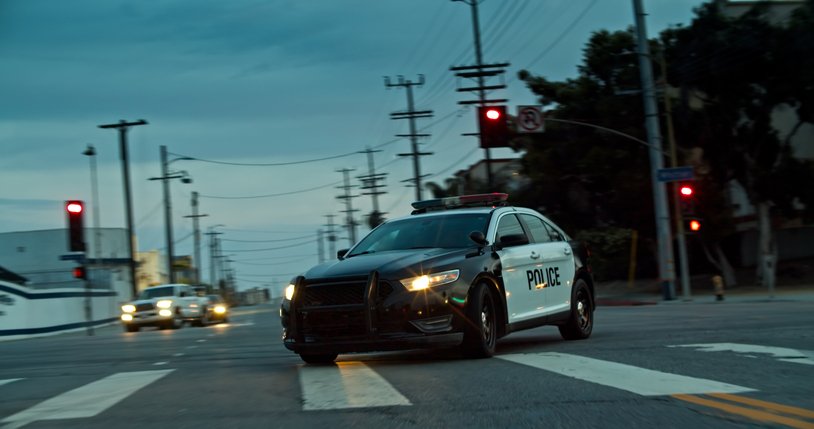
What Happens When a Police Officer Causes a Red Light Accident in Florida?
Yes, you can bring a claim against a Florida law enforcement agency when one of their officers runs a red light and hits you. Callers are usually surprised to hear that. The short answer is yes. The longer answer is that the rules are different from a normal two-car case, and the difference is where most of these claims are won or lost.
I have worked these files long enough to know that the agency’s first instinct is to lean on sovereign immunity and the emergency-vehicle exemption. Both have real limits. When you understand those limits before you sit down to give a statement, the case looks very different.
What Florida law actually says about a police officer running a red light
The starting point is Section 316.072, Florida Statutes. The statute lets the driver of an authorized emergency vehicle pass through a red light or stop sign, but only when the officer is responding to an actual emergency call, pursuing a fleeing suspect, or transporting an organ or surgical team. Even then, two conditions apply: the cruiser must be signaling with lights and siren, and the officer must slow down enough to proceed safely. In plain English, the green light still belongs to you unless the officer announces an emergency and clears the intersection before entering it.
Transporting a suspect to jail is not an emergency. Driving back from a call is not an emergency. Coding a traffic stop as urgent because the officer is late for shift change is not an emergency. I have seen each of those used as a defense, and I have seen each of them fall apart once the dispatch log and the body-cam audio come in.
Two more statutes do the heavy lifting on the civil side. Section 768.81 is the modified comparative negligence rule the Legislature reworked in 2023: if you are 50 percent or less at fault, your damages are reduced by your share; if you are 51 percent or more, you recover nothing. Section 95.11(4)(a) cut the negligence deadline from four years to two for crashes on or after March 24, 2023. And Section 627.736, the Florida PIP statute, still requires you to see a qualifying provider within fourteen days of the crash or you lose the $10,000 in no-fault medical benefits altogether.
On the government side, Section 768.28 caps recovery against any state agency or political subdivision at $200,000 per person and $300,000 per incident. The cap applies regardless of how badly you are hurt. Anything above it requires a claims bill in Tallahassee, which can take years and usually goes nowhere. The same statute requires a written presuit notice to the agency and to the Florida Department of Financial Services within three years, and a 180-day investigation window before you can file suit.
Five crash patterns in police red-light cases
Police red-light wrecks tend to fall into five recurring patterns. Knowing which one you are in shapes everything that follows.
- The silent run. The cruiser approaches the intersection with no siren and no lights, sometimes because the officer is responding Code 1 or Code 2 rather than Code 3. The emergency-vehicle defense collapses the moment we pull the audio.
- The late activation. Lights and siren come on a block before the intersection, which is too late for cross-traffic to react. Florida case law treats this as ordinary negligence, not protected emergency conduct.
- The non-emergency run. The cruiser is transporting a prisoner, driving to court, or returning from a call. The exemption never attached in the first place.
- The failed clear. Lights and siren are on, but the officer enters the intersection at 50 or 60 miles per hour without slowing. Section 316.072 requires the officer to slow as necessary for safe operation. Speed-data downloads usually tell us within five minutes whether the officer complied.
- The pursuit gone wrong. The officer is chasing a fleeing driver and either the cruiser or the fleeing car strikes you. We work these as joint cases against the agency for the pursuit decision and against the fleeing driver for the underlying crash.
The pattern matters because it changes the proof. A silent-run case is mostly about the audio file. A failed-clear case is mostly about speed and intersection-camera footage. A pursuit case is mostly about the agency’s written pursuit policy and whether the supervisor authorized the chase to continue.
Why government-vehicle crash cases require a tighter timeline than ordinary car wrecks
The reason these claims are difficult is not the law. The law is fairly clean. The difficulty is the practical layer that sits on top of it.
First, evidence walks. Body-cam and dash-cam footage are typically retained for sixty to ninety days under most Florida agency retention schedules, and once it is gone, it is gone. We send a written preservation letter the day we are retained, and we copy the city or county attorney. If the agency claims the file was overwritten, that letter becomes its own piece of evidence.
Second, the responding officer is rarely neutral. The investigating deputy is often from the same agency as the driver who caused the crash, and the initial crash report tends to read as if the officer was on a true emergency call even when the dispatch log does not back that up. That is one reason I tell every client not to give a recorded statement to anyone, including the agency’s adjuster, before we have read the report and pulled the underlying audio.
Third, the damages cap distorts settlement. A carrier representing a self-insured agency knows the $200,000 ceiling and tends to anchor every offer well below it, even on catastrophic injuries. The way you push past that is by building the file as if you intend to try it, including a fully workup on causation, future medical care, and lost earning capacity. A carrier that believes you will actually try the case settles differently.
Fourth, the notice rules are unforgiving. The presuit notice under Section 768.28 has to be in writing and has to be served on both the agency and the Florida Department of Financial Services. Email does not count. I have watched otherwise strong claims die because the family waited until the two-year mark and then learned about the separate notice requirement for the first time.
What to do if a police cruiser hits you at a red light
I have walked clients through the first forty-eight hours of these cases many times, and the steps below come from what has actually worked. They are not generic. They are what I would tell a member of my own family.
- Call 911 even though law enforcement is already there. You want a separate responding agency on scene where possible. Florida Highway Patrol responding to a city officer’s crash on a state road is a very different report than the city’s own internal-affairs write-up. The FLHSMV crash-report rules require notification any time there is injury, a fatality, or visible damage above the statutory threshold.
- Photograph the cruiser’s light bar and the dashboard. If the lights or siren were not on, the switches will often still be in the off position when other officers arrive. That photo, taken before anyone touches the vehicle, has saved cases for us.
- Ask any independent witness whether they heard a siren. Not whether they saw lights. Sirens are what cross-traffic actually responds to, and an independent witness who heard nothing is one of the strongest pieces of evidence in this kind of file.
- See a doctor within fourteen days. PIP under Section 627.736 requires it, and the medical record is the bridge between the crash and the injury. I have used this advice with clients who felt fine at the scene and were diagnosed with disc injuries a week later.
- Do not give a recorded statement to the agency’s adjuster. Polite refusal is fine. Tell them you will respond once you have counsel. Then call a lawyer who has handled sovereign-immunity files before.
- Get the presuit notice on the calendar that week. Three years sounds like a long time. It is not. The agency’s 180-day investigation period runs inside it, and so does the two-year underlying negligence deadline.
One more practical note. Intersection camera coverage in Lee and Collier Counties has improved a lot in the last five years, especially along the I-75 corridor and on US-41 / Tamiami Trail through Bonita Springs, Fort Myers, and Naples. If your crash happened at a signaled intersection on either of those routes, there is a good chance somebody’s camera caught it. We chase that footage hard in the first two weeks because most retention windows are short.
Key Takeaways
- Florida Statute 316.072 lets an officer pass a red light only during a real emergency, with lights and siren on, and only at a speed that allows safe clearance of the intersection.
- Section 768.28 caps recovery against a state or local agency at $200,000 per person and $300,000 per incident, and requires written presuit notice within three years to both the agency and the Florida Department of Financial Services.
- The 2023 reforms shortened the negligence deadline to two years under Section 95.11(4)(a) and made 51 percent fault a complete bar to recovery under Section 768.81.
- The case usually turns on a small number of pieces of evidence: dispatch logs, body-cam and dash-cam audio, signal-timing data, and independent witnesses who can speak to the siren.
- PIP under Section 627.736 still requires medical care within fourteen days, even when the at-fault driver is a government employee.
Frequently Asked Questions
Q1. Can a Florida police officer legally run a red light?
Only during an actual emergency, and only if the cruiser has its lights and siren on and the officer slows enough to clear the intersection safely. Section 316.072 grants that exemption, but it does not cover routine duties like transporting a suspect to jail or driving back from a call.
Q2. What is the damages cap if a Florida officer causes my crash?
Section 768.28 caps recovery against a government employer at $200,000 per person and $300,000 per incident. Amounts above that require a claims bill from the Florida Legislature, which is a long process and rarely succeeds.
Q3. How long do I have to give notice of a claim against a police department?
You generally have three years to serve a written notice on the agency and the Florida Department of Financial Services before you can sue. The agency then has 180 days to investigate. Miss those windows and the claim is barred, even if your two-year negligence deadline is still running.
Q4. How does Florida comparative negligence apply if I had a green light?
Under Section 768.81, your recovery is reduced by your share of fault, and if you are more than 50 percent at fault you recover nothing. A green light helps, but the carrier will still argue you should have seen the cruiser. Witness statements and intersection video are what shut that argument down.
Q5. What evidence matters most in a police red-light crash?
Dashcam and body-cam footage from the cruiser, the dispatch log showing whether the run was coded as a true emergency, the audio file of the siren and radio traffic, traffic-signal timing data, and any independent witness who can describe the lights and siren. We preserve all of it through a written litigation hold letter to the agency.
Talk with our office
If a deputy or city officer ran a red light and hit you anywhere in Lee or Collier County, call our office at 239-992-8259 for a free consultation. There is no fee unless we recover for you. The presuit notice clock starts running the day of the crash, so the sooner we are on the file, the more evidence we can preserve before it cycles off the agency’s servers.
About the Author

Personal injury law has been David B. Pittman, Esq.’s focus across Southwest Florida for more than thirty years. He founded Pittman Law Firm, P.L. and remains its lead attorney. The firm represents injured clients across Lee and Collier Counties — from the firm’s main office at Windsor Place on Bonita Beach Road through Fort Myers, Naples, Estero, Cape Coral, and Lehigh Acres, with a particular focus on commercial-vehicle, complex-liability, and serious-injury cases.
David’s path to law began at The Citadel, The Military College of South Carolina, and continued at the University of South Carolina School of Law. He carries an AV-Preeminent rating with Martindale-Hubbell and a membership in the Multi-Million Dollar Advocates Forum.
David has held a Florida real estate broker license for twenty-five years, a credential that shapes how the firm reads the property side of premises cases. The firm handles personal injury cases across Lee and Collier Counties, serving Fort Myers, Bonita Springs, Naples, Cape Coral, Estero, and Lehigh Acres, with offices at Windsor Place in Bonita Springs (main) and Fort Myers (satellite). Call 239-992-8259 for a free consultation.
The information on this page is general in nature and is not legal advice for any particular case. Reading it does not create an attorney-client relationship with Pittman Law Firm, P.L. Past results do not guarantee a similar outcome. This page may be considered attorney advertising under the Rules Regulating The Florida Bar.