

Drowning Is The Leading Cause Of Death In Boating Accidents — What That Means For Florida Families
Roughly three out of every four fatal recreational boating accidents end in drowning. Most people do not guess that. They guess collisions, fires, capsizing in heavy seas. The real answer is simpler and harder: the majority of those victims were not wearing a life jacket when they went into the water. A jacket tucked under a seat cushion on Estero Bay or in the storage bin of a center console heading out from Fort Myers Beach is not protection. It is furniture.
Our firm has handled boating injury and wrongful death cases across Lee and Collier Counties for many years. Our clients launch from Bonita Springs, run the back bays off Fort Myers Beach, fish the Gulf out of Naples, and take the kids tubing on the Caloosahatchee. When something goes wrong, the pattern is consistent. Understanding that pattern — both for safety and for the legal questions that follow — is what this piece covers.
What Florida law actually says about boating fatalities
Florida is the recreational boating capital of the country. We have more registered vessels than any other state, and we have a statutory scheme that recognizes the risk. A few provisions matter most when a boating death is involved.
Florida Statute 327.35 — Boating under the influence. Operating a vessel with a blood-alcohol level of 0.08 or higher is a criminal offense in Florida. If the operator causes a death while impaired, the charge becomes BUI manslaughter. In plain English, the rules for drinking and driving a boat are the same as drinking and driving a car. The Coast Guard’s national numbers say alcohol is the known leading factor in roughly one in five fatal boating accidents. In our practice on the Gulf side, the number feels higher than that, because sun, dehydration, and engine vibration multiply the effect of every drink.
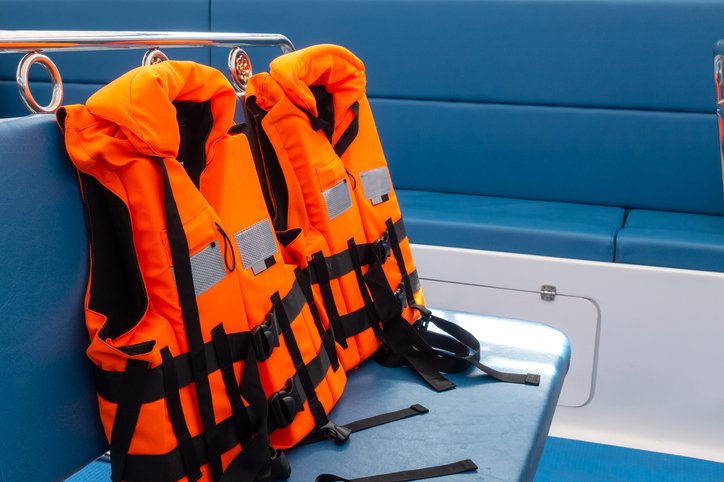
Florida Statute 327.50 — Life jackets. Florida law requires a Coast Guard approved wearable life jacket, in the correct size, for every person on board. Children under the age of six on a vessel less than 26 feet long must wear that life jacket whenever the boat is underway. The statute does not require adults to wear one at all times. The data, however, is unambiguous. The large majority of drowning victims in boating accidents were not wearing a life jacket when they went into the water. A jacket that is tucked under a console or stowed in a forward locker is no jacket at all when somebody is thrown overboard at thirty miles an hour.
Florida Statute 327.30 — Duty to report. If a boating accident involves death, disappearance, an injury that requires more than basic first aid, or property damage of more than two thousand dollars, the operator is required to report it to the Florida Fish and Wildlife Conservation Commission. Failure to report is itself a violation and, in a civil case, often a piece of evidence we rely on to show the operator knew something was very wrong.
Florida Statute 95.11 — Statute of limitations. For most negligence claims arising on or after March 24, 2023, the deadline to file suit is two years from the date of the accident. Wrongful death claims also have a two-year window under Florida Statute 768.20. That is a meaningful change from the older four-year rule, and it is one of the most common questions families ask us when they call months after a loss.
Federal maritime law. Some boating cases are governed not only by Florida statutes but also by federal maritime law, particularly when the accident happens in navigable waters offshore. The deadlines, damages rules, and even the available defendants can shift. That is one reason these cases benefit from a lawyer who has actually handled them before, rather than a general practitioner.
Recurring boating-death patterns from our Lee and Collier County practice
Every boating fatality is its own story, but they tend to fall into a small number of recurring patterns. After thirty years of representing injured boaters and their families across Lee and Collier Counties, these are the ones our firm sees again and again.
- The overboard fall from a small boat. Coast Guard data shows roughly eight in ten drowning victims were on a vessel under 21 feet. Small boats sit low, turn hard, and react sharply to wakes. A passenger standing at the wrong moment ends up in the water before anyone realizes it.
- The alcohol-fueled return trip. The day starts well. The cooler empties. The sun bakes everyone harder than they expect. The accident usually happens on the way back to the ramp, in narrowing channels with other returning traffic.
- The collision with a fixed object. Pilings, channel markers, sandbars, and oyster bars on the back side of barrier islands. Often at dusk. Often with a driver who has run that route for years and stopped looking carefully.
- The cold-water immersion in winter. Florida is not Lake Superior, but Gulf water in January can sit in the sixties. Cold-shock response, gasp reflex, and rapid loss of swim function are real. Anglers who go overboard in February drown for different reasons than anglers who go overboard in July.
- The carbon monoxide event. Houseboats, cabin cruisers, and even open boats with passengers riding on the swim platform behind the engine. Carbon monoxide collects in pockets, victims pass out, and the drowning that follows looks at first like a swimming accident.
- The rental boat with an inexperienced operator. A family on vacation rents a center console for the day, gets a five-minute orientation, and heads out into chop they have never handled. The data is consistent. Roughly three quarters of fatal accidents involve operators who never took an approved safety course.
- The wake-related ejection. A larger boat passes close, a smaller boat takes the wake broadside, and a passenger is launched. We have handled several of these involving the I-75 corridor through Lee and Collier Counties at locations where boaters launch under the highway bridges.
Why fatal boating cases are among the most complex we handle
From the outside, a fatal boating accident can look like a straightforward case. the answer is that boating cases are some of the most complicated injury matters we handle. A few of the reasons.
The scene disappears. A car wreck on US-41 / Tamiami Trail leaves skid marks, debris, a crushed guardrail, and traffic-camera footage. A boating accident leaves a few minutes of GPS data, if you are lucky, and the testimony of witnesses who may have been drinking. The water erases everything. Investigators who get on the case quickly can recover meaningful evidence. Investigators who arrive a week later often cannot.
The insurance picture is layered. Recreational vessels are usually covered by a marine policy that looks nothing like a Florida auto policy. Coverage limits, exclusions for racing or fishing tournaments, exclusions for operator intoxication, exclusions for unlisted operators, and choice-of-law clauses that try to push the case into a less favorable jurisdiction are all common. Most families have no idea the policy exists until we ask for it.
Multiple parties may share fault. The operator. The boat owner, if different. The rental company. The marina that did the maintenance. The component manufacturer if a steering linkage failed. Under Florida’s modified comparative negligence rule, a plaintiff who is found more than fifty percent at fault recovers nothing. That makes the apportionment fight the central battle in many boating cases.
Coast Guard and FWC reports are not the last word. The official reports are useful, but they are often based on the operator’s own account. Where we have seen the most movement in cases is when we put our own investigator on the water, locate independent witnesses at the marinas and the launch ramps, and pull the engine ECM data before the boat is repaired or sold.
The medical timeline is unusual. Drowning, near-drowning, and aspiration injuries do not always present the way the family expects. A child pulled from the water alive can develop pulmonary edema hours later. A father who seems fine on the ride back to the dock can lose consciousness that night. Hospitals know to watch for this. Insurance carriers know it too, and they often try to lock in a recorded statement before the full medical picture is clear.
A case that shows why early warning signs matter
The case that comes to mind here is not a boating case at all. It is a medical case we handled out of Naples, and I include it because the same pattern shows up in our drowning files. A routine procedure where the early signs of disaster are missed, and a family that has to fight to prove what should have been caught.
The defense, predictably, was that complications happen. Our position, supported by the medical witnesses we retained, was that the standard of care required a careful post-operative inspection that simply did not occur. We proved the deviation. The case settled for nine hundred thousand dollars.
I tell that story in a boating-accident article on purpose. The structural problem is the same. Something goes wrong in a setting that is supposed to be controlled. The early warning is missed. By the time anyone realizes what happened, the family is dealing with the worst version of the outcome. Whether the setting is an operating room in Naples or open water off Sanibel, the legal job is the same: reconstruct what happened, prove the deviation from the duty owed, and hold the responsible party accountable.
What to do if your family loses someone in a boating accident
I have walked families through this more times than I would like to count. The advice below is what I have seen actually help, not a generic checklist.
- Do not give a recorded statement to any insurance carrier — yours or the other side’s — until you have spoken to a lawyer. Marine adjusters are good at their jobs. They are not your friend. Anything you say in the first seventy-two hours, while you are exhausted and grieving, will be replayed at deposition months later.
- Ask the Coast Guard and FWC for copies of the official reports, and request the operator’s BUI breath or blood test results. Those documents are public, but families rarely know to ask, and they form the backbone of the civil case.
- Preserve the vessel and the gear. If the boat is still afloat, do not let it be repaired, sold, or scrapped. The engine, the steering, the fuel system, and the navigation electronics all hold evidence. The same goes for the life jackets that were and were not worn. A photograph is not enough.
- Write down the day, in order, while it is fresh. Who was on the boat. Where you launched. What was consumed and when. What the water looked like. Which radio channel was monitored. Where the life jackets were stored. The memory of the people who were there is the single most valuable piece of evidence we have, and it fades fast.
- Find every passenger and get their phone number that day. Friends-of-friends scatter after a tragedy. Six months later, when we need a statement, they are unreachable. The afternoon of the accident is when to lock down contact information.
- Pull the marine insurance policy off the boat owner, the rental company, or the marina — not the summary, the full policy. The exclusions are where the fight starts. Reading them late is one of the most common ways families lose options they should have had.
- Be careful with social media. A photo of the cooler on the dock that morning, a comment about how rough the ride was, a check-in at the marina bar after the accident — all of it is admissible. I have watched defense lawyers build entire comparative-fault arguments out of a single Facebook post.
- Talk to a lawyer who has done this before. Boating cases are not car cases. The statutes, the federal overlay, the insurance language, and the proof problems are different. The two-year statute under Florida Statute 95.11 starts running the day of the accident, and the older four-year rule no longer applies to most of these.
Key Takeaways
- Drowning accounts for roughly three out of every four fatal boating accidents in the United States — and the large majority of victims were not wearing a life jacket at the time.
- Most fatal accidents happen on smaller recreational boats under 21 feet, with operators who never completed an approved safety course.
- Florida Statute 327.35 sets the boating-under-the-influence limit at 0.08 BAC, the same as driving. Alcohol is a documented factor in a meaningful share of fatal cases on the Gulf side.
- Under Florida Statute 95.11, the deadline to file most negligence cases arising on or after March 24, 2023 is two years from the date of the accident. Wrongful death follows the same two-year window.
- Boating injury and wrongful death cases are factually and legally harder than auto cases. Early investigation, preserved evidence, and a lawyer who has handled these before are the single largest predictors of a fair outcome.
Frequently Asked Questions
Q1. Is drowning really the leading cause of death in boating accidents?
Yes. U.S. Coast Guard data consistently shows roughly three out of four fatal recreational boating accidents involve drowning, and the large majority of those victims were not wearing a life jacket when they went into the water. Across thirty years of practice we have seen the same pattern in our own files.
Q2. Does Florida law require everyone on a boat to wear a life jacket?
Florida Statute 327.50 requires a Coast Guard approved wearable life jacket in the correct size for every person on board, and requires children under six on a vessel less than 26 feet to actually wear one whenever the boat is underway. Adults are not legally required to wear one at all times. Our office strongly recommends it anyway, and the data supports that recommendation.
Q3. What is the legal alcohol limit for operating a boat in Florida?
Under Florida Statute 327.35, the limit is a blood-alcohol level of 0.08, the same as a car. Boating under the influence is a criminal offense and, if it causes a death, can be charged as BUI manslaughter. In civil cases, a documented BUI is one of the strongest pieces of evidence we can put in front of a jury.
Q4. How long do I have to file a boating injury or wrongful death claim in Florida?
For most negligence claims arising on or after March 24, 2023, the deadline is two years from the date of the accident under the revised Florida Statute 95.11. Wrongful death claims under Florida Statute 768.20 also run two years. Federal maritime claims can have different deadlines, which is why these cases need a lawyer involved early.
Q5. What should I do in the hours after a boating accident on the water?
Render aid, account for every passenger by name, call 911 or hail the Coast Guard on VHF channel 16, and report the accident to the Florida Fish and Wildlife Conservation Commission as Florida Statute 327.30 requires. Photograph the vessels, the water, and any life jackets. Get phone numbers from every passenger before they leave the dock. Then call a lawyer before giving a recorded statement to any carrier.
Talk to our office before you talk to the insurance carrier
If you have lost someone in a boating accident in Lee or Collier County, or if you were seriously injured on the water, our firm would like to hear what happened. We have handled these cases out of Bonita Springs, Fort Myers, Naples, Estero, Cape Coral, and Lehigh Acres for more than thirty years. Call 239-992-8259 for a free consultation. There is no fee unless we recover for you.
About the Author

David B. Pittman, Esq., the founder of Pittman Law Firm, P.L., concentrates his practice on personal injury matters across Southwest Florida and has done so for more than thirty years. The firm represents injured clients across Lee and Collier Counties — Bonita Springs, Fort Myers, Naples, Estero, Cape Coral, and Lehigh Acres — with offices in Bonita Springs and Fort Myers, focusing on commercial-vehicle, complex-liability, and serious-injury cases.
His undergraduate degree is from The Citadel, The Military College of South Carolina; his JD is from the University of South Carolina School of Law. Martindale-Hubbell rates him AV-Preeminent, and he is a member of the Multi-Million Dollar Advocates Forum.
David has held a Florida real estate broker license for twenty-five years, a credential that shapes how the firm reads the property side of premises cases. The firm handles personal injury cases across Lee and Collier Counties, serving Fort Myers, Bonita Springs, Naples, Cape Coral, Estero, and Lehigh Acres, with offices at Windsor Place in Bonita Springs (main) and Fort Myers (satellite). Call 239-992-8259 for a free consultation.
The information on this page is for general information only and is not legal advice for any individual case. Reading or viewing this page does not create an attorney-client relationship with Pittman Law Firm, P.L. This is attorney advertising.