

Who Is Responsible If Debris Hits My Car While Driving in Florida?
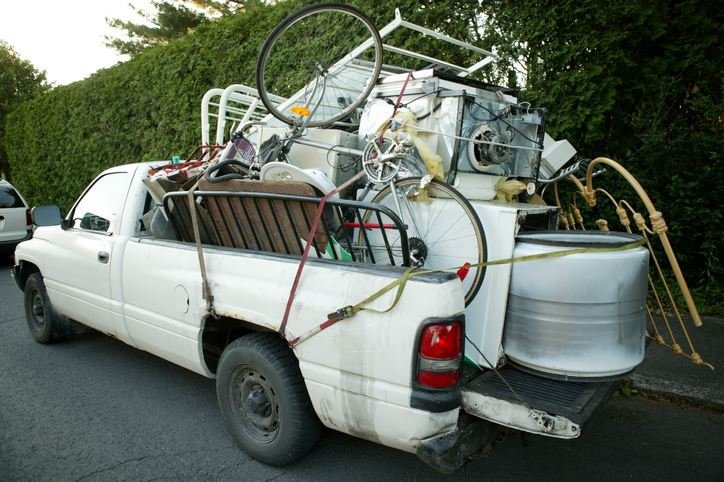
You are doing 70 in the center lane of I-75, a mattress or a length of pipe or a chunk of retread comes off the truck ahead of you, and there is no good move. Swerve and you risk the cars beside you. Hold the line and it comes through the windshield. Drivers walk into our office after exactly this, on I-75 and on US-41, asking one question: who is supposed to pay for it? Florida law is clear on who is responsible. The hard part is whether you can identify the vehicle the debris came from, because that one fact is usually the whole ballgame.
We handle these differently from an ordinary rear-end or intersection wreck. The legal framework is more layered, the evidence has to be locked down within hours, and your own insurance ends up carrying more of the case than most drivers expect.
What Florida law says about cargo
Florida has a statute on the books that does most of the legal work. Section 316.520, Florida Statutes, makes it unlawful to operate a vehicle on Florida roads with a load that is not adequately secured against shifting, leaking, blowing, or falling. It applies to passenger vehicles hauling lumber from Home Depot, to commercial dump trucks moving construction material, to landscapers with a trailer full of palm fronds. The duty is on the driver and the owner of the vehicle. If something falls and causes a crash, that statute is the first piece of evidence we put in front of an insurance carrier.
For commercial trucks, federal law layers on top. The Federal Motor Carrier Safety Administration’s cargo securement rules (49 CFR Part 393) impose detailed requirements on how cargo must be tied down, blocked, and braced. Commercial drivers receive training on these requirements; trucking companies are responsible for ensuring compliance. When a piece of commercial cargo causes an accident, FMCSA violations are often the strongest part of the case. They give us the specific federal rule the carrier broke, not a general negligence theory.
The situations that land in our office
Most of the debris cases that come into our office fall into one of four patterns:
- Identified truck, identified driver. You saw the truck. You got a plate number or a company name off the door. A police report was filed. This is the cleanest case: the driver and the carrier are both potential defendants, and the trucking company’s commercial insurance policy is usually large enough to cover real injuries.
- Identified truck, no identified driver. A company truck (branded, named) has shed cargo, but no one got a plate. The company is still potentially on the hook under vicarious-liability principles if we can connect the truck to the company’s fleet. This is harder but workable.
- Unidentified vehicle (phantom). Something fell off something, you don’t know what. The vehicle is long gone before you can react. In Florida, this is treated similarly to a hit-and-run: your own uninsured motorist coverage steps in, provided you reported the incident promptly and there is some corroborating evidence (a witness, a 911 call, debris consistent with a specific load type).
- Pre-existing road debris. A mattress, a ladder, a tire tread that has been on the road for hours or days. Liability here is the hardest of all to pursue. Sometimes the government entity responsible for that stretch of road bears responsibility, but Florida sovereign-immunity rules make those claims slow and capped. Most of these claims, in practice, go through your own collision or UM coverage.
Why your own UM coverage matters so much in these cases
Florida’s uninsured motorist statute (§627.727, Florida Statutes) is one of the most important pieces of insurance law most Floridians have never read. UM coverage applies to more than accidents with uninsured drivers. It covers hit-and-runs and phantom-vehicle cases as well, situations where the at-fault driver can’t be identified at all.
This matters because in roughly half of the debris cases we handle, by the time the dust settles, we end up making a UM claim against our own client’s insurance carrier. Drivers are often shocked by this. The mental model is “I pay premiums, so my insurance company is on my side.” The legal reality is that once you make a UM claim, your own insurance carrier is functionally the defendant. Their adjusters will scrutinize the claim the same way they would scrutinize any other.
If you have not checked your UM coverage limits in a while, this is the moment. UM is one of the most valuable pieces of an auto policy and one of the most underbought.
An I-75 truck case from our files
Several years back, we handled a serious case involving an 18-wheeler that jackknifed across three lanes of I-75 near Alico Road during a heavy afternoon rainstorm. Our client’s vehicle was pinned against the guardrail. The medical picture was severe: multiple rib fractures and a punctured lung that required chest tube insertion and an extended trauma-unit stay, followed by months of respiratory therapy.
The case was not strictly a “debris” case, but the legal architecture was nearly identical to the cargo-securement scenarios I see in our debris files. What we found mattered: the tires on the trailer had worn well past the regulatory threshold, and the driver had exceeded his federal hours-of-service window before the crash. Both are FMCSA violations. Both became the spine of the case.
The case settled at $1.8 million, with the trucking company’s commercial policy taking the brunt of it. The lesson for any Floridian who has been hit by debris from a commercial vehicle is the same: the cause of the accident goes beyond the falling object. It is the maintenance record, the driver’s logs, the dispatch schedule, and the company’s training program. Federal regulations give us the framework. The records tell the story.
We have handled similar commercial-vehicle and heavy-equipment cases across Lee County, including a Bonita Springs case involving a commercial backhoe operator who failed to check his blind spots, with a recovery in the seven figures. The legal theory in those files is the same: when commercial equipment hurts someone, the company’s safety program is usually the case.
What to do if you were hit by debris
If you were just hit by something falling from another vehicle, or your car was struck by something on the road, here is the order I would walk a caller through:
- Get medical attention. Even if you feel OK in the moment. Adrenaline masks a lot of soft-tissue and neck injuries, and the medical record from the day of the incident is the foundation of any later claim.
- Photograph everything before you move. The debris. Your vehicle. The position of any vehicles you can see. Photographs taken in the first ten minutes are more valuable than reconstructions taken days later.
- Call 911 and get a police report. Even on a damage-only event, a police report timestamps the incident and locks in the location and weather conditions.
- Try to identify the vehicle. Plate, color, company markings, direction of travel. Ask other drivers who stopped if they saw it. A witness statement at the scene is gold; a witness called two weeks later is much less so.
- Save the debris if you can. If a piece of cargo is recoverable and small enough to keep, keep it. A trucking company’s denial of “that didn’t come from us” looks very different in a deposition when the piece is sitting on the table.
- Report the claim to your own carrier. Even if you think a third party is responsible. Many UM policies have prompt-notice requirements, and missing them can become a coverage argument later.
- Don’t give a recorded statement to anyone’s insurance company without talking to a lawyer first. They will call. They will be polite. The recording will be used against you.
Key takeaways
- Florida law (§316.520) makes it unlawful to operate a vehicle with an unsecured load, and commercial trucks are also subject to FMCSA federal cargo-securement rules.
- If you can identify the vehicle and driver, you sue the driver and (usually) the trucking company. If you can’t, your own uninsured motorist coverage is the practical path.
- UM coverage in Florida applies to phantom-vehicle cases; read your policy and know your limits before you need them.
- The strongest commercial-vehicle cases are built on records: maintenance logs, driver hours-of-service, training files, dispatch schedules, cargo securement reports.
- Florida’s 2023 tort reform cut the statute of limitations on negligence claims to two years. The clock starts on the day of the incident.
Frequently Asked Questions
If something falls off a truck and hits my car, can I sue the truck driver?
Yes, if you can identify the truck and the driver. Florida law makes it the driver’s legal duty to keep the load secured, and federal regulations apply to commercial trucks. The hard part is almost never the law — it’s identifying the vehicle the debris came from before the trail goes cold.
What if I can’t identify the vehicle the debris fell from?
This is the common case. Florida treats an unknown vehicle as a “phantom” vehicle, and your own uninsured motorist coverage steps in. You typically need to report the incident promptly and have some corroborating evidence — a witness, damage consistent with the debris, a 911 call timestamp.
Is the trucking company on the hook, not just the driver?
Usually yes. Under Florida’s vicarious-liability rules, an employer is responsible for an employee’s negligent acts in the course of employment. Federal trucking regulations put separate duties on the carrier itself for vehicle maintenance, driver hours-of-service, and cargo securement training.
What if a piece of road debris was kicked up by another car?
This is harder. The driver who kicked it up is generally not liable unless they did something negligent — driving too fast for conditions, ignoring a known hazard, dragging something. Most of these claims go through your own collision or UM coverage, and we evaluate each one on its facts.
How long do I have to file a claim in Florida?
Two years from the date of the accident for most negligence claims. Florida cut the statute of limitations from four years to two in the 2023 tort reform. Claims against the government have separate notice rules that run much faster.
If you were hit by debris on a Florida highway
If you were injured by debris from a commercial truck, a passenger vehicle, or an unidentified source anywhere across Lee or Collier County, call Pittman Law Firm at 239-992-8259 or request a free consultation online. There’s no fee unless we recover compensation for you.
About the Author

Pittman Law Firm, P.L. is led by founder David B. Pittman, Esq., who has practiced personal injury law across Southwest Florida for more than thirty years. The firm represents injured clients in Lee and Collier Counties, with a particular focus on commercial-vehicle, complex-liability, and serious-injury cases. Highway incidents involving commercial trucks — debris loss, jackknifes, multi-vehicle pileups on I-75 — are a regular part of the practice.
David has held a Florida real estate broker license for twenty-five years, a credential that shapes how the firm reads the property side of premises cases. The firm handles personal injury cases across Lee and Collier Counties, serving Fort Myers, Bonita Springs, Naples, Cape Coral, Estero, and Lehigh Acres, with offices at Windsor Place in Bonita Springs (main) and Fort Myers (satellite). Call 239-992-8259 for a free consultation.
The firm represents clients in Bonita Springs, Fort Myers, Naples, Estero, Cape Coral, and Lehigh Acres, from the firm’s Windsor Place office on Bonita Beach Road and its Fort Myers satellite. Free consultations are available at 239-992-8259.
The information on this page is for general information purposes only. Nothing here should be taken as legal advice for any individual case or situation. This information is not intended to create, and receipt or viewing does not constitute, an attorney-client relationship with Pittman Law Firm, P.L.