

Bad Weather at Florida Theme Parks: How Storms, Heat, and Wind Change a Premises Case
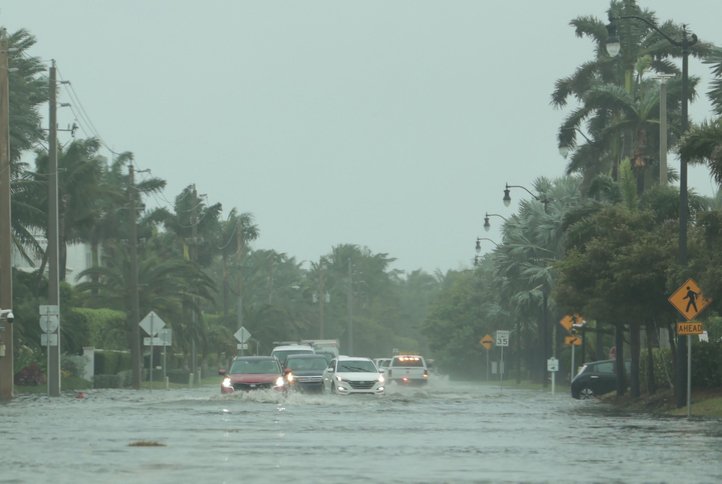
Florida theme park injuries happen on predictable schedules. Every June through September, afternoon thunderstorms build over central Florida around 2 p.m. Families from Bonita Springs, Fort Myers, and Cape Coral make the drive up through Alico Road to I-75 north, spend the morning at the park, and then the sky opens up. Someone slips on a soaked walkway, a child gets hurt on a ride that should have closed before the storm, or a grandparent ends up in an emergency department with heat stroke. By the time the family is back home in Southwest Florida, the bigger questions have started: who pays for this, and was the park doing what it was supposed to be doing?
The legal pattern is the same as any other business-invitee injury: a business with a written safety system, an event the system was meant to prevent, and a question about whether that system actually ran the way it was supposed to. The answers are almost always buried in incident reports, ride logs, lightning detection records, and surveillance video — none of which is on the public side of the park and all of which needs a preservation letter from your lawyer in the first days, before the footage overwrites.
What Florida law actually says about theme park injuries in bad weather
Florida treats a theme park like any other business that invites paying guests onto its property. The legal name for that visitor is a business invitee, which means the park owes a duty to keep the premises reasonably safe and to warn of dangers it knows about, or should know about, that an ordinary guest would not see coming. A sudden afternoon storm in Florida is foreseeable. It is not a freak event in this state. Courts here have made that point for decades.
Three statutes do most of the heavy lifting in these cases.
Modified comparative negligence — §768.81, Florida Statutes. In 2023 the Legislature changed Florida from a pure comparative state to a modified comparative state. In plain English, if a jury finds you 50% or less at fault, you still recover, but your recovery is reduced by your percentage. If the jury finds you 51% or more at fault, you recover nothing. That single number controls more theme park cases than people realize. When a park argues you ignored a posted warning, kept walking through a clearly wet area, or rode a ride after a delay announcement, what they are really arguing for is your fault percentage.
Statute of limitations — §95.11(4)(a), Florida Statutes. The same 2023 reform shortened the negligence filing window from four years to two. So if a family was hurt at a Florida theme park on a stormy July afternoon, the two-year clock is already running. People lose otherwise good cases by waiting through a slow recovery, assuming they have plenty of time, and then discovering the window has closed.
PIP — §627.736, Florida Statutes. Florida’s Personal Injury Protection statute is an auto coverage. It pays the first $10,000 in medical bills after a car crash, no matter who was at fault. It is not a theme park coverage. I mention it here only because a lot of clients show up in our office assuming PIP will cover the walkway slip or the ride injury. It will not. Health insurance is the first payer on most theme park injuries, and the liability case against the park is what reimburses those medical bills and adds damages for lost income and pain and suffering on top.
Five weather-injury patterns from Florida theme park cases
If you grouped Florida theme park weather cases by mechanism, the same five buckets show up over and over.
- Slip and fall on a wet walkway. Tile, painted concrete, the polished surfaces inside indoor queues that get tracked with rainwater — these go from grippy to skating-rink the moment the sky opens up. The premises case turns on whether the park had a posted protocol for wet weather, whether it was followed, and whether warnings or mats were in place. A real estate broker reading the lease for a similar property would already know what the park’s standard of care looks like, because the same duty shows up in every commercial lease in Florida.
- Ride incidents after a rushed restart. Parks close rides for lightning within a published radius — typically five to ten miles. When that radius clears, the rides come back. What we sometimes find in the records is that a particular ride was restarted without the full post-storm inspection the park’s own procedures called for. That gap is the case.
- Heat stroke and dehydration. Florida is one of a handful of states where summer heat indices regularly cross 105 degrees. Heat injuries are not just discomfort — they put older adults and children in the hospital. When a park’s cooling stations are unmanned, water refill points are dry, or shade structures are blocked off for construction, the foreseeability argument is right there in the park’s own staffing records.
- Wind events on hanging or tower attractions. Hanging swings, drop towers, and elevated coasters have wind-speed thresholds written into the manufacturer’s manual. Modern parks tie wind sensors directly to the ride controls. The hard cases are the ones where the sensor read normal but the local gust at the platform was higher because of a microburst — those become engineering questions, and we bring in a reconstruction engineer to read the wind log against the incident timeline.
- Water attraction events during flash flooding. Pool decks and lazy river surrounds become slip zones when storm runoff overwhelms the drains. Drowning and near-drowning risks rise quickly when staff are pulled to other weather duties. The lifeguard rotation log is the document that matters here.
The thread running through all five — the records that answer the case are almost always the park’s records. That is why a fast preservation letter, sent in the first week, matters as much as the medical workup.
Theme park weather injuries — why these cases are harder than they look
the answer for any family asking whether to bring a claim against a Florida theme park is that these cases are harder than a typical premises case for three reasons.
First, the parks are sophisticated defendants with in-house risk management teams. By the time you call a lawyer, the park’s adjuster has already taken statements, secured the incident report, and started building the comparative negligence argument under §768.81. They are good at what they do. That is not a reason to back off — it is a reason to get your own counsel involved early so the evidence preservation runs in parallel.
Second, theme park surveillance video is on a short retention cycle. Camera systems at large parks often overwrite footage within thirty days unless an incident triggers preservation. If a family waits two or three months to decide whether to pursue a claim, the most useful angle on what actually happened may be gone. A written preservation demand from a lawyer in the first weeks of the case stops that clock.
Third, the comparative negligence math is unforgiving. A jury that finds the park 60% responsible and the injured guest 40% responsible still produces a real recovery — just reduced by 40%. A jury that finds the guest 51% responsible produces nothing. The whole defense playbook is aimed at pushing that needle past 50%, often by pointing at posted warnings or announced delays the guest is alleged to have ignored. The cases that win cleanly are the ones where the documentary record — the park’s own log of what its system did and did not do — answers the comparative-fault question before the jury ever has to guess.
A Naples truck case that shows how weather evidence works
A case I think about often involved a client driving home through Naples on Immokalee Road when a commercial truck T-boned the driver’s side of her vehicle at speed. The truck driver, by his own account in the police report, had been pushing through the front edge of a thunderstorm and missed the light. Our client’s car was sideways across the intersection by the time bystanders reached her.
The medical picture in the first weeks looked like rib fractures and a concussion. The real injury — the one that changed her life — was a traumatic brain injury that did not fully declare itself until she went back to work and discovered she could not run a meeting the way she had a month before. She would lose words. She would lose the thread of her own sentences. Her family noticed first; she noticed later, which is exactly how these injuries tend to present.
The case turned on documentation. We brought in a neuropsychological consultant to do baseline-versus-current cognitive testing, paired that record with the accident reconstruction work on the truck’s braking and pre-impact speed, and matched both against the weather data for that hour on that stretch of road. The case settled in the multi-millions in the weeks before trial. The settlement does not give my client her old career back. It does pay for the care she will need for the rest of her life and it acknowledges, on the record, that a sober and attentive truck driver in clear weather would not have hit her car.
I tell that story because the lessons travel into the theme park weather context. Document the medical picture early. Pull the other side’s records before they are gone. And do not let a defendant whose own behavior caused the harm reframe the case as your fault for being in the wrong place at the wrong time.
What to do if you are hurt at a Florida theme park in bad weather
Some of what follows looks like a generic list. It is not. Each of these is here because I have watched a case turn on it, or fail to turn on it, in our office.
- Get checked the same day. Same-day medical records carry more weight than records from a week later, both medically and legally. If the park has a first-aid station, use it — but do not stop there. Go to an emergency department or urgent care the same day if there is any head impact, loss of consciousness, dizziness, or pain you cannot explain. Concussions and TBIs in particular present late, and the same-day record is what protects you when the defense argues you were fine when you left the park.
- Ask for an incident report and ask for a copy. Parks generate an internal incident report on most reported injuries. You are not always given a copy automatically. Ask, write down the report number, and write down the name and ID of every staff member you spoke with. If they will not give you the document, that fact itself goes in your notes.
- Take your own photographs. Phone photos with the location’s GPS metadata are powerful. Photograph the surface you fell on, the angle of approach, any warning signs or absence of warning signs, the weather conditions in the sky, and the exact spot from at least two angles. Photograph any standing water or wet area within fifty feet.
- Save the ticket, the wristband, and the receipt. The ticket is your proof of admission and timestamp. The wristband often has a unique ID linked back to your account, which makes it harder for the park to dispute who you are and where you were.
- Write down witness names and phone numbers. Other guests will leave the park and never be found again. The five minutes you spend trading numbers with the family that saw what happened is worth more than the next month of investigation.
- Do not give a recorded statement to the park’s insurer. Their adjuster will call quickly and ask for a recorded statement. You are under no obligation to give one before you have spoken with your own lawyer. The recorded statement is built to lock in language the park can later use to push the comparative-fault percentage against you.
- Call a Florida lawyer before the surveillance footage rolls over. The single most useful thing a lawyer does in the first week is send a written preservation demand to the park, freezing video, ride logs, and weather logs for the period in question. That letter is cheap. The records it preserves are worth the case.
Key Takeaways
- Florida theme parks owe paying guests a reasonable duty of care, and an afternoon thunderstorm is a foreseeable event a park is required to plan for.
- You have two years to file a negligence claim under §95.11(4)(a), Florida Statutes — half the time you had before the 2023 reform.
- Modified comparative negligence under §768.81 reduces your recovery by your percentage of fault and bars it entirely at 51% or more.
- PIP under §627.736 is auto coverage and does not apply to a theme park premises injury — your health insurance is the first payer.
- The case lives or dies on the park’s own records: incident reports, ride logs, lightning detection data, and surveillance video — all of which need preservation in the first weeks.
Frequently Asked Questions
Q1. Can I sue a Florida theme park if I was hurt during a storm?
Sometimes yes. The question is whether the park followed its own written weather protocols and reasonable industry practice. If lightning was within the park’s published shutdown radius and rides kept running, or if a walkway was a known wet-weather hazard and no warning was posted, that is the kind of negligence Florida courts recognize. Under §768.81, Florida Statutes, any fault assigned to you reduces your recovery, and 51% or more bars it entirely.
Q2. How long do I have to file a claim after a Florida theme park injury?
Two years from the date of the incident for most negligence claims, under §95.11(4)(a), Florida Statutes, after the 2023 tort reform shortened the old four-year window. Wrongful death is also two years. If the park is on land owned or operated by a governmental entity, shorter notice rules can apply, so do not wait to call a lawyer.
Q3. Does my own health insurance or PIP cover theme park injuries?
PIP under §627.736, Florida Statutes, is a no-fault auto coverage and generally does not apply to a slip and fall in a theme park. Your health insurance is usually the first payer for medical bills, and a successful liability claim against the park then reimburses those bills, lost wages, and pain and suffering. Save every receipt and every explanation of benefits.
Q4. What if I ignored a posted weather warning and got hurt anyway?
You can still have a case, but a jury may assign you a percentage of fault. Florida is a modified comparative negligence state under §768.81. If you are 50% or less at fault you recover, reduced by your percentage. At 51% or more you recover nothing. Posted warnings, surveillance video, and witness accounts all become evidence on that fault split.
Q5. What evidence matters most in a weather-related theme park case?
The park’s own incident report, ride logs, lightning detection data, the maintenance log for the walkway or attraction, surveillance footage, your photos and timestamps, the names of any staff and witnesses, and a same-day medical record. Theme park video is overwritten quickly, so a preservation letter from your lawyer in the first days matters.
If you were hurt at a Florida theme park, our family is here to help yours
Pittman Law Firm, P.L. handles personal injury cases for families across Lee and Collier Counties — from our main office at Windsor Place on Bonita Beach Road, through Fort Myers, Naples, Estero, Cape Coral, and Lehigh Acres. If you or someone in your family was hurt at a Florida theme park, call us at 239-992-8259 for a free consultation. There is no fee unless we recover for you.
About the Author

More than thirty years of personal injury practice across Southwest Florida stand behind every blog on this site. David B. Pittman, Esq. is the founder of Pittman Law Firm, P.L. The firm represents injured clients across Lee and Collier Counties — from the firm’s main office at Windsor Place on Bonita Beach Road through Fort Myers, Naples, Estero, Cape Coral, and Lehigh Acres, with a particular focus on commercial-vehicle, complex-liability, and serious-injury cases.
David holds an AV-Preeminent rating from Martindale-Hubbell and belongs to the Multi-Million Dollar Advocates Forum. His undergraduate degree is from The Citadel, The Military College of South Carolina, and his JD is from the University of South Carolina School of Law.
David has held a Florida real estate broker license for twenty-five years, a credential that shapes how the firm reads the property side of premises cases. The firm handles personal injury cases across Lee and Collier Counties, serving Fort Myers, Bonita Springs, Naples, Cape Coral, Estero, and Lehigh Acres, with offices at Windsor Place in Bonita Springs (main) and Fort Myers (satellite). Call 239-992-8259 for a free consultation.
Disclaimer: This article is for general information only and is not legal advice. Reading this page does not create an attorney-client relationship with Pittman Law Firm, P.L. Every case is different; outcomes described here are illustrative and do not guarantee a similar result. For advice on your situation, contact a licensed Florida attorney. Attorney advertising.