

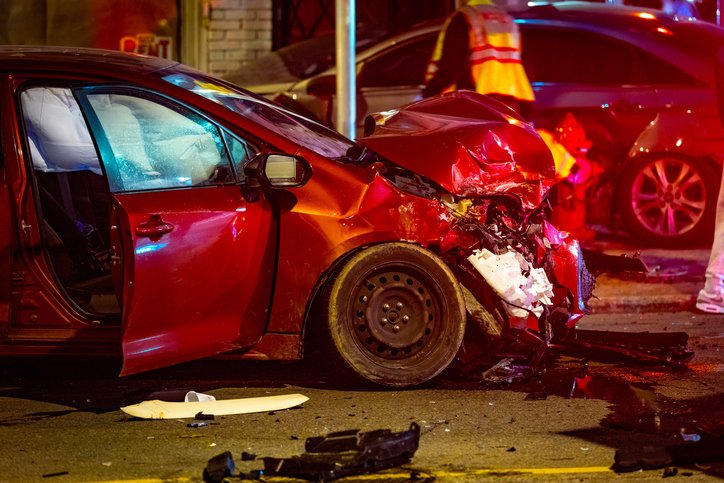
Why Car Accidents Increase During Season And Who Is Liable
By late October on US-41 and the I-75 corridor through Lee and Collier Counties, you can feel the population shift before you see it in any statistic. Drivers who spent the summer on quiet roads in Ohio or Ontario suddenly find themselves in stop-and-go traffic on Tamiami Trail at five o’clock, looking for a turn on a phone screen, in a rental SUV they have driven for three days. Add an afternoon rain band off the Gulf, and the call volume to our office picks up by the next morning.
When someone calls and asks, “It was a snowbird — do I even have a case?” the answer is almost always yes. The harder question is who pays, on what policy, and in what order. That is what I want to walk through here.
What Florida law actually says about season crashes
There are five Florida statutes that decide almost every season car-accident case in our office. Each one trips people up in a different way, so I want to take them in plain English.
Section 768.81, Florida Statutes — modified comparative negligence. In March 2023 the Legislature changed how fault gets allocated. If a jury finds you 51 percent or more responsible for the crash, you recover nothing. At 50 percent or less, your damages get reduced by your share. The practical effect in season is this: defense lawyers for the visiting driver’s carrier will work hard to push fault onto the local driver who “should have known” the road. We push back with crash-site geometry, signal timing, and what a reasonable driver in that lane was supposed to do.
Section 95.11(4)(a) — two-year statute of limitations. The same 2023 reform cut the negligence statute of limitations from four years to two. If your wreck happened on a Saturday in January 2025, the lawsuit clock runs out on that same Saturday in January 2027. I have had clients who flew back to Michigan in April thinking they had plenty of time. They did not. Two years goes fast when you are still in physical therapy at month nine.
Section 627.736 — Personal Injury Protection. Florida is a no-fault PIP state. Your own auto policy pays the first $10,000 of medical bills and lost wages regardless of who caused the crash, but only if you are seen by an authorized medical provider within fourteen days. Visitors who think they can wait until they get home to see their family physician often blow the fourteen-day window and lose the PIP benefit entirely.
Section 627.727 — Uninsured and Underinsured Motorist coverage. Florida does not require bodily injury liability coverage on a private passenger vehicle. Let that sink in. A driver from a state that does require it can rent a car here, hit you, and turn out to be carrying nothing more than the minimum property damage policy. Your UM coverage on your own policy is the difference between a real recovery and a hospital lien with no source of payment.
Section 316.066 — crash report requirement. Any crash involving injury, death, or a vehicle that has to be towed requires a written report by law enforcement. The driver-exchange-of-information short form is not enough. We have had files where the responding deputy filed only a short form, the visitor went home, and the carrier later took the position that there was no real crash. Insist on a long-form report at the scene.
Season crashes — the five fact patterns we keep seeing
After thirty years of season files, the fact patterns repeat. If you have been in a wreck between Thanksgiving and Easter in Southwest Florida, your case probably looks like one of these.
- The parking-lot pull-out on US-41. A visitor leaves a shopping center, restaurant, or beach lot and pulls directly into traffic on Tamiami Trail without looking. Right of way is clear on paper but the carrier still tries to argue you were speeding or distracted.
- The GPS lane-change. Driver hears “turn right in 200 feet,” cuts across two lanes on I-75 near the Estero or Daniels Parkway exits, and clips the car already in the right lane. Dashcam and phone records often tell the real story.
- The rear-end in a sudden rain band. The first ten minutes of a Gulf shower lifts oil off the asphalt and visibility drops fast. A driver from a dry climate keeps the same following distance and rear-ends the car ahead. Weather is context, not a defense.
- The rental-car U-turn. Visitor misses a turn, makes an illegal U-turn across a median on US-41, and broadsides a local. Rental-car coverage layers create extra carriers, more letters, and longer timelines.
- The commercial vehicle that should have known better. A delivery van, food-service truck, or shuttle pulls out from a busy lot during peak season traffic and hits a driver with the right of way. The commercial policy behind it changes the math entirely.
Three reasons season cases are more work than they look
From the outside, a season crash looks straightforward. Out-of-state plates, the visitor was clearly in the wrong, the police report agrees, end of story. In practice, three things make these files harder than people expect.
First, the at-fault driver leaves. They fly home in April and stop returning calls in May. We have to serve them through Florida’s nonresident motorist statute, which works but slows everything down. Second, the carriers know the visitor will be hard to depose, so they push for a quick low-ball settlement before the injured local has the full medical picture. Third, the 2023 comparative-fault change gives every defense lawyer an incentive to argue that the local driver “should have anticipated” the visitor’s bad decision. That argument is weaker than it sounds, but it has to be answered with evidence, not just irritation.
The other complication is medical. Season clients often have pre-existing issues — a prior shoulder, an old back surgery, a knee that was already on the schedule. Carriers love to claim the wreck did not cause anything new. The answer is a treating physician who can separate the aggravation from the baseline, and that takes the right referrals early.
An Estero claim from our files
A client of ours was driving south on US-41 in Estero, just past Coconut Point, in the middle of the afternoon rush. A branded delivery van pulled out of a shopping-center driveway on the right, into a gap that was not there, and the front of the van came across the client’s lane. The client braced hard against the steering wheel and the seat belt, and the impact tore the rotator cuff on the dominant shoulder.
The medical course was what you would expect. Initial imaging, a course of conservative care, arthroscopic shoulder surgery, then months of occupational therapy to get strength and range of motion back. The client was a working adult who needed that arm for a living, so the wage-loss picture was as serious as the medical one.
The defense carrier opened the file the way they always open these: a denial that the van driver had done anything wrong, a suggestion that our client had been speeding, and an early offer that did not cover the surgery. We pulled the van’s telematics, the lot’s surveillance video, and a dashcam clip from a vehicle two cars back. The van had not paused at the lot exit at all. The case resolved against the national delivery corporation’s commercial policy for a high-value settlement that covered the surgery, the future shoulder care, and the wage loss. The client got back to work. That is the case we file every season, with the names and the brand changed.
What to do if you are hit during season
Most of what follows I have watched go right or wrong dozens of times. These are not generic tips. They are the moves that, in my files, tend to separate the cases that resolve cleanly from the ones that drag.
- Call law enforcement and ask for a long-form report. If a deputy or trooper offers to write only a short-form driver exchange, ask politely for the long form. You are entitled to it any time there is an injury or a tow.
- Get medical attention inside fourteen days. Even if you “feel okay,” the PIP statute will not pay if your first visit is on day fifteen. Soft-tissue injuries in particular do not show up at the scene.
- Photograph the other driver’s license, the rental agreement, and the insurance card. Rental and commercial vehicles have layered policies. The card on the dash is rarely the whole picture.
- Save the dashcam and pull surveillance the same week. Most shopping-center DVRs in Lee and Collier Counties overwrite footage in seven to thirty days. After that, it is gone, and we cannot subpoena what no longer exists.
- Do not give a recorded statement to the other driver’s carrier. Their adjuster will call within forty-eight hours and sound friendly. That call exists to lock you into a story before you know what your injuries actually are.
- Write down your version that night. Memory degrades fast under stress and pain medication. A short typed account on the day of the wreck has carried more files than people realize.
Key Takeaways
- The statute of limitations on a Florida negligence claim is now two years from the date of the crash, not four. The 2023 reform applies to season visitors and locals the same way.
- Under modified comparative negligence, 51 percent or more at fault means zero recovery. The defense will work to push fault onto the local driver, so documentation matters from the first hour.
- PIP pays the first $10,000 of medical bills only if you are seen within fourteen days by an authorized provider. Miss the window and the benefit is gone.
- Florida does not mandate bodily injury liability coverage. Your own uninsured motorist coverage is often the difference between a real settlement and a hospital lien.
- Surveillance footage from shopping centers along US-41 and I-75 overwrites quickly. Preservation letters in the first week change outcomes.
Frequently Asked Questions
If a snowbird from out of state rear-ends me on US-41, whose insurance pays first in Florida?
Your own PIP coverage pays the first $10,000 of medical bills under §627.736, regardless of who caused the crash. After that, the at-fault driver’s bodily injury liability coverage is where the real recovery happens. If they bought minimum coverage from an out-of-state carrier and you have serious injuries, your own uninsured or underinsured motorist coverage under §627.727 becomes the next pocket we look at.
How long do I have to file a car accident lawsuit after a winter season crash in Naples or Bonita Springs?
Two years from the date of the crash under §95.11(4)(a), Florida Statutes. The 2023 reform cut the old four-year window in half. Visitors who fly home after the season often assume they have more time. They do not, and the carrier is counting the days.
The other driver says the rain caused the wreck. Does that get them off the hook?
No. Florida drivers have a duty to adjust to road conditions, which includes slowing down in rain, increasing following distance, and using headlights when wipers are on. Weather is context, not a defense. We use National Weather Service data and dashcam footage to show what a reasonable driver should have done.
What does the 2023 comparative fault change mean for a snowbird crash?
Under §768.81, if a jury finds you 51 percent or more at fault, you recover nothing. At 50 percent or less, your recovery is reduced by your share of fault. In season, the carriers push hard to stack fault on the local driver who knows the roads. Documenting the visitor’s unfamiliarity, GPS distraction, or sudden lane change matters.
Should I give a recorded statement to the other driver’s insurance company?
Not before you talk to a lawyer. Adjusters are trained to ask questions that lock you into a version of events before you have the medical picture or the police report. We handle those calls so our clients do not say something on day three that the carrier uses against them in month eighteen.
Talk to our office before the carrier locks you in
If you were hit during season anywhere from Bonita Springs to Naples, Estero, Fort Myers, Cape Coral, or Lehigh Acres, we will sit with you and walk through the policies, the timeline, and what your case is actually worth before you say a word to the other driver’s adjuster. Call our office at 239-992-8259 for a free consultation. There is no fee unless we recover for you.
About the Author

David B. Pittman, Esq., the founder of Pittman Law Firm, P.L., concentrates his practice on personal injury matters across Southwest Florida and has done so for more than thirty years, with a sustained focus on serious-injury auto and complex-liability cases. The firm represents injured clients across Lee and Collier Counties — Bonita Springs, Fort Myers, Naples, Estero, Cape Coral, and Lehigh Acres — with offices in Bonita Springs and Fort Myers.
After The Citadel, The Military College of South Carolina, David took his JD from the University of South Carolina School of Law and built a personal injury practice that now carries AV-Preeminent recognition with Martindale-Hubbell and a membership in the Multi-Million Dollar Advocates Forum.
David has held a Florida real estate broker license for twenty-five years, a credential that shapes how the firm reads the property side of premises cases. The firm handles personal injury cases across Lee and Collier Counties, serving Fort Myers, Bonita Springs, Naples, Cape Coral, Estero, and Lehigh Acres, with offices at Windsor Place in Bonita Springs (main) and Fort Myers (satellite). Call 239-992-8259 for a free consultation.
The information in this article is general in nature and is not legal advice for any individual case. Reading this article does not create an attorney-client relationship with Pittman Law Firm, P.L. The hiring of an attorney is an important decision that should not be based solely on advertising. Prior results do not guarantee a similar outcome.