

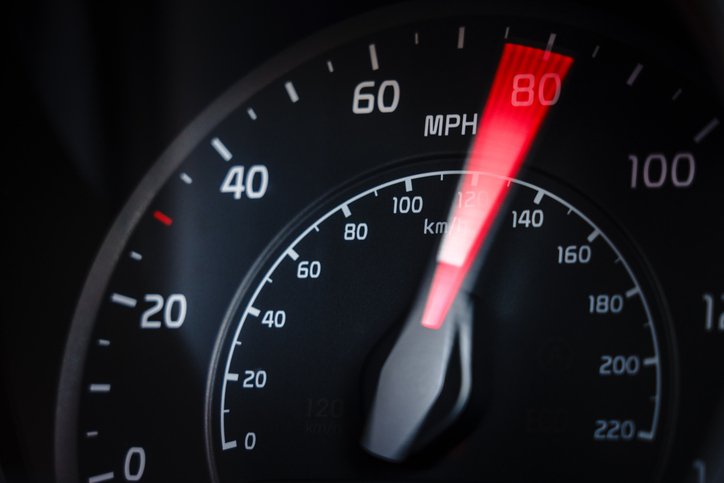
Why Speeding Causes So Many Auto Accidents in Lehigh Acres
SR-82 between Lehigh Acres and the Collier County line is the kind of road that punishes inattention. It is straight enough and open enough that drivers routinely treat a posted 55 as a suggestion, and when someone doing 75 meets an oncoming car on a two-lane pass, the physics are not forgiving. Speed is the single thing on a crash report that most reliably moves a Lehigh Acres case from a routine claim into one with real medical consequences and real value. I have worked these cases across Lee County for more than thirty years, and the pattern holds: tell me how fast the other driver was going, and I can usually tell you within the first ten minutes of the call whether we are looking at a soft-tissue claim or a surgical one.
This piece is for the Lehigh Acres reader who has either been hit by a speeding driver or who is worried about the next time. I want to walk through what Florida law actually says, the scenarios our office sees most often on SR-82 and Lee Boulevard, why these cases are harder than the police report makes them look, and what to do in the first 14 days.
What Florida law actually says about a speeding crash
Five Florida statutes do most of the work in a Lehigh Acres speeding case. None of them is hard to read once someone translates the lawyer-speak.
§768.81, Florida Statutes — modified comparative negligence. In March 2023 the Legislature rewrote how fault gets divided. If a jury finds you more than 50 percent at fault for your own crash, you recover nothing. At 50 percent or under, your recovery is reduced by your share. So if a Lehigh Acres jury finds you 20 percent at fault for pulling out of a side street and the speeder 80 percent at fault for doing 70 in a 45, a $500,000 verdict pays you $400,000. The full statute is here. This is one of the biggest reasons speed evidence matters — proving the other driver was well over the limit is often what keeps your own share of fault under 50 percent.
§95.11(4)(a), Florida Statutes — two-year deadline. The same 2023 reform cut the negligence statute of limitations from four years to two for any crash on or after March 24, 2023. Statute link. If your Lehigh Acres crash happened a year ago and you have been waiting for the carrier to “do the right thing,” you have less time than you think.
§627.736, Florida Statutes — PIP, the no-fault $10,000. Florida PIP pays 80 percent of reasonable medical bills and 60 percent of lost wages, up to $10,000, regardless of fault. The catch is the 14-day rule — if you do not see a qualified medical provider within 14 days of the crash, you forfeit PIP entirely. Read the statute. I cannot count how many Lehigh Acres callers have waited three weeks because they thought the soreness would pass and learned they had walked away from $10,000.
§627.727, Florida Statutes — Uninsured Motorist (UM) coverage. This is the one I beg every Lee County client to carry. UM pays out of your own policy when the at-fault driver has no insurance, too little insurance, or fled the scene. Statute here. A serious speeding crash on SR-82 with a $10,000 Florida-minimum bodily-injury policy on the other side is not going to pay for one surgery, let alone a life-changing one. UM is often the only real money.
§316.066, Florida Statutes — the crash report. A Florida law-enforcement officer has to investigate and write a long-form crash report when a wreck involves injury, death, a commercial vehicle, or a DUI suspicion. Statute link. The driver’s own statements in that report are confidential and inadmissible — a quirk a lot of Lehigh Acres clients do not know about, and one that matters when an at-fault driver’s “I was only going 50” statement gets repeated later.
The four scenarios we actually see on SR-82, Lee Boulevard, and Homestead Road
Out of all the Lehigh Acres speeding calls our office takes, four patterns account for the great majority. Listing them is a way of telling you what the crash report often does not.
- The rural straightaway pass. SR-82 between Lehigh Acres and the Collier County line invites passing on a two-lane stretch with no median. A driver going 70 in a 55 swings around the truck in front, misjudges the closing speed of an oncoming car, and the head-on or sideswipe is catastrophic. These are the cases where speed evidence — black-box data, witness statements, skid measurements — wins or loses the whole file.
- The arterial rear-end at a yellow. Lee Boulevard heading toward Homestead is a corridor of long blocks, fast signals, and impatient drivers. A driver doing 55 in a 45 cannot stop in time when the car in front brakes at a stale yellow. The rear-end injury looks routine until the MRI shows a disc herniation that surgery cannot fully resolve.
- The side-street pull-out where speed is hidden. A driver pulls out of a residential street onto Sunshine or Bell Boulevard, looks left, sees a car a “safe” distance away, and gets hit broadside because that car was doing twice the limit. The crash report often blames the person pulling out. Reconstruction shifts it.
- The late-night SR-82 race. We have worked more than one file involving two young drivers running side-by-side at 90-plus on SR-82 after dark. When one of them clips an uninvolved driver heading home from a Fort Myers shift, the uninvolved driver’s family ends up on the phone with us. UM is usually the only meaningful money in those cases.
Speeding cases — why they are harder than they look
From the outside, a speeding crash sounds like an easy case: he was going too fast, end of story. In our office, these are some of the most contested files we handle, and for reasons most callers do not anticipate.
First, the speed number on a Florida traffic crash report is almost always an estimate. It comes from one of three sources — the at-fault driver’s own statement, the investigating trooper’s visual judgment, or a witness. None of those is forensic. To prove speed in a deposition or at trial we usually need black-box data from the at-fault vehicle’s airbag control module, dashcam or surveillance video, or a reconstruction engineer working from skid marks and crush. That work has to happen fast, before the vehicle gets totaled and crushed by a salvage yard. We have lost the chance to download a module more than once because a Lehigh Acres family called us six weeks after the crash.
Second, the carrier’s first move on a speeding case is almost always a comparative-fault argument against the injured driver. “Why didn’t you see him coming?” “Why did you pull out?” “Why didn’t you brake sooner?” Under §768.81 they only need to push the injured driver over 50 percent to pay nothing at all. That math drives every adjuster’s opening offer.
Third, the injuries from a high-speed impact often do not show up cleanly on day one. The adrenaline of a crash masks neck, lower-back, and shoulder injuries for 48 to 72 hours. Then the swelling sets in. By the time a Lehigh Acres client realizes something is genuinely wrong, the 14-day PIP clock has been ticking for a week. We push every new client into a same-day or next-day evaluation, even if all they feel is sore.
Fourth, in a serious Lehigh Acres speeding crash there are often multiple defendants — the speeder, the speeder’s employer (if it was a work trip), the owner of the vehicle under Florida’s dangerous-instrumentality doctrine, sometimes a bar under dram-shop law. Each one has its own carrier and its own lawyer. Untangling who pays what, in what order, is real work.
When one thread leads to another
I’ll describe one we handled recently because it illustrates how speeding-adjacent cases sometimes pull in pieces a caller would never expect, and because the human side of it stayed with me.
The family of an elderly resident at a Fort Myers care facility off McGregor Boulevard called the office after they noticed something was wrong. Their mother had finger-shaped bruises on both upper arms, a fresh fear of one particular staff member, and a withdrawal so sudden it was unmistakable to anyone who had known her for years. The family did not call a personal injury firm because of any speeding crash. They called because a daughter who lived in Bonita Springs had read enough of our nursing-home pieces to know who to phone.
She got the daughter on a three-way call with the facility’s administrator within hours, demanded the staffing assignments for the prior two weeks, and arranged a same-day independent medical evaluation. By the end of the week the offending staff member had been terminated and the resident had been moved to a safer facility on the other side of Fort Myers. The investigation that followed produced a confidential settlement that funded the resident’s future care and the mental-health support she would need for the rest of her life.
I include this case here because of a piece of it that ties back to speeding. The family told us, in the second meeting, that the original concern that brought them to a lawyer at all was not the bruises — those came later — but a near-miss in the facility’s parking lot months before, when a staff member backing a transport van too fast nearly struck their mother in her wheelchair. That parking-lot moment was the thread they pulled on. The serious harm came later, from someone else inside the building. Speed in a parking lot is not what most people picture when they hear “speeding case,” but in a thirty-year practice the threads connect in ways you would not predict.
What to do in the first 14 days after a Lehigh Acres speeding crash
This is the practical part. These are not generic tips. Each one is here because I have watched the absence of it cost a client real money.
- See a doctor within 14 days, even if you feel only sore. Same-day or next-day if possible. Walk-in urgent care counts. Without that visit, §627.736 forfeits your $10,000 in PIP. I have used this push with clients who insisted they were fine and watched them, three weeks later, end up needing imaging they no longer had PIP to cover. Get seen.
- Photograph everything before the cars move, if you safely can. The position of debris, the length of the skid marks on the asphalt, the resting angle of both vehicles — those photos are sometimes the only contemporaneous speed evidence that survives. Trooper photos are not always taken from the angles that matter.
- Get the other driver’s tag, insurance card, and a photo of the driver’s license. In a hit-and-run, get the tag if nothing else. A Lehigh Acres caller last year remembered three of seven digits — we found the car anyway, but that work was hours we should not have had to spend.
- Do not give a recorded statement to the other driver’s carrier. Ever. You are required to cooperate with your own insurer; you are not required to be interviewed by the at-fault carrier, and the questions they ask are designed to push you over the §768.81 50-percent line.
- Pull your own declarations page and find the UM number. If the at-fault driver was on Florida-minimum coverage — $10,000 bodily injury — your UM under §627.727 is the only meaningful money. If you do not carry UM, this is the conversation you should have with your agent the week you renew, regardless of whether you are hurt now.
- Call a lawyer before you call the at-fault carrier back. The first 72 hours determine evidence preservation. Black-box data, surveillance video from a Lehigh Acres convenience store at SR-82 and Joel, dashcam footage from a witness who has already deleted his SD card — we have lost all three on cases where the family waited a month before calling.
- Write down your symptoms every day for the first two weeks. A short note on your phone is enough. Carriers love to argue that an injury that appears in week three was not caused by the crash. A daily symptom log is contemporaneous evidence that beats that argument.
Key Takeaways
- Florida’s 2023 reform cut the negligence filing deadline from four years to two under §95.11(4)(a), and made any plaintiff over 50 percent at fault recover nothing under §768.81. Speed evidence is often what keeps an injured Lehigh Acres driver under that line.
- Florida PIP under §627.736 pays the first $10,000 in medical bills, but only if you see a qualified doctor within 14 days. Missing that window is one of the most common, and most costly, mistakes we see.
- Uninsured Motorist coverage under §627.727 is often the only meaningful money in a Lehigh Acres speeding case because so many at-fault drivers carry only the Florida minimum.
- The speed estimate on a Florida traffic crash report is rarely forensic. Real proof comes from black-box data, video, and reconstruction work that has to start within days of the crash, before the vehicle is destroyed.
- Most serious Lehigh Acres speeding crashes happen on SR-82, Lee Boulevard, or Homestead Road, and most involve a rear-end at a yellow signal, a rural pass, a hidden-speed side-street collision, or a late-night race. Knowing the pattern shapes the investigation.
Frequently Asked Questions
What does Florida’s 2023 negligence reform actually change for a speeding case in Lehigh Acres?
Two things matter most. The statute of limitations for negligence dropped from four years to two years under §95.11(4)(a), so a Lehigh Acres crash on or after March 24, 2023 has to be filed within two years. And under the new §768.81, if a jury finds you more than 50 percent at fault, you recover nothing. Both changes reward people who call early and punish people who wait.
If the speeder hit me on State Road 82 and took off, is my own insurance going to help?
Yes, if you carry Uninsured Motorist coverage under §627.727. UM also covers hit-and-run drivers and drivers who carry only the Florida minimum. On SR-82 we see a lot of underinsured drivers, so UM is often the only meaningful pocket of money. Check your declarations page — if you stacked it, even better.
I went to the ER after a rear-end crash on Lee Boulevard. Who pays that bill first?
Florida PIP, under §627.736, pays the first $10,000 of medical bills regardless of who caused the crash, but you have to see a doctor within 14 days or you forfeit it. A lot of Lehigh Acres clients miss that window because they try to tough it out. Get seen, even at urgent care, within two weeks.
The crash report says I was partly at fault. Is my case over?
Not necessarily. A police officer’s fault notation is not a jury verdict. Under §768.81 you can recover as long as your share of fault is 50 percent or less, with your recovery reduced by your percentage. We have worked plenty of cases where the initial report leaned the wrong way and a reconstruction witness or new dashcam footage flipped it.
How long do I have to file a speeding-crash case in Lee County now?
Two years from the date of the crash for ordinary negligence under §95.11(4)(a). Wrongful death is two years from the date of death under a separate statute. Some claims against a government defendant — say, a road-design claim — have shorter notice requirements. Treat two years as the outside limit and call sooner.
If you were hit by a speeding driver in Lehigh Acres, call our office
If a speeding driver hurt you or someone in your family on SR-82, Lee Boulevard, Homestead Road, or anywhere else in Lee or Collier County, call Pittman Law Firm, P.L. at 239-992-8259 for a free consultation. We work these cases from our main office at Windsor Place on Bonita Beach Road and our Fort Myers satellite. There is no fee unless we recover for you.
About the Author

David B. Pittman, Esq. keeps an active personal injury practice across Southwest Florida as the founder of Pittman Law Firm, P.L., now into his thirty-first year, with a sustained focus on serious-injury auto and complex-liability cases. The firm represents injured clients across Lee and Collier Counties — from the firm’s main office at Windsor Place on Bonita Beach Road through Fort Myers, Naples, Estero, Cape Coral, and Lehigh Acres.
Two schools made the lawyer: The Citadel, The Military College of South Carolina, and the University of South Carolina School of Law. The recognition followed: AV-Preeminent at Martindale-Hubbell, membership in the Multi-Million Dollar Advocates Forum.
David has held a Florida real estate broker license for twenty-five years, a credential that shapes how the firm reads the property side of premises cases. The firm handles personal injury cases across Lee and Collier Counties, serving Fort Myers, Bonita Springs, Naples, Cape Coral, Estero, and Lehigh Acres, with offices at Windsor Place in Bonita Springs (main) and Fort Myers (satellite). Call 239-992-8259 for a free consultation.
Attorney advertising. The information in this article is for general educational purposes and is not legal advice. Reading it does not create an attorney-client relationship with Pittman Law Firm, P.L. Past results do not guarantee a similar outcome in any future matter. If you have been injured, please contact a Florida-licensed attorney about your own facts.