

The Real Cost of Rain: Florida Weather and Cape Coral Car Accidents
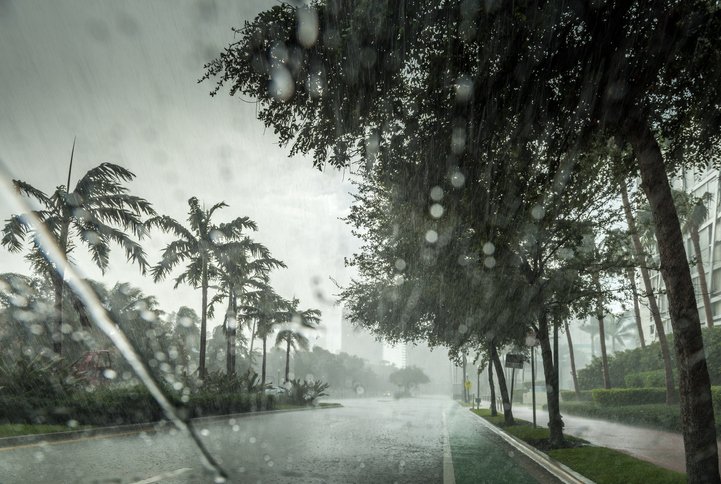
Cape Coral gets a particular kind of storm. The afternoon rain drops hard and fast off the Gulf, the canals push water onto Cape Coral Parkway and Del Prado Boulevard, and the first ten minutes of rain are the worst because the oil that built up on dry pavement during a dry stretch comes to the surface. None of that automatically makes a wet-road crash the sliding driver’s fault. Florida law looks at what everyone on the road was doing before and during the storm, and the rain is a factor — not a verdict.
People want to know whether a wet-road crash is automatically their fault, whether their insurance will fight harder because it was raining, and whether a rainy-day case is worth bringing. I have spent more than thirty years handling these cases up and down Lee County, and my answers are: no, sometimes yes, and usually yes — depending on how quickly the evidence gets locked down.
What Florida law actually says about rainy-day car accidents
Three statutes do most of the work in weather-related crash claims, and each one shows up in almost every Cape Coral rain case we open.
The first is §768.81, FL Stat., Florida’s modified comparative negligence statute. After the 2023 reform, a jury can still split fault between the drivers, but if your share is 51% or more, you recover nothing. In plain English: if you were tailgating in a downpour and rear-ended a car that brake-checked you, a jury might put 60% on you and 40% on the other driver — and you walk away with zero. That cliff at 50% is the single most important number in Florida injury law right now.
The second is §95.11(4)(a), FL Stat., the statute of limitations for negligence. The same 2023 reform cut the deadline from four years to two. So a Cape Coral driver hit during a July thunderstorm in 2026 has until July 2028 to file suit — and if the file sits in a drawer until two years and one day, the case is over no matter how strong the liability looks. I have watched good cases die on that two-year line. Do not assume you have more time than you do.
The third is §627.736, FL Stat., Florida’s PIP statute. Every Florida auto policy has to carry $10,000 in Personal Injury Protection. PIP pays 80% of reasonable medical bills and 60% of lost wages regardless of who caused the crash, but only if you see a doctor within fourteen days. That fourteen-day window is non-negotiable. I have seen people skip the urgent-care visit because the rain made the crash feel like a fender-bender, and then their PIP carrier denied the whole file when the neck pain showed up three weeks later.
The fourth statute matters when the other driver vanishes — and in heavy rain, they often do. §627.727, FL Stat. requires every insurer to offer Uninsured Motorist coverage. UM steps in when the at-fault driver had no insurance, took off, or carried a policy too small to cover the injuries. We rely on UM more often than the average Cape Coral driver realizes.
Finally, §316.066, FL Stat. requires a written crash report whenever there is injury, death, a hit-and-run, a DUI, or property damage of at least $500. An officer’s on-scene report almost always satisfies the rule, but if police never showed up — which happens in storm-volume traffic days — you have ten days to file the report yourself.
Five rain-crash patterns we actually see in Cape Coral
The legacy version of this article talked about hydroplaning physics. That is fine for a driver-safety pamphlet, but it is not what shows up in our intake calls. Here are the five scenarios that actually walk through the door at our office:
- The first-ten-minutes rear-ender on Pine Island Road. A driver going east toward the bridge during the first burst of an afternoon storm cannot stop in time. The car ahead had braked for standing water. Both drivers were going the limit. The fight is over following distance and whether the lead driver’s brake check was reasonable.
- The intersection T-bone in poor visibility. A driver tries to clear a yellow at a flooded intersection like Del Prado Boulevard and Cape Coral Parkway, misjudges the gap because the rain hid the cross-traffic, and gets hit in the side. PIP pays the first medicals, but the bodily-injury fight turns on who actually had the green.
- The hydroplane single-vehicle that turns into a two-vehicle. Driver loses traction on Veterans Parkway, slides into the next lane, and is then struck by a second car. The carrier wants to call it 100% the hydroplaning driver. The truth is usually shared fault, and §768.81 controls how the dollars come out.
- The multi-car pileup during a sudden squall. Three or four cars stacked up near the Cape Coral Bridge as visibility drops to a few hundred feet. Liability gets sorted car by car. The lead driver and the trailing driver are usually in different positions than the middle drivers.
- The rain-cover hit-and-run. Driver clips another car in a downpour and keeps going, hoping the weather erased the witnesses. This is where UM coverage under §627.727 becomes the whole case.
Why rain cases push back harder than clear-day crashes
Three complications make weather cases harder than a clear-day rear-ender, and the insurance carriers know all three.
The first is the carrier’s default narrative. The adjuster on the other side will open the file by saying the weather caused the crash, not their insured. That framing is meant to push fault back onto the injured client under §768.81 and shave the recovery. Our job is to put the human conduct back at the center of the story — speed, following distance, distraction, the decision to drive on tires that were past their service life.
The second is the evidence problem. Rain washes skid marks off the pavement within hours. Witnesses who would have stopped on a dry day keep driving in the downpour. Body-cam video from the responding officer often shows water on the windshield and not much else. We move fast on rain cases — photos the same day if we can, scene visit within forty-eight hours, witness canvassing before memories blur.
The third is the medical-treatment timing. Adrenaline carries a person through the scene of a wet-road crash. The neck stiffness, the shoulder catch, the headaches — those come in two days later. By then the fourteen-day PIP window is already counting down. I tell every new client the same thing: if anything aches, see a doctor this week. Not next week.
A North Fort Myers hit-and-run in a storm, and how UM carried the recovery
A driver coming home through a North Fort Myers downpour was hit by a vehicle that crossed her lane and kept going. She never got a tag number. The rain was heavy enough that no other driver on the road could give us a plate either, and the responding deputy wrote it up as a hit-and-run with an unknown defendant. On paper, the case looked dead.
The injuries were not minor. Two discs in her lower back were ruptured, and a concussion put her under neurological care for several months. The bills started stacking before her first appointment with the physical-therapy office was even on the calendar. She called our office because she did not know what to do — the at-fault driver was gone, and her own carrier was treating her like the problem.
We opened a UM claim under her own policy, the way §627.727 contemplates. The case resolved through her Uninsured Motorist coverage in a number that took care of her medical bills, her future care, and the wage time she had already lost. The point of the firm’s domain name is to keep an injured person from being hit twice — once by the crash, and a second time by the medical debt — and that is exactly what the UM recovery did here.
What to do if you are in a rainy-day crash in Cape Coral
This is the action list I give clients, and every item on it comes from something I have watched go wrong in a real file.
- Get off the travel lane if you safely can. The second collision in a rain crash is often worse than the first. If the car still moves and the shoulder is solid, move it. If it does not move, get the people out and away from the lane.
- Call 911 even if the damage looks light. A §316.066 crash report from the responding officer is worth more than anything you can write yourself ten days later. The officer’s narrative, diagram, and witness contacts become the spine of the case.
- Take photographs of the standing water, not just the cars. Standing water on Cape Coral Parkway or at the Pine Island Road intersection is evidence — it proves the road condition that the at-fault driver failed to account for. The water will be gone in an hour. The photos will not.
- See a doctor inside fourteen days, even if you feel okay. PIP under §627.736 shuts off if you wait. I have used this approach with clients who thought they were fine after a wet-road bump and were surprised, two weeks in, by how much their neck and lower back had stiffened up — getting in front of a physician early kept their PIP intact and gave us a clean medical timeline.
- Do not give a recorded statement to the other driver’s insurer. Not to your own, either, until you have talked to a lawyer. The first question they ask in a rain case is always some version of “how fast were you going in the storm” — and they are looking for an admission to slide under §768.81.
- Save your phone’s weather data and the dash-cam footage. Most people delete the storm radar app within a week of the crash. Screenshot the radar at the time of impact. Pull the dash-cam card. Both pieces hold up in front of an adjuster.
Key Takeaways
- Rain is a factor in Florida car-accident liability — it is not a verdict. Fault still gets split by what each driver was doing, under §768.81’s modified comparative negligence rule.
- The 2023 reform cut the statute of limitations for negligence to two years under §95.11(4)(a). Most rainy-day claims live or die on that clock.
- PIP under §627.736 pays the first medicals regardless of fault — but only if you see a doctor within fourteen days of the crash.
- Uninsured Motorist coverage under §627.727 carries the case when a driver vanishes in the storm. Hit-and-runs in heavy rain are one of the clearest UM scenarios.
- Rain destroys evidence fast. Photos of standing water, dash-cam files, and weather-app screenshots taken the day of the crash are worth more than memory two weeks later.
Frequently Asked Questions
Q1. If I hydroplaned in the rain, can the other driver still be at fault?
Often, yes. Florida is a modified comparative negligence state under §768.81, FL Stat., so fault gets split by percentage. If the other driver was tailgating, speeding, or running a light through the downpour, a jury can put most of the fault on them even though you were the one who slid. So long as your share stays under 50%, you can still recover.
Q2. How long do I have to file a car accident claim after a rainy-day crash in Cape Coral?
Two years from the date of the crash for most negligence claims, under §95.11(4)(a), FL Stat. — the 2023 reform cut the old four-year window in half. Wrongful-death cases run on their own two-year clock. Treat the deadline as hard, and call a lawyer well before the two-year mark so evidence can be locked down.
Q3. Does my PIP pay for medical bills after a rain-related crash?
Yes. §627.736, FL Stat. requires every Florida auto policy to carry $10,000 in Personal Injury Protection. PIP pays 80% of reasonable medical bills regardless of who caused the crash, but you have to see a doctor within 14 days, or PIP coverage shuts off entirely.
Q4. What if I was hit by a driver who took off in the storm?
That is where Uninsured Motorist coverage saves the case. Under §627.727, FL Stat., UM stands in for the missing or unidentified at-fault driver and pays bodily injury damages up to your policy limit. A hit-and-run in heavy rain is one of the clearest UM scenarios we see.
Q5. Do I have to file a crash report if it happened during a Cape Coral downpour?
Yes, in most cases. §316.066, FL Stat. requires a written report whenever there is injury, death, a hit-and-run, a DUI, or property damage of at least $500. If an officer responds and writes the report at the scene, that satisfies the rule. If not, you have ten days to file one yourself.
If you were injured in a Cape Coral rainy-day crash, call our office
Weather-related crashes have been a steady part of our work since the day we opened the firm. If a rainy-day collision in Cape Coral, Fort Myers, or anywhere across Southwest Florida has put you in front of medical bills and an insurance carrier that is already pushing back, call us at 239-992-8259 for a free consultation. There is no fee unless we recover for you.
About the Author

David B. Pittman, Esq., the founder of Pittman Law Firm, P.L., concentrates his practice on personal injury matters in Cape Coral and the Lee County waterfront and has done so for more than thirty years, with a sustained focus on serious-injury auto and complex-liability cases. Cape Coral cases concentrate along Cape Coral Parkway, Pine Island Road, Del Prado Boulevard, and Veterans Parkway, with steady serious-injury auto work feeding in from the Cape Coral Bridge corridor.
After The Citadel, The Military College of South Carolina, David took his JD from the University of South Carolina School of Law and built a personal injury practice that now carries AV-Preeminent recognition with Martindale-Hubbell and a membership in the Multi-Million Dollar Advocates Forum.
David has held a Florida real estate broker license for twenty-five years, a credential that shapes how the firm reads the property side of premises cases. The firm handles personal injury cases across Lee and Collier Counties, serving Fort Myers, Bonita Springs, Naples, Cape Coral, Estero, and Lehigh Acres, with offices at Windsor Place in Bonita Springs (main) and Fort Myers (satellite). Call 239-992-8259 for a free consultation.
Disclaimer: The information in this article is for general educational purposes and is not legal advice. Reading it does not create an attorney-client relationship with Pittman Law Firm, P.L. Every case turns on its own facts. If you have been injured, please contact our office directly so we can review your situation. Attorney advertising — prior results do not guarantee a similar outcome.